Matan Kahana: The Right Man to Champion Israel’s Democracy
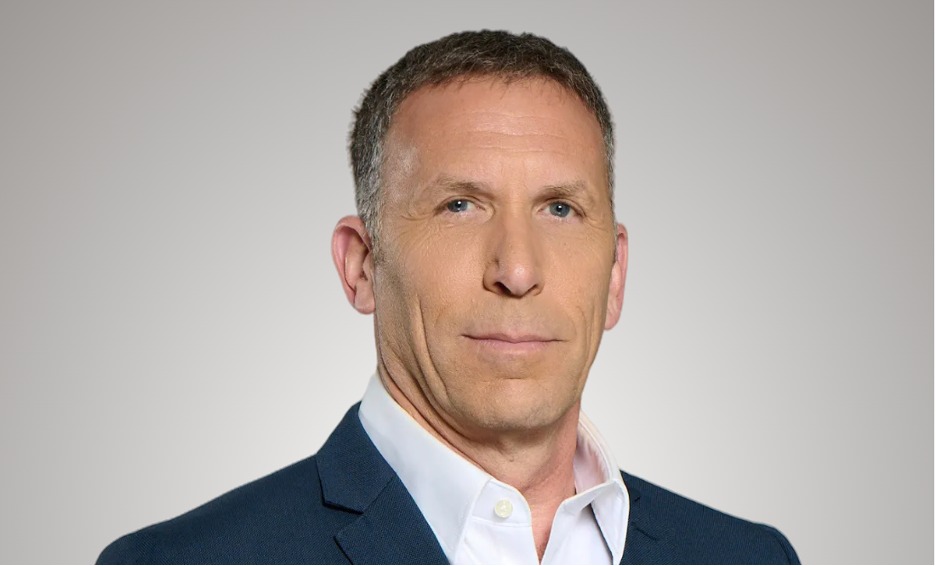
Last night, the Knesset elected Matan Kahana as its new Speaker. Sixty-six legislators voted for him. Fifty-two opposed.
For liberal Israelis, the departure of Amir Ohana, Benjamin Netanyahu’s obsequious parliamentary enforcer, was cause for celebration. But his replacement, Gadi Eisenkot’s trusted lieutenant, has left many uneasy. Some are downright suspicious.
They shouldn’t be.
I know Matan Kahana. And I cannot imagine a better person to lead the Knesset through the battles ahead, as a new government begins repairing the damage inflicted on Israeli democracy and restoring unity to a deeply polarized nation.
Here’s why.
I first got to know Kahana when he served as Minister of Religious Services in Naftali Bennett’s government. The two were close friends, having served together in the elite Sayeret Matkal commando unit. Kahana subsequently completed the grueling Air Force pilot training program, eventually commanding an Israeli Air Force base.
Bennett handed him one of Israel’s most dysfunctional, politically compromised bureaucracies. Kahana responded with an audacious reform agenda, challenging entrenched economic interests and seeking to make religious services more accessible and accountable.
It was not a job for the fainthearted.
Consider kashrut certification. For decades, Israel’s official system operated as a collection of local monopolies. Businesses seeking certification had little choice but to submit to the local rabbinate and its inspectors.
My family spent years among the owners of the Café Joe coffee shop chain. I saw firsthand the indignities of the kashrut bureaucracy: Restaurant owners (and coffee producers) navigated an unholy labyrinth of religious supervisors, arbitrary demands, and, in our experience, payments that had precious little to do with keeping kosher. Too often, the system seemed more interested in kickbacks and protecting livelihoods than upholding religious standards.
Kahana decided to do something about it.
His reform sought to introduce competition among local rabbinates, permit qualified private organizations to issue kosher certificates, and transform the Chief Rabbinate from a monopolistic service provider into a regulator. If businesses that wanted to keep Kosher encountered unscrupulous inspectors, they could simply take their business elsewhere.
The legislation passed in October 2021. Its first stage took effect in January 2022. The more consequential provisions, opening the market to private certification, were scheduled for the following year. Unfortunately, by then, the ultra-Orthodox parties had returned to power. The reform was frozen and ultimately canceled.
But perhaps not buried. Israel has a way of rediscovering good ideas when the political weather changes.
My own encounter with Kahana began with a disagreement.
As a Conservative (Masorti) Jew, I was furious that the legislation appeared to exclude non-Orthodox movements from Israel’s official kashrut system. My requests to amend the language had been rebuffed by the ministry’s director general. I warned that unless the discrimination was addressed, I would oppose the bill. With a narrow 61-seat coalition, this posed a problem.
Kahana invited me to meet.
It was late in the evening. The Knesset was preparing for another marathon night of voting. We had plenty of time.
What began as polite small talk became a fascinating conversation about Jewish identity, religious pluralism, and the future of Judaism in Israel.
Kahana described his first encounters with Conservative Jews and his surprise at discovering how much common ground we shared. He listened carefully. He believed that our theological differences were modest, and did not regard them as barriers to cooperation.
For an Orthodox politician in Israel, that is not as common as it should be.
He also described the ferocious resistance he faced from the religious establishment. I had watched opposition legislators subject him to vicious personal attacks, questioning his religious credentials, integrity, and seemingly everything else about him.
Kahana was unfazed.
Perhaps his years in Sayeret Matkal and the Air Force had prepared him well for confronting extremist rabbis and Knesset hecklers. He certainly did not seem intimidated.
By the end of our conversation, I understood his tactical predicament and was convinced he was acting in good faith. I agreed not to hold up the legislation over my proposed amendment, trusting that he would incorporate it later and continue addressing discrimination against non-Orthodox Jews.
The government collapsed before he had the chance.
But Kahana demonstrated something Israeli politics desperately needs: the ability to listen respectfully, find common ground, and move forward.
And he had other battles to fight.
One of his most impressive achievements involved Israel’s local religious councils, which administer Jewish communal services such as ritual baths, synagogues and kashrut supervision. Their leadership had traditionally been an almost exclusively male preserve.
Kahana decided this was unacceptable.
In 2022, he introduced regulations requiring appropriate representation of women among ministerial appointees. Then he used his appointment authority to deliver results.
According to the US State Department’s 2022 International Religious Freedom Report, Kahana appointed nine women as religious council chairpersons and another 20 as co-chairs.
This was no symbolic gesture. It was a genuine breakthrough in institutions where women had historically been relegated to the sidelines, despite being directly affected by many of their services.
Naturally, the religious establishment was incensed. Kahana didn’t blink.
Some gains were subsequently reversed under Netanyahu’s government. But Kahana had demonstrated that even Israel’s most ossified and discriminatory institutions could be transformed.
When Bennett stepped away from politics in 2022, Kahana found himself without a political home. Benny Gantz recruited him into the alliance that included Gadi Eisenkot and became the National Unity Party.
It was a natural fit.
Kahana lives on a religious moshav. He is proudly Orthodox and unapologetically right-wing. He believes deeply in the Jewish people’s historic connection to Judea and Samaria. Nobody will mistake him for a Meretz activist.
But his faith comes with something increasingly rare in Israeli politics: humility.
He believes wholeheartedly in the rule of law and respects democratic institutions. He understands that compromise is not capitulation and patriotism does not require treating political opponents as enemies.
He is also a good listener. Even though Kahana tends to downplay this part of his political identity, I believe he cares deeply about the environment. And, perhaps surprisingly for someone with such an imposing military résumé, he has a terrific and irreverent sense of humor.
I had another opportunity to appreciate these qualities after October 7, 2023.
I was preparing for a six-month sabbatical at Stanford University, with lectures scheduled at American universities rapidly becoming battlegrounds over Israel’s legitimacy.
Before departing, I sought Kahana’s advice.
How did he explain Israel’s predicament to liberal audiences? How did he reconcile his national-religious convictions with democracy, tolerance, and human rights? What did he think I should say to increasingly skeptical students and faculty?
Once again, our conversation was illuminating.
We agreed on far more than either of us expected. His positions were grounded in patriotism, pragmatism, respect for human rights, and genuine appreciation of competing perspectives.
He is certainly a man of the right. But he is not a prisoner of the right.
Indeed, he represents precisely the religious Zionism that Israel desperately needs to recover: confident in its Jewish identity, steadfast in its defense of democratic principles, and unwilling to surrender its moral compass to the messianic fanaticism that has hijacked parts of the movement.
For too long, extremist politicians have invoked Jewish destiny while excusing lawlessness, encouraging intolerance, and ignoring shameful violence by radical Jewish settlers in the West Bank.
Kahana offers a different model.
He understands that love of the land of Israel does not confer a license to disregard the law. That Jewish identity need not mean religious coercion. And that a strong Israel is one whose institutions protect everyone’s rights, not merely the majority’s.
This is why his election matters.
The Speaker is not merely a parliamentary traffic cop, setting the agenda and deciding who gets the microphone. He is the guardian of the legislature’s dignity and a critical defender of the balance between Israel’s democratic institutions.
After years in which the Knesset was too often treated as an extension of the prime minister’s political machinery, Israel needs a Speaker who puts loyalty to the state before loyalty to a party.
Kahana’s inaugural remarks suggest he understands the assignment.
“With a profound sense of reverence, I accept the responsibility of serving as Speaker of the Knesset. I have made the principle of statesmanship my guiding value, and I intend to be a Speaker for everyone, regardless of religion, race, or gender.
“I sincerely hope that the government to be formed will undertake the necessary reforms to the system of checks and balances through broad consensus. Until that happens, however, the Knesset of Israel will comply unequivocally with the rulings of the courts.”
After years of relentless attacks on judicial independence, politicians treating the Supreme Court as an enemy of the state, and an executive branch repeatedly testing the limits of its authority, these words constitute a declaration of democratic renewal.
Israel has a long road ahead. The damage to our democratic institutions, international standing, and social cohesion will not be repaired overnight.
Restoring the confidence of our friends abroad – and perhaps winning back some who have lost faith in us – will require more than inspiring speeches. It demands leaders capable of disagreeing without demonizing, compromising without surrendering principles, and remembering that their first obligation is to the country, not their political camp.
Matan Kahana’s election as Speaker of the Knesset is a critical first step.