Microalgae could become the future of urban clean air
Microalgae could make our cities greener (image copyright Adobe Stock)
Air pollution is no longer merely a technical issue discussed by environmentalists or scientists. Today, from Tel Aviv to Haifa, from Istanbul to Delhi, millions of people wake up every morning inside an invisible threat. Due to traffic, industrial activity, rapid urbanization, and the steady disappearance of green spaces, clean air is no longer a naturally guaranteed right, but a strategic necessity that must be protected.
According to United Nations data, the majority of the world’s population now lives in areas that fall below acceptable air quality standards, turning this issue into not only an environmental crisis, but also a global economic and public health challenge. In densely populated cities especially, respiratory illnesses, cardiovascular diseases, and the decline in overall quality of life linked to air pollution are no longer problems governments can afford to ignore. As a result, many countries have started discussing not only how to reduce carbon emissions, but also how to implement tangible air-cleaning solutions directly within urban environments.
Israel, meanwhile, is not only one of the countries experiencing the effects of this problem, but is also becoming one of the technology centers attempting to solve it. Climate-tech startups, particularly those based in Tel Aviv, have significantly increased investments in air quality, carbon capture, and environmental efficiency in recent years. Israeli ventures such as yAlgae, which develops microalgae-based pollution treatment technologies, are focusing on reducing industrial emissions, while companies like Aura Air and Urecsys are working on AI-supported air quality management systems. Israel’s long-standing culture of innovation in water technologies and desert agriculture is now increasingly extending into the field of clean-air technologies.
Around the world, remarkable examples are also beginning to emerge in this sector. Companies working on microalgae-based air purification systems are developing solutions that go beyond the traditional understanding of urban planning. One of them is Carbelim, a UK- and India-linked climate-tech venture aiming to improve localized air quality in densely populated urban areas through the towers it has developed. The company’s approach goes beyond simply filtering air; it also includes real-time data monitoring, carbon capture, and the creation of visible environmental awareness. Designed particularly for high-traffic intersections, industrial zones, and public transportation hubs, these systems present a powerful vision of a future in which cities may consist not only of concrete and glass, but also of living biological infrastructure. Carbelim, founded by Dr. Karthika Gopi, who pursued her PhD studies in the Middle East, is also conducting research related to submarine systems.
Although they may not be as impactful as Carbelim, Green City Solutions and Biomitech are also among the companies developing technologies in this field.
Of course, although Israel stands out for its technological and innovation capabilities, it does not have a completely problem-free record when it comes to air pollution. Air quality around the Tel Aviv metropolitan corridor, the Haifa Bay area, and several industrial zones has remained a major public concern for years. However, what distinguishes Israel from many other countries is its ability to approach these challenges not only through reporting and regulation, but through technology-driven solutions. Thanks to the strong innovation network established between universities, startups, and the private sector, Israel is now considered one of the world’s most dynamic countries in fields ranging from air quality monitoring systems to smart environmental technologies. Considering that clean air will increasingly be viewed not only as an environmental issue, but also as a strategic matter of urban planning and public health, Israel’s technological reflex in this field is particularly noteworthy.
In the coming years, cities will need to become not only smarter, but also more breathable. Perhaps the greatest competition of the future will not be between taller skyscrapers or larger megaprojects, but between cities capable of offering genuinely clean air to their people. And perhaps microalgae-supported systems will eventually become an inseparable part of everyday urban life and local governance.
About the Author
Dalia Cohen has worked in magazines such as Newsweek, Fortune and TechCrunch in her editorial career. She is actively involved in many NGOs and writes articles on topics such as politics, technology and business. She is also actively working on antisemitism and women's rights.




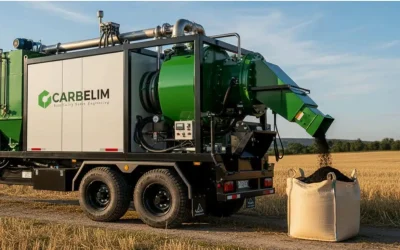 The company’s approach goes beyond simply filtering air; it also includes real-time data monitoring, carbon capture, and the creation of visible environmental awareness. Designed particularly for high-traffic intersections, industrial zones, and public transportation hubs, these systems present a powerful vision of a future in which cities may consist not only of concrete and glass, but also of living biological infrastructure. Carbelim, founded by Dr. Karthika Gopi, who pursued her PhD studies in the Middle East, is also conducting research related to submarine systems.