Migrants and refugees need COVID-19 support — in Israel too
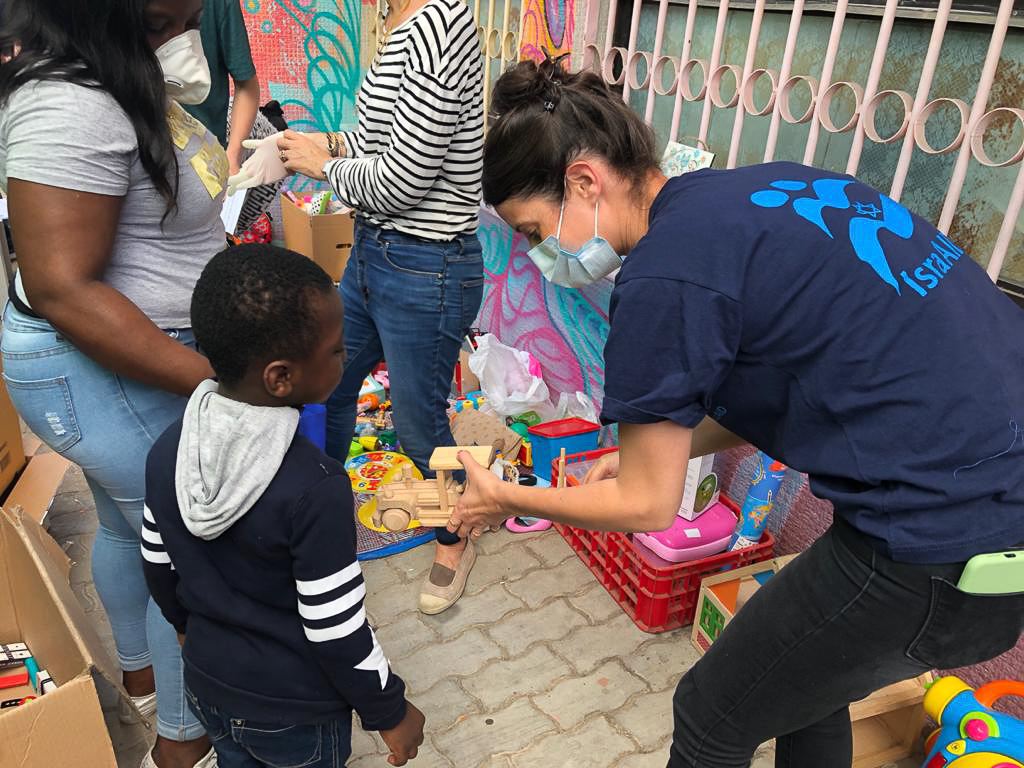
This past month was the first time I’ve ever worn my IsraAID t-shirt, meant for fieldwork, here, in Israel. I spent time sorting toys by age level and handing out stress relief items to parents and caregivers, as part of a coronavirus response project just one neighborhood over from mine. Many of Tel Aviv’s residents have survived humanitarian disasters, and today are living in Israel, seeking asylum from genocide in Darfur, war in South Sudan, and forced, unlimited conscription in Eritrea.
Unitaf, a powerful local educational initiative, seeking to improve the quality and safety of early childhood education available to asylum seekers and migrant workers, reached out to us as the pandemic struck the world. Our job is to support communities affected by disasters, helping them build back better toward increased resilience. These communities are no exception.
With all schooling shuttered by preventive measures, the daycare centers run by the organization were forced to close. The families that Unitaf serves are among Israel’s most vulnerable populations. Lacking legal status in Israel limits their income potential, their ability to access education, healthcare, and therefore, a better future for their children. Many of the parents and caregivers from these households have lost their jobs due to the current situation, further exacerbating the stress of living in a foreign country, with a new language, a different culture, and mounting concerns of what the future may hold.
Asylum seekers in Israel face immense challenges amid the current situation, just like the refugees and displaced people IsraAID works with in Greece, Colombia, Kenya, Uganda, Germany, and South Sudan. Some call COVID-19 “the great equalizer,” but they couldn’t be more wrong. Many of us are in isolation and miss our routines, our loved ones and, to some extent, our freedom. Many of us – and our families – have also been personally affected by the virus. But migrant and refugee populations face serious barriers to accessing basic support, some due to legal limbo, some due to socio-economic status, and some due to language gaps and lacking the cultural knowledge that is so key to understanding the ongoing situation. Rather than making us all equal, the pandemic amplifies existing inequalities.
Although working in Israel is usually excluded from IsraAID’s mandate, amid the current reality of limited resource, closed skies, and the distraction of disrupted routine, this intervention allowed us to address a pressing need. The coronavirus places marginalized and vulnerable communities at greater risk – no matter what country they are in.
We cannot miss the point here. Just one neighborhood over from my house, people can use a helping hand. And right now, amid this craziness, I find myself with some extra time, some extra energy, and hundreds of local families who had some extra toys. So, it’s my responsibility to show up and fill the gap that’s needed. We are not all going through the same thing. We do not start out on an equal playing field. Wherever and whenever we can, it’s vital that we reach out to our neighbors, and ensure they have access to the support they not only need, but the support they deserve as human beings.
—
Click here to learn more about IsraAID’s global response to COVID-19.