
Missile Defense Worked. Can Israel Count on It Working Next Time?
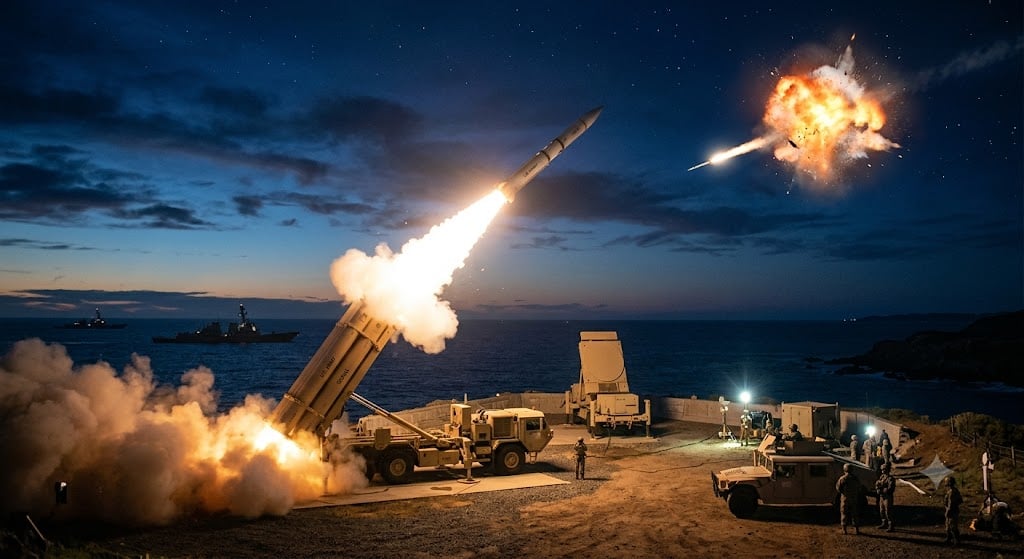
Over the past few months, we have witnessed unprecedented success and cooperation between the US, Israel, and Gulf states, especially with regard to missile defense. Facing renewed retaliatory strikes between the US and Iran, what are the key lessons Israel should take away from its air and missile defense operations against Iran and its proxies — Hezbollah, Hamas, and the Houthis?
My overall assessment is that Israel’s missile defense capabilities performed effectively over the past two years of hostilities, blunting the vast majority of air and missile attacks against the country. But there are several warning signs Israel needs to weigh as it plans for the future — most importantly, whether it can continue to count on the same level of US support that carried it through the run-up to and duration of the current conflict.
Israel’s Missile Defense Architecture
In 1991, Israel was repeatedly attacked by Iraq with ballistic missiles in an unprovoked assault. The objective was not military but political. Iraq’s leader at the time, Saddam Hussein, believed that striking Israel with ballistic missiles would provoke an Israeli entry into the war to eject Iraqi forces from Kuwait — and that Israel’s involvement would in turn force the coalition’s Arab members to withdraw, fracturing the coalition’s ability to prosecute the war effectively.
The strategy came close to working. As ballistic missiles began falling on Israeli cities, the government of Prime Minister Yitzhak Shamir was strongly inclined to retaliate. That it did not is likely attributable to several factors, including intense political pressure from the United States and, critically, the deployment of US Patriot PAC-2 batteries to Israel. Although the Patriot PAC-2 interceptor was not originally designed to engage ballistic missiles, it was modified to provide a limited capability against them. As one analyst has observed, the deployment of US Patriot systems to Israel following Iraq’s initial Scud attacks on Tel Aviv helped stabilize an already volatile situation.
At the war’s conclusion, Israel drew two lasting lessons. First, it needed a domestically designed missile defense system tailored to its specific threat environment — the war had exposed how limited Israel’s own anti-missile capabilities were, and how dependent the country had been on the US military to provide Patriot interceptors for its defense. Israel did not want to find itself in that position again. With substantial technical and financial support from the United States, it spent the next three decades building a layered missile defense architecture capable of intercepting the full spectrum of missile threats it faced. That architecture includes:
- The Arrow family of interceptors (Arrow 2 and Arrow 3) and associated radars, designed to intercept medium- and long-range ballistic missiles, including exo-atmospheric threats.
- David’s Sling, designed to intercept aircraft, drones, tactical ballistic missiles, medium- to long-range rockets, and cruise missiles at ranges of roughly 40 to 300 km (25 to 190 miles).
- Iron Dome and Iron Beam, designed to intercept short-range rockets and artillery.
Well before the wars with Iran, Iron Dome had already accumulated extensive operational experience, intercepting thousands of short-range rockets launched by Hamas from Gaza and Hezbollah from Lebanon. With the exception of Iron Beam, which remains in development, every system listed above was fielded in significant numbers by the time Iran’s first direct air and missile strikes on Israel occurred in 2024.
The second lasting lesson was the value of close operational coordination with the US military. As I noted in a previous article, more than 25 years of joint exercises between the United States and Israel — most notably the Juniper Cobra series — built the tactics, techniques, and procedures needed to rapidly deploy US missile defense capabilities to Israel and integrate them into Israel’s own systems, enabling a coordinated, unified defense rather than two parallel ones operating side by side.
Key Lessons So Far
Beginning in April 2024, Israel has engaged in a series of air and missile defense operations against Iran and its proxies. Based on those engagements, here is my initial assessment of the key lessons learned so far — with the caveat that this understanding will continue to evolve as more data becomes available. Let’s start with the positives.
First, Israel’s layered missile defense architecture performed well. Though some drones and ballistic missiles penetrated Israel’s defenses, every element of its layered architecture appears to have performed extremely well against the volume of drones and missiles launched by Iran and its proxies. We don’t have precise figures on the interception rate, but most public estimates put it around 90 percent — an impressive result by any measure. Deep credit is owed to the Israeli political, military, and industry leaders who built this system, and to their US counterparts who worked alongside them. This is clearly an investment that has paid off.
Second, US-Israel operational cooperation paid dividends. Three decades of military-to-military cooperation have also paid off. Through joint exercises like Juniper Cobra, the two countries built a template for rapidly deploying US missile defense capabilities to Israel and integrating them into Israel’s own defense plan. As I’ve noted elsewhere, this allowed American and Israeli forces to fight as a single integrated system rather than as separate actors dividing up the same battlespace.
Third, European and Arab partners helped as well. Though less prominent than the US-Israel relationship, several other partners contributed to Israel’s defense against Iranian air and missile attacks in 2024, including Britain, France, and Jordan.
Fourth, missile defense has become a diplomatic tool for Israel. An often-overlooked dimension of this story is how Israel has used its missile defense expertise to strengthen relationships with Gulf Arab states. According to numerous press reports, Israel deployed troops and equipment to the United Arab Emirates to help defend against Iranian drones and missiles.
While the lessons of the past two years have largely been positive, there are also several red flags Israeli officials need to weigh.
Fifth is the interceptor inventory problem. Although Israeli and partner defenses have intercepted the vast majority of Iranian drones and missiles, according to press reports, the US intelligence community assesses that Iran still retains large stockpiles of both in hardened underground facilities that have survived repeated Israeli and US strikes. That raises an uncomfortable question: does Israel have enough interceptors to sustain a prolonged conflict with Iran?
Based on what Ukraine has learned the hard way with its limited supply of Patriot PAC-3 missiles, the answer is probably not. Going forward, Israel will need to grow its interceptor inventory — through a combination of increased production of existing systems and investment in new technologies like directed energy that can help break the missile defense “cost curve” problem. The encouraging news is that Israel’s military appears to understand this: through Iron Dome and Iron Beam, the Israeli Defense Forces (IDF) have already begun developing a response to this emerging threat that is both cost-effective and scalable.
Sixth, Israel’s adversaries are adapting as well. As I noted in a recent article, Hezbollah — drawing lessons directly from the war in Ukraine — has deployed fiber-optic drones against Israeli forces in Lebanon, accounting for the vast majority of IDF casualties there since the ceasefire. The lesson is clear: Israel will need to track global developments in air and missile defense, particularly the war in Ukraine, and rapidly evolve not just its systems but its doctrine, tactics, techniques, and procedures to stay ahead of an adaptive threat.
And the final area of concern is the durability of continued US support. American financial support has been critical to the development of Israel’s missile defense program; without it, it’s questionable whether Israel could have built and fielded the layered capability it has today. The same is true of operational cooperation between the two militaries. As a recent Washington Post article reported, the United States expended over 200 Terminal High Altitude Area Defense (THAAD) interceptors — roughly half the Pentagon’s total inventory — along with more than 100 Standard Missile-3 (SM-3) and Standard Missile-6 (SM-6) interceptors defending Israel, while Israeli forces fired fewer than 190 of their own. Given America’s global commitments, particularly in the Indo-Pacific, and ongoing strains on its defense industrial base, will the United States be able to sustain this level of operational support for Israel going forward? That is a serious and open question.
There is also the matter of continued political support for Israel among the American public and its elected officials, especially within the Democratic Party. For 50 years, there has been strong, bipartisan support for helping Israel develop missile defense and other capabilities. That bipartisan consensus now appears to be eroding.
Political warning signs are emerging in Washington. On April 15, 2026, the Senate considered two Joint Resolutions of Disapproval, introduced by Senator Bernie Sanders, that would have blocked nearly $450 million in arms sales to Israel — a bulldozer sale and a sale of 12,000 1,000-pound bombs. Both measures failed, defeated by unified Republican opposition. But a majority of the Senate’s 47-member Democratic caucus voted in favor of blocking at least one of the sales — 40 senators on the bulldozer resolution, 36 on the bombs resolution — more than double the level of Democratic support such measures received as recently as 2024. Neither resolution passed, but the trajectory is unmistakable, and it raises a real question for Israeli planners: can Israel continue to count on the same depth of US political and military support it has relied on for the past three decades?
Conclusion
The events of the past two years have proven that Israel’s investment in layered missile defense has paid off significantly, saving potentially thousands of civilian lives. That system was built on strong financial, technical, and operational support from the United States. To stay ahead of the threat, Israel will need to do several things: expand its missile defense interceptor inventory, develop new technologies to address the inventory and cost-curve problem, and continuously review and integrate lessons from other conflicts, particularly Ukraine. But above all, it will need to find a way to preserve the strength of its alliance and partnership with the United States. The political challenge ahead may prove harder to solve than the technical one.