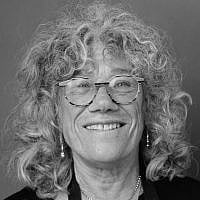
Mohamed Maouhoub, Derrida and the Crisis of Modernity XII
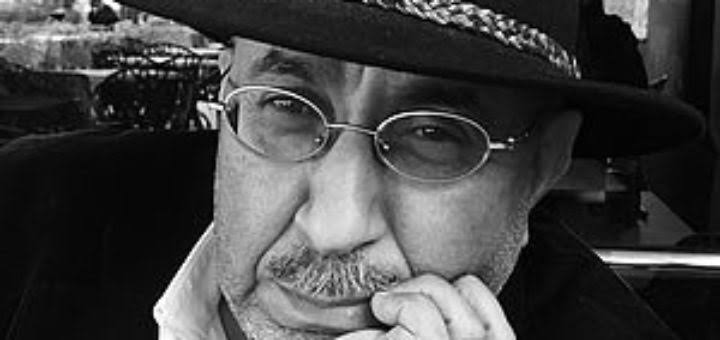
A few years ago, in Marseille, two translators were asked to carry the same book into two sister languages. Moshe Ron was to render Jacques Derrida’s Le Monolinguisme de l’autre into Hebrew, and Mohamed Maouhoub into Arabic. The Mucem staged their work in dialogue around the exhibition Après Babel, traduire, with Alain Badiou present. Few scenes could be more fitting for a series on the crisis of modernity. A text by a Jew born in French Algeria, about the language he was given and could never own, was being translated at the same moment into the two languages his family history had passed through or beside.
Maouhoub’s version appeared in 2021. This article asks what that translation required of him, concept by concept.
The translator and his field
Maouhoub took his doctorate in philosophy at Paris 8 in 1997 and teaches at Cadi Ayyad University in Marrakech. Two details of his profile are easy to miss. He is a specialist in German philosophy, and he translates in both directions, from Arabic into French and from French into Arabic, including novels as well as philosophy. He sits on the editorial board of a philosophy journal, Madarrates al falsafa, and wrote in Arabic Turjumān al-falsafa, “the translator of philosophy” (Cadi Ayyad University Press, 2012).
A 2017 interview with him, published just after he finished the Derrida, carries a revealing title: De la tradition à la traduction. La modernité comme projet philosophique. The sentence suggests his working thesis, that modernity is what happens when a tradition must be translated. I could not read the interview itself, so I leave the thesis in the form of its title. It fits this series, because the Persian and Arab Heideggerians we have discussed all started from the same difficulty.
What the book asks of a translator
Le Monolinguisme de l’autre has a subtitle, ou la prothèse d’origine. It grew out of a dialogue with the Moroccan writer Abdelkébir Khatibi, whom Derrida regularly visited in Rabat and whose Amour bilingue he cites. The central claim has the form of a paradox: “I have only one language; it is not mine.” Each noun in that sentence is a decision for the Arabic translator.
1. Monolinguisme. Both earlier Arabic translators render it with aḥādiyya (أحادية), “singleness,” from aḥad, “one.” The choice is natural and carries a risk. In Islamic mysticism, aḥadiyya names the absolute unity of God, the term Ibn ʿArabī’s readers know well. Derrida’s monolingualism is the opposite of divine unity. He describes it as a sovereignty “always colonial,” tending to reduce languages to the One. A translator must decide whether the theological resonance is a hazard to suppress or an irony to preserve. The Arabic word invites the second reading, since a sovereign One is just what Derrida is criticizing.
2. The genitive. In “la langue de l’autre,” Derrida says, the de indicates provenance, not possession. Arabic is unusually well equipped for this. The construct state, the iḍāfa (lughat al-ākhar), is ambiguous in exactly the same way: it can mean the language that belongs to the other or the language that comes from the other. The French preposition has to be argued into carrying both meanings, while Arabic grammar offers them for free. This is one place where translation reveals the original, because the Arabic shows how much the French was doing.
3. “Avoir.” In “I have only one language,” the verb is “have.” Classical Arabic has no verb for possessing. It says lī (“to me”) or ʿindī (“at me”), so possession is built into the sentence as a relation and never an act. The same is true of Hebrew, which says yesh li, “there is to me.” For the two translators in Marseille this is perhaps the sharpest shared difficulty. Derrida’s whole analysis concerns the illusion of linguistic property, and both languages grammaticalize that illusion differently from French. The sentence “it is not mine” can be rendered more naturally in Arabic and Hebrew than in French, but it loses the verb whose use Derrida is questioning.
4. Prothèse d’origine. Here the two earlier Arabic versions can be compared. Omar Mehibel (Beirut and Algiers, 2008) subtitles his version fī l-tarmīm al-aṣlī, and Ibrahim Mahmoud (Dar al-Hiwar, 2017) writes tarmīm al-aṣl. Both choose tarmīm, “restoration,” “repair,” for prothèse. The word keeps the idea of repair and loses the limb and the artificiality. It has a further twist: Arabic aṣl means origin, root, principle and original text, and it belongs to the vocabulary of uṣūl al-fiqh, the “roots” of jurisprudence. A prosthesis of origin therefore becomes a repair of the root, with an echo of the legal tradition that Derrida certainly did not intend. A third translator has to choose between following tarmīm and breaking from it, and this is the choice I would most like to see in Maouhoub’s text. Whether he follows Mehibel and Mahmoud is something I could not establish.
5. The mother tongue. Derrida argues that the mother tongue is simply the first of the foreign languages one learns. Applying this to Arabic raises a particular problem, which a French teaching site has treated under the title “monolingualism of classical Arabic.” The written, literary Arabic that a translator uses is al-fuṣḥā, which no one speaks as a first language. A Moroccan grows up in Darija or Tamazight and learns the fuṣḥā at school. In the Arabic world, then, the language of the Derrida translation is already “the language of the other” for its translator, which is Derrida’s thesis in the flesh. Adonis’s call for the “Arabization of Arabness,” a recognition of plurality in Arab culture, is the nearest Arab parallel to the book’s argument. A Moroccan translator, working between Darija, the fuṣḥā, French and Amazigh, is perhaps better placed than any Egyptian or Iraqi to hear this.
6. Franco-maghrébin. Derrida calls himself a “judéo-franco-maghrébin.” In Arabic the word maghribī serves for both “Moroccan” and “of the Maghreb,” since the country takes its name from the region, “the West.” A Moroccan translator translating “Franco-Maghrebi” is also translating himself, and the word cannot be neutral for him. Khatibi, the book’s Moroccan interlocutor, wrote in French and thought in a pensée-autre that Arabic readers know under several names, so the book had already been half-translated into Moroccan terms before Maouhoub began.
7. The promised language. Derrida closes with a “language to come,” an avant-première langue whose existence is anticipated and never given. Commentators place this in a line of messianic thought running through Rosenzweig and Benjamin. For an Arabic translator the question is which register of “promise” to use, the juridical (waʿd), the prophetic or the neutral. The reader will hear the choice.
Why the same book into Hebrew and Arabic
The Marseille project deserves more than an anecdote. It put two translators side by side and invited them to compare the difficulties each met, so that each language would show what the other could not do. Hebrew and Arabic share root-and-pattern morphology, an ancient liturgical register, a modern revived or standardized literary form, and the absence of “have.” They differ in politics, in sacred geography, and in the relation of their speakers to Derrida’s French. A Jewish philosopher’s meditation on the language that was not his, translated into both, becomes a kind of test. Does the book survive the passage into languages that were historically its family’s languages, or beside them, and that its author never claimed?
I would like to know what the two translators concluded. The Mucem presentation promised a comparison “on what it tells us about each of the languages and their relation.” I have found no record of the discussion.
Koyré and the other thread
Maouhoub’s earlier work on Alexandre Koyré, a short essay of about 130 pages published by his university in 2021, belongs to the same pattern. Koyré, born in Russia and settled in France, was a Jewish exile whose account of the scientific revolution is also an account of modernity. The book ends with a translated extract from Koyré’s Introduction à la lecture de Platon, and with testimonies from thinkers Koyré influenced, Foucault among them. Maouhoub chooses, in both cases, to present modernity’s critics by translating them.
What the translator tells us
The usual story of the crisis of modernity treats it as a problem of ideas: the forgetting of Being, the mathematization of nature, the rule of technique. A translator’s story differs. For him the crisis shows in the practical difficulty of making one language say what another has said, and in the discovery that no language, including his own, belongs to him. Derrida’s book makes that discovery explicit, and Maouhoub’s translation enacts it. The point matters for a series about Heidegger’s reception, because Heidegger too treated translation as destiny. What the Maghrebi translator adds is the experience of working in several languages, none of them simply his own.