


Morad Farhadpour, Giorgio Agamben and the Crisis of Modernity VIII
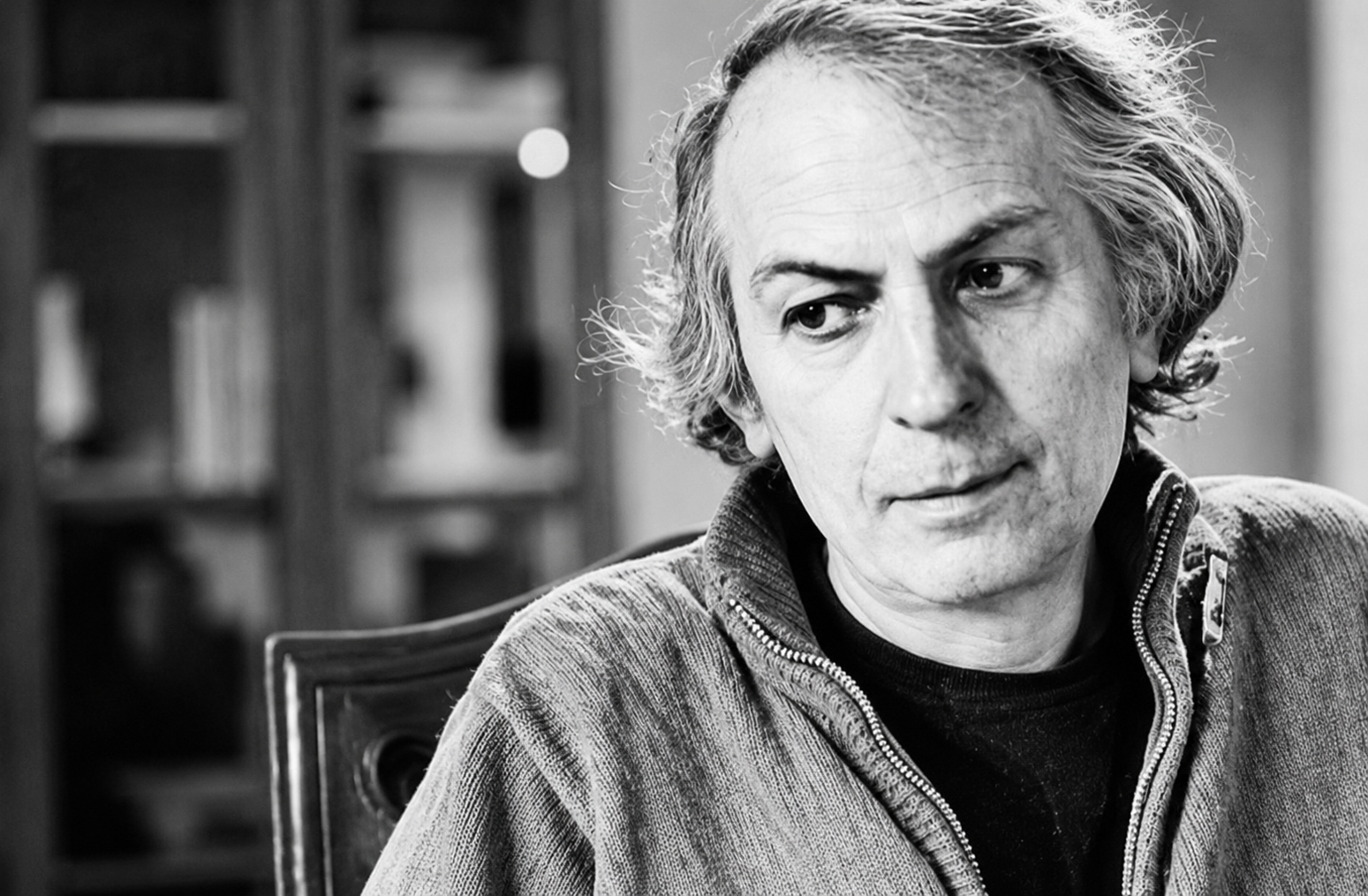
The earlier instalments of this series traced a recognisable genealogy. Mehdi Pârsâ read Derrida. Daryoush Ashouri and Reza Davari Ardakani, each differently, took up the question that Ahmad Fardid bequeathed to Iranian thought: what is the West, and what is it to dwell within its history or against it? Heidegger was the shared horizon, even among those who disagreed about its use. Morad Farhadpour inhabits the same landscape from the opposite bank. He is not a Heideggerian in the Iranian sense. He is the thinker who has made the passage of Western philosophy into Persian the central problem of philosophy itself.
For Fardid and his heirs, the crisis of modernity is a loss of origin. For Farhadpour, it is a condition to inhabit: there is no untouched origin, only a history of translations and appropriations from which thought is made.
Farhadpour co-founded Arghanoun (The Organon), active in the reformist years until around Ahmadinejad’s first term, then Rokhdad (The Event), a nod to Badiou, and Thesis 11, an allusion to Marx. His books include Aql-e afsorde (1999) and the two-volume Pareh-ha-ye fekr (2008-2009).
Thinking as translating
Farhadpour is best known for a thesis that sounds modest and is not: in modern Iran, thinking is translating. The claim concerns the structure of Iranian modernity rather than the difficulty of rendering German or French terms. The concepts through which Iranians have thought their society since the nineteenth century (nation, freedom, revolution, subject, history, reason) arrived from elsewhere, carried by translators before they were carried by philosophers. To think under such conditions is to take up a foreign word and make it speak in a language that did not produce it.
The thesis has a history, which Farhadpour himself retraces. In a first phase it was close to hermeneutics, with an emphasis on conscious translation, the lucid awareness of what one does when one carries a text across. The break with Arghanoun shifted his perspective: the political side of translation, he says, became clearer to him, and this fed into the long essay later included in Pareh-ha-ye fekr. Translation must now be a negative, critical act, one that creates a tension in the target language. It must carry a surplus, and that surplus must be political, given the specific conditions of Iran. His resources changed accordingly: less Gadamer, more structuralism, post-structuralism, Lacan and the theory of the subject, then Badiou, Agamben and Žižek, taken up through the Rokhdad group with its website, its books and its collective political positions. What matters, he insists, is no longer the hermeneutic self-awareness he once sought but this political surplus.
This sits uneasily with the Fardidian tradition. The diagnosis of “Westoxification” presupposes a pre-Western ground against which contamination can be measured. If thought is translation all the way down, the quest for an unspoiled origin is itself a product of translation, since Fardid’s vocabulary was Heidegger’s, recast in Persian. That inference is mine, not a formula Farhadpour is known to have used.
The thesis has also drawn criticism. A scholar at the Institute for Humanities and Cultural Studies argues that it rests on a superficial reading of Gadamer and conflates understanding with translation. The objection is interesting precisely because Farhadpour says he has moved away from hermeneutics. Whether his later, political version escapes it remains open.
Words that carry across
The vocabulary of translation is not neutral, and its etymologies tell two stories that matter here.
The first is of carrying. Latin translatio, from transferre, means “to carry across”; English translation descends from it, and French traduction from traducere, “to lead across”. German übersetzen says the same, to set across as a ferryman does. Greek links the idea to metaphor: metaphora, “carrying over”, is Aristotle’s word for metaphor and the modern Greek word for transport, while. Arabic naql, “transport”, was used for the transmission of Greek learning into Arabic.
The second is of the interpreter. Arabic tarjama, Persian tarjome and Hebrew targum belong to one family of probable ancient Near Eastern origin, which also gave European languages dragoman. The Targum, the Aramaic rendering of Scripture, was spoken aloud in the synagogue after the Hebrew reading, and tarjama also means a biographical notice: to translate is to give an account, to speak on behalf of another. Jewish tradition remained ambivalent about the whole enterprise, since a sacred text addresses all peoples yet is bound to the letters of one language.
Persian holds both stories, and in three layers. Tarjome is itself a loanword, borrowed from Arabic. The Persian name of the operation is literally a translation: even the word for carrying across has been carried across. Against this borrowed word, modern Persian has coined a native one, bargardān, formed on bargardāndan, “to turn back”, which is often favoured by those who wish to avoid Arabic loans. Behind both stands an older term, zand, which in Middle Persian designated the commentary-translation of the Avesta, and survives in “Zend-Avesta”. There, translation and explanation are one gesture. A single language thus keeps, side by side, a borrowed word, a purist coinage and an archaic term, and no one of them names an untouched origin. This is the situation Farhadpour describes: Persian thought is made out of words that have always already been carried across.
Derrida: Babel, relève, monolingualism
Derrida provides the most rigorous frame for this problem. He returned to translation repeatedly: in “Des Tours de Babel” (1985), a reading of Benjamin’s “The Task of the Translator”; in Monolingualism of the Other (1996); and in “What is a ‘relevant’ translation?” (1998).
“Des Tours de Babel” begins from a proper name. In Genesis, Babel is glossed as confusion, yet it also resonates with the name of the father. By imposing his name, God demands to be understood and forbids translation, since the name must remain identical in every tongue. Translation is thus commanded and prohibited at once, a double bind Derrida declines to resolve. Babel is not a fall from unity into plurality: the plurality of languages is the condition of meaning. Following Benjamin, Derrida also inverts the relation between original and translation. The original is in debt, lacks something and calls for translation, and survives only by being translated. Benjamin, whom Farhadpour translated, is the natural bridge between the two thinkers.
In the 1998 lecture, “relevant” is traced to Latin relevare, “to raise”, and tied to relève, Derrida’s rendering of Hegel’s Aufhebung, which at once cancels, preserves and lifts. The ideal translation would raise meaning out of one language into another without remainder. But meaning does not exist apart from the body of the idiom, so no translation is fully relevant, and every translation aspires to be. Translating is both impossible and necessary.
Monolingualism of the Other offers the formula closest to the Iranian case. Derrida, a Jew in colonial Algeria for whom French was at once his only language and one that excluded him, writes that he has only one language, and that it is not his own. No one possesses the language they speak. A philosophical Persian assembled from Arabic, German and French borrowings is a case in point.
Here Derrida and Farhadpour meet and part. Both deny an untranslated origin. But Derrida insists on the remainder, the untranslatable idiom that makes translation interminable, and this is the point his critics would press on Farhadpour: if thinking is translation, what resists it? Farhadpour’s answer, drawn from his own account, is political rather than metaphysical. What resists is not an untranslatable essence but the surplus a translation deliberately introduces, a negativity that unsettles the target language. Derrida’s remainder is a structural fact about language, Farhadpour’s surplus a task; both converge on the idea that translation is never complete.
Badiou, Agamben and the translator’s choice
A philosopher who holds that thinking is translating is judged by what he translates. With Pedram Najafi and Ali Abbasbeigi, Farhadpour translated a collection of Badiou’s texts on philosophy, politics, art and love (Farhang Saba). With Saleh Najafi, he translated Agamben’s Homo Sacer (Markaz), a publication the Tehran Times reported in April 2024 alongside a second, independent translation by Seyed Mohammad Javad Seyedi (Now Publications). Two Persian versions of one work in a single season testify to how alive the question of sovereignty has become.
Agamben’s book turns on a figure of Roman law, the person who may be killed without the killer being punished, yet cannot be sacrificed. Through it, he argues that sovereign power is defined by the capacity to suspend the law and reduce human beings to bare life. Without putting words in the translators’ mouths, one may observe that Badiou and Agamben converge on one frontier: where political order meets the event that breaks it, or the exception that founds it. Agamben is deeply marked by Heidegger but places him at the service of an analysis of the state of exception, which differs from Fardid’s use of the question of Being against the West as a civilisational whole. He will publish The Time of Thinking, The Le Thor Seminars with Heidegger (1966 And 1968) in january 2027.
Integration and isolation
If the translation thesis concerns the form of Iranian thought, a 2021 essay in Multitudes, “Integration and Isolation: The Two Sides of the Iranian Revolution”, addresses its object. Farhadpour proposes analysing the revolution of 1979 through “integration” into the world capitalist system, which stresses what Iran shares with other peripheral countries, and “isolation” from the new world order, treated as a moment of that integration, which accounts for what distinguishes Iran from its neighbours. The move refuses both the culturalist reading that explains Iran by its religion and a flat account that dissolves its specificity into global capitalism. Nothing is simply foreign, nothing simply native: the logic is again that of translation.
Conclusion
For Fardid and his heirs, the crisis of modernity is the loss of an origin, a ground of Being obscured by the West and awaiting recovery. Farhadpour displaces the question. If thinking is translating, there is no untranslated ground to return to. Where Derrida’s remainder is a structural fact about language, Farhadpour makes the excess a task. Badiou’s event and Agamben’s exception answer to the same logic: each exposes an order lacking a foundation of its own. In the South Atlantic Quarterly, writing on the Twelve-Day War of June 2025 he rejects both localist (mahalli-gerāyi) imperialist narratives that exceptionalise Iran, and campist (ordugāh-gerāyi) apologetics celebrating the Islamic Republic as resistance, following the logic of “integration and isolation”, and both missing the parallax gap (shekāf-e pārālāksi). Omid Mehrgan, his co-translator of Dialectic of Enlightenment and of Benjamin’s essays, is among his closest collaborators and an admirer of israeli scholar Ori Goldberg, recalling his work on Shi’a political theology in Iran. The chapter’s translators and editors, Kayvan Tahmasebian and Rebecca Ruth Gould, draw on Matthew Reynolds’s concept of “prismatic translation”.