
My friend, Claude
The only Claude I met in real life was a staff entertainer in Club Med, Noumea. As a precocious 9-year-old, I developed a crush on him. When it came time to leave, my mother snapped a parting photo: Claude smiling generously in his poncho-style shirt, holding my hand in his. We said goodbye, never to meet again.
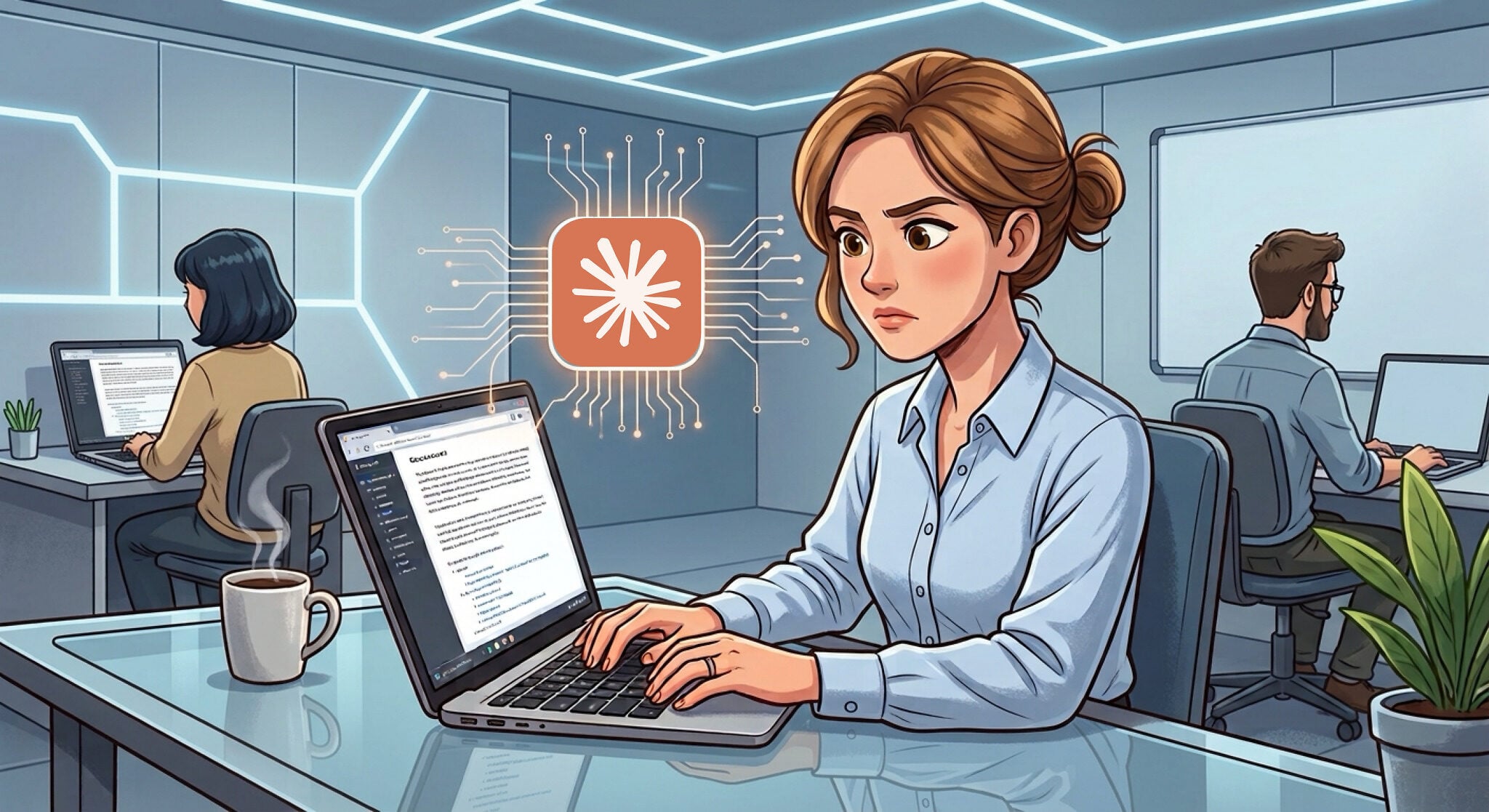
The AI version of Claude I met about a year ago and see almost every day, Sunday to Thursday. I work in a Tel Aviv startup, where Claude AI is part of the team. He doesn’t just hold my hand. He receives my instructions and files, my images and text. He analyzes and processes them, and gives back an unprecedented level of first-class intellectual output, cognitive analysis, and quality assurance. And yet.
After a day of full-on interaction with Claude AI, I feel empty. Depleted. He’s an intelligent golem, a creature without feeling or soul, without empathy or connection. True, he understands my requests all too well, but so does a calculator.
I engage with Claude AI on a purely intellectual level. Is he efficient? Yes, he generates content, plans and processes in seconds. Productive? Of course, he has a whole team of agents doing the work for him. Creative? You bet. He’s savvy, three steps ahead of me, and proposes things I didn’t think of myself. He lets me know whenever any inconsistencies surface, and lays out the options for resolving them. He’ll even politely ask: How would you like me to resolve that?
The other day I asked him to plan a complex workflow. The planning, building and testing took about a day. He didn’t just sketch out the workflow in theory – he’s going to do it. But Claude AI didn’t start from nothing. I built and tested data sets, and uploaded them to make sure he’s working with verified, quality data. I also gave Claude AI very specific instructions for each part of the workflow. Those guidelines come from my knowledge gathered over the course of a career. Downloading my expertise directly to a robot isn’t the same as teaching a human being, which comes with a sense of shared responsibility, mentoring, and inter-generational conversation. Giving the instructions to Claude AI is a career hand-off: from now on it’s going to do what I’ve done until now.
And the result? A company success story: a more mature product, fewer customer support calls, and a better customer experience. Thanks to Claude AI. With all my know-how and attention to detail, Claude AI beats me hands down. A year ago I thought I had the edge on him, but today, there’s no competition.
How does that make me feel? Emasculated, or whatever similar word exists for women. Instead of me doing the work, albeit one day at a time, interacting with my colleagues and getting satisfaction from a job well done, I’ve passed the baton to Claude AI. He, together with his band of agents, will be doing my job on a large scale, and I’ll be maintaining them, tweaking them as necessary, or resolving whatever conflicts arise. Or as my other half said, you’ll be managing them.
I was raised to believe we had to do well at school so we could get a well-paying job. That was a core part of my identity: being a good student, excelling at university, and then working in a field where I could continually learn and contribute. In the era of AI, that model is crumbling. Living a successful life isn’t measured anymore by academic accolades or job achievements, when AI does it so much better. Now that I’ve contributed very generously to Claude AI, he’s made that knowledge his own, and my job is accelerating towards its probable expiry date.
The irony is that without the input of human knowledge in the first place, Claude AI wouldn’t be as intelligent as it is today. Large language models, the basis for AI platforms, were built by training on human-written text: digitized books, Project Gutenberg, and Wikipedia. At Claude headquarters, 80% of the work is now done by agents. Junior staff have been replaced by teams of agents, supervised by senior management. Many companies are looking to follow Claude’s lead, even though it remains unclear who will replace senior management once they retire.
I’m still the human-in-the-loop, or the steerer of the AI conversation. Or maybe Claude AI is only giving the impression that I’m steering the conversation. For now.
Where does that leave me? Pondering what it means to be human, to be connected, and to be present. Like a good friend, Claude reminds us who we really are.