
Flattering Iran: The Biggest Mistake Israel Can Make
Who Is Giving Orders in Tehran? Israel Must Ask
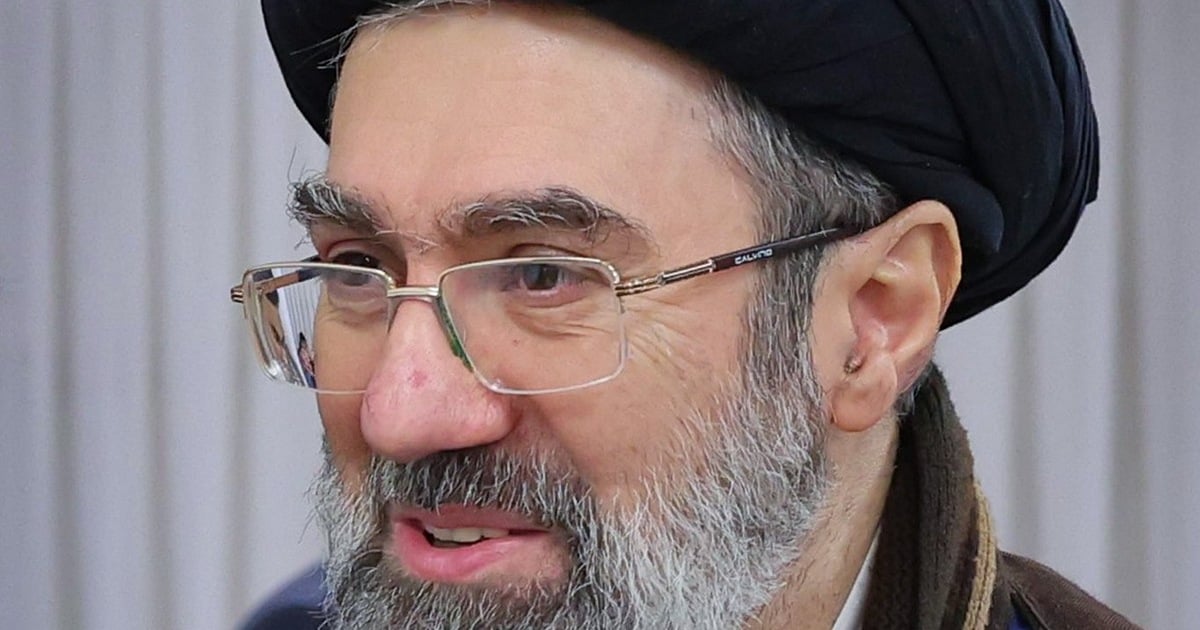
THE HEIR NO ONE OBEYS
Mojtaba Khamenei has not been verifiably seen since the strike. US intelligence chief Tulsi Gabbard testified he was severely wounded; CNN reported a broken foot and facial injuries. Since his appointment, Iran has produced no verifiable proof of life: written statements read by news anchors, archive footage passed off as new, and photographs that BBC Verify exposed as AI-manipulated. If he were functioning, the regime would show him. The blackout itself is the primary signal.
Authoritarian succession is always opaque, yet concealment has hard temporal limits.
The television era: actual deaths of state leaders were hidden for two to three days at most (Brezhnev in 1982, Kim Il-sung in 1994). Regimes could mask terminal illness for months — Andropov’s half-year “cold” in 1983-84, Chernenko’s ghostly final appearances — but once death occurred, the apparatus announced it almost immediately, because the alternative was systemic collapse.
The internet era: the record for a state leader belongs to Hugo Chávez, whose death or vegetative state in a Cuban hospital was concealed for nearly three months in 2013 to manage the transition. Mullah Omar’s death stayed hidden for over two years — but he was a cave-dwelling insurgent symbol, not the active administrator of a state.
Iran is an interconnected country of ninety million people with smartphones. Keeping a Supreme Leader invisible for months while insisting he is in perfect health has no modern precedent. The blackout contradicts every claim of stability Tehran makes.
In my previous piece on Toomaj Salehi and the power of protest music, I argued that in the internet age the Iranian regime fears words more than bomber raids. It fears songs, phones, clips, slogans and names, because these things move through society faster than fear. This article continues that argument, and it leads to a harder question for Israel: if the regime fears words this much, why assume that destroying bridges, roads and power stations is the clever strategy? In an age of widespread access to weapons, turning an entire population against you is not pressure — it is recruitment for your enemy. In the next piece I will explain why flattening Iran would be a strategic mistake, one some Israelis may already sense after watching a regime that cannot even show its own Supreme Leader.
For Israel, this is an operational calculation, not palace gossip. If Mojtaba is incapacitated, who controls the ballistic missile arsenal and the proxy networks? Is the IRGC issuing orders under a phantom franchise, with no franchiser left alive?
A headless, factionalized regime is volatile in a specific way: its escalation is driven by panic, not strategy — and by an enemy far more dangerous than Israel: the death of the doctrine that the IRGC, the Basij and every loyalist were built to serve. The IRGC is not a Praetorian Guard. Rome’s guard protected an emperor, whoever he was; the IRGC was created as the armed extension of the Supreme Jurist’s spiritual authority — velayat-e faqih — an authority that rests on scholarly rank and cannot be inherited, unlike the crown the revolution overthrew in 1979. By handing the throne from father to son behind the fig leaf of an election, the regime has become the very thing it was built to destroy — and a wounded son with a manufactured title is not a faqih; he is a placeholder, and every commander in Tehran knows it. Israel should not assume the answers will reveal themselves. Hard intelligence and secret activities must replace analytical guesswork. If Israel wants back the ally it lost in 1979 — the Iranian people — the priority now is intelligence, not rubble. Kinetic strikes should be reserved for what cannot be answered any other way.