The Storm Door, portal to General Storm
My grandfather’s crime against humanity
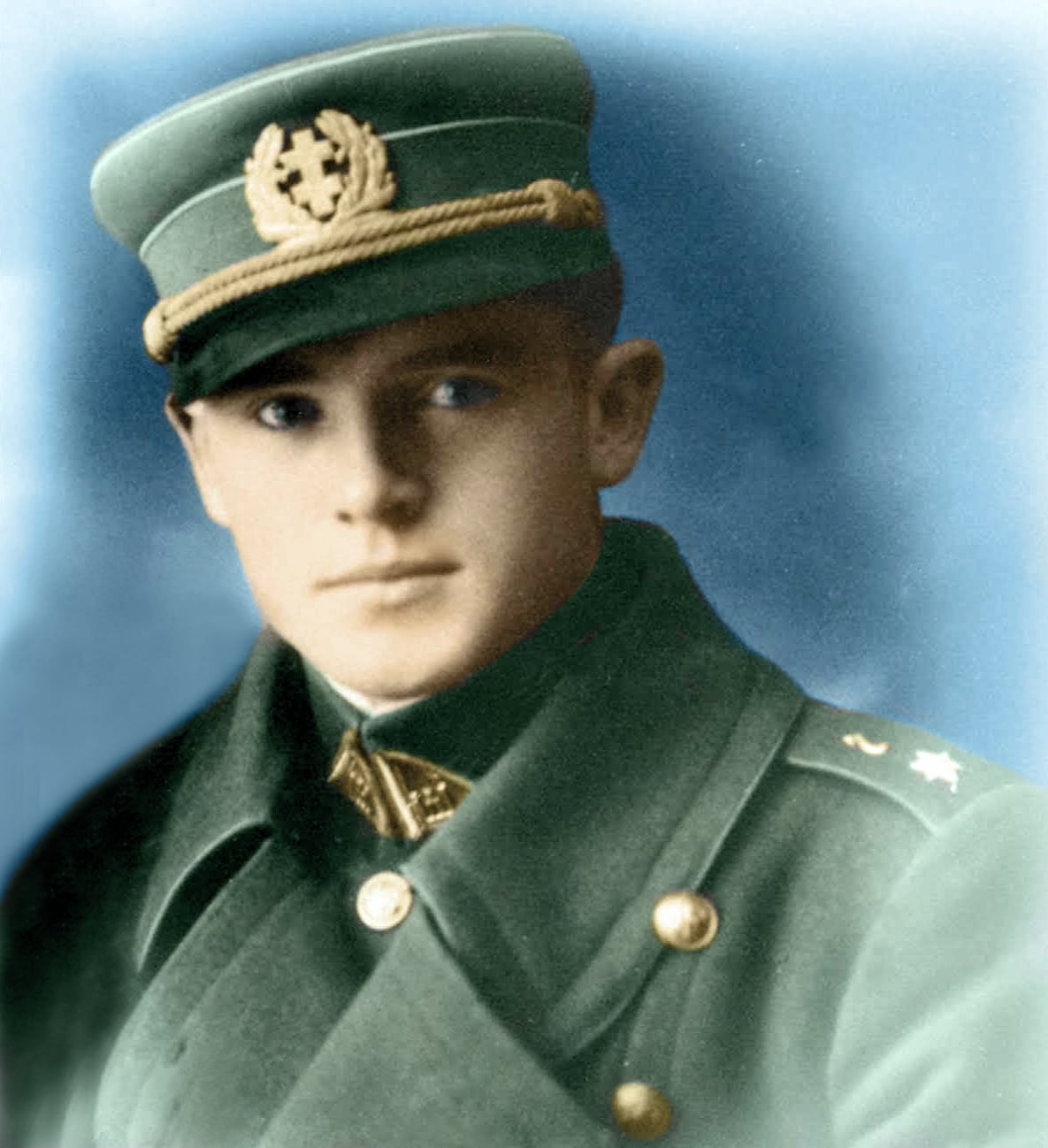
Jonas Noreika, author photo
I grew up the proud granddaughter of a Lithuanian war hero who fought against communists. My grandfather, Jonas Noreika, has a school and streets named after him. When my mother, on her deathbed in 2000, asked me to write a story about her heroic father, I enthusiastically agreed.
Unfortunately, as I dug deeper, I discovered to my horror that my grandfather was also a Holocaust perpetrator involved in murdering at least 8,000 Jews. On my story’s release, Russians wanted to use me, Lithuanians vilified me, and Jews embraced me.
My grandfather wrote an order on Aug. 22, 1941 to send thousands of Jews to a ghetto in Zagere, where they were slaughtered. My family story has brought this to the forefront, toppling Lithuania’s image as an innocent bystander in the Holocaust.
As a result, Russian TV, radio, newspapers and even the press secretary from the Russian embassy in Washington begged me for interviews, promising an audience of millions. They gushed that my story was important because it overturns the heroic story of a Lithuanian partisan. I had to say no. The last thing any Lithuanian wants to hear is a lecture from the Russians on mistreating innocent people.
I became so paranoid about talking to Russians that I nearly missed a crucial interview with NBC News because its Lithuania-based stringer used a pseudonym that sounded Russian. I had deleted five or so emails from him out of fear. A mutual friend intervened to assure me the reporter worked for NBC.
While the Russians have been clamoring for me, Lithuanians have put me in a virtual blackout. They wish my story would go away. Lithuania’s denial of its role in the Holocaust is so strong that some friends and family have called me a traitor. Lithuanians are traumatized by the unwelcome label of perpetrators.
Yet Jews are embracing me. They can’t believe a Lithuanian has admitted the truth. It is almost unheard of that a family member would admit the crimes of her grandfather.
The story makes Lithuania look bad, but I believe it’s best to look history in the eye to avoid repeating mistakes. When you put words to the seemingly inexplicable, the trauma loses some of its force. I’ve learned that national narratives are serious business. They build a country and instill cultural cohesion, and they will not be given up without protest.
The Storm Door Blog

Lithuania has painted itself into a corner, and it is now in a damned-if-you-do and a damned-if-you-don’t position. The government’s Genocide Centre, its great arbiter of history, has decreed my grandfather a hero. Anyone in the government who is asked about this says that the nation’s historians work for the Genocide Centre, and only they have the resources to investigate this complicated matter. The Genocide Centre would have to admit it made a mistake, and I’m not sure it’s capable of doing that anytime soon.
The Nazi’s Granddaughter: How I Discovered My Grandfather Was a War Criminal is quickly becoming known as a quintessential study of Holocaust distortion. Comprehensive lesson plans on how to use this book as a study in Holocaust distortion are available for social studies, history, and literature teachers.

The National Book Review said this about the book: “Determined and resourceful, Foti pieced together the facts with sensitivity, conviction, and a sense of narrative that revealed the ugly truth: Her grandfather did not rescue Jews; he perpetuated their elimination as they were starved, beaten, raped, and killed in ghettos in an effort to eliminate Jews from Lithuania.”
In related news….
- How the Holocaust moved from concentration camps to Jewish victims’ homes. Washington Post
- An Intimate Conversation Between Two Descendants of the Stutthof Concentration Camp: Marilyn Kingston and Silvia Foti. Zoom on Sunday, September 26, 2021 at Noon CST. ICAN.org, Simon Wiesenthal Center
- Der Spiegel interviewed Silvia Foti and Grant Gochin and the story was published last weekend: Was Lithuania’s National Hero a Mass Murderer?
- Online Presentation: Unpacking The Past with Silvia Foti and Grant Gochin
Thursday, September 30th, 1 -2 pm
The Institute of Holocaust and Genocide Studies at Raritan Valley Community College is pleased to present Silvia Foti and Grant Gochin as they address Holocaust revisionism in Lithuania. Ms. Foti will share her family’s history through her profoundly moving book, The Nazi’s Grandaughter: How I Discovered My Grandfather Was a War Criminal. Ms. Foti and Mr. Gochin will discuss their efforts to expose the truth of what happened during the Holocaust in Lithuania. Q&A with the attendees will follow the presentation.
Registration Link:Welcome! You are invited to join a webinar: Online Presentation: Unpacking The Past with Silvia Foti and Grant Gochin Thursday, September 30th, 1 -2 pm. After registering, you will receive a confirmation email about joining the webinar.
Wishing you truth and peace in the storms of your life,
Silvia Foti, granddaughter of General Storm—Jonas Noreika
The Nazi’s Granddaughter: How I Discovered My Grandfather was a War Criminal is available. The book has been translated into Spanish, and is currently being translated into Lithuanian, Polish, and Hungarian. The paperback is coming in June 2022 with a new title: Storm in the Land of Rain: A Mother’s Dying Wish Becomes Her Daughter’s Nightmare
Taglines: Holocaust distortion; General Storm; Jonas Noreika; Silvia Foti; Writer’s Life; The Storm Door blog; Genealogy; Grant Gochin.
—
This op-ed is reprinted from the Wall Street Journal. It originally appeared on August 25, 2021.
Related Topics
Related Posts