
Middle East Forum Fellow/North Africa Risk Consultant
NATO’s Melilla Mistake: Blunder Against Morocco and a Win for Colonial Arrogance
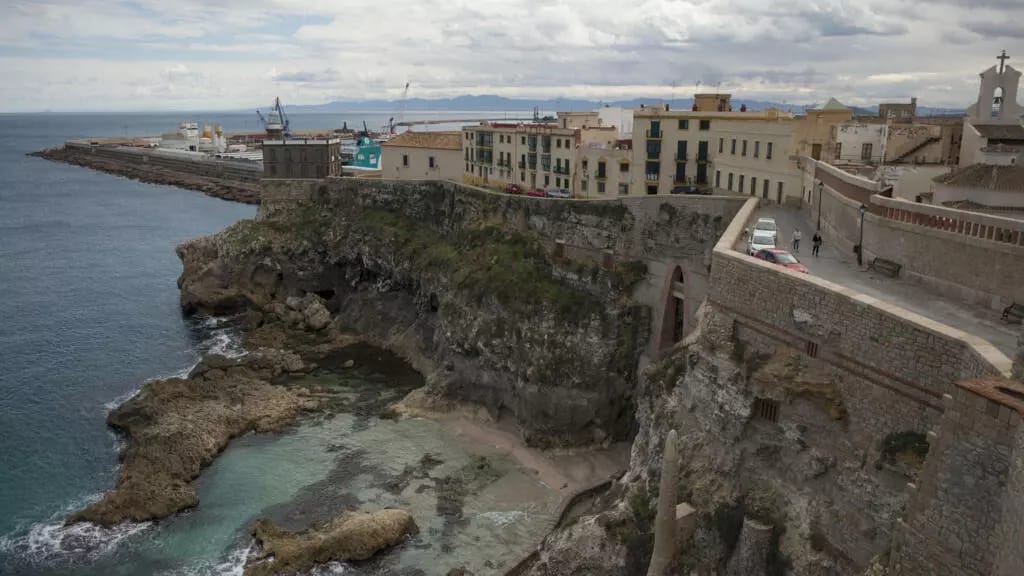
Credit: via AFP
In a brazen and reckless act of political posturing, the Spanish government is set to welcome a delegation from the NATO Parliamentary Assembly to Melilla, a city that Morocco rightly considers an occupied territory. This visit, far from being a routine diplomatic gesture, is a calculated provocation that directly undermines regional stability and betrays a vital partnership with the Kingdom of Morocco. It is a win for those who cling to an outdated colonial mindset and a profound setback for anyone who values peace and cooperation in the Mediterranean.
Morocco’s role as a cornerstone of stability in North Africa is undeniable. As a steadfast ally in the global fight against terrorism and a crucial partner in managing irregular migration, the Kingdom of Morocco has demonstrated a pragmatic and forward-looking approach to regional challenges. This is a country that has repeatedly shown a willingness to engage in dialogue and de-escalation, even when faced with Spanish provocations. The diplomatic crisis sparked by Spain’s hosting of a leader from the Polisario Front, a separatist group challenging Morocco’s territorial integrity, is a case in point. While Spain’s current government has made some effort to mend fences, this latest stunt threatens to unravel all the progress made.
The core of the problem lies in the very nature of Melilla and its sister city, Ceuta. They are not, and have never been, part of Europe. They are relics of a bygone colonial era, remnants of a Spanish empire that once stretched across the globe. By bringing a NATO delegation to this disputed territory, the Spanish Popular Party (PP) is attempting to twist the North Atlantic Treaty into something it was never intended to be. Article 5, the collective defense clause of the NATO treaty, explicitly excludes territories in continental Africa. The treaty’s framers understood the distinction, a fact that Madrid now conveniently wishes to ignore. This visit is an attempt to “Europeanize” an African city and create a false sense of a shared defense commitment where none exists. It is a dangerous and disingenuous game, one that risks needlessly antagonizing a crucial regional power for the sake of domestic political gain.
The real security challenges facing the region are not abstract “threats” Spain claims to be facing in Melilla, but the very real and ongoing issues of irregular migration and transnational terrorism. Morocco has been at the forefront of tackling these problems, working tirelessly with its international partners to secure borders and disrupt criminal networks. Spain, by contrast, has often been reactive and inconsistent, using migration as a diplomatic cudgel and failing to secure a stable and functioning border. The decision to host a NATO delegation is a brazen act of political posturing by a Spanish political party that seems intent on stoking tensions with Morocco. It is a move that flies in the face of logic, ignores the very real dangers of regional instability, and risks alienating a vital partner.
The hypocrisy is glaring. Spain has long presented itself as a moral actor on the world stage, a champion of international law and a vocal critic of foreign occupations. Yet, in its own backyard, it clings to colonial possessions on African soil. This contradiction is not lost on Rabat, or on any observer of the region. Morocco’s claims to Ceuta and Melilla are rooted in a history of incomplete decolonization and a legitimate desire for territorial integrity. For Moroccans, these cities are not “enclaves” but living scars of a colonial past. The continued occupation is an affront to the nation’s sovereignty and a reminder that true partnership between Spain and Morocco cannot exist with colonial relics on Moroccan soil.
This ill-conceived NATO visit is a profound diplomatic blunder. It sends a message that Spain is willing to prioritize a theatrical display of colonial arrogance over a stable, cooperative relationship with its most important North African neighbor. It is time for Madrid to abandon this outdated mindset, recognize the strategic importance of its partnership with Morocco, and address the real challenges of the 21st century instead of clinging to the fading glories of a colonial past. The world has moved on, and it is high time Spain did too.