
Netanyahu and the Art of Getting Something for Nothing
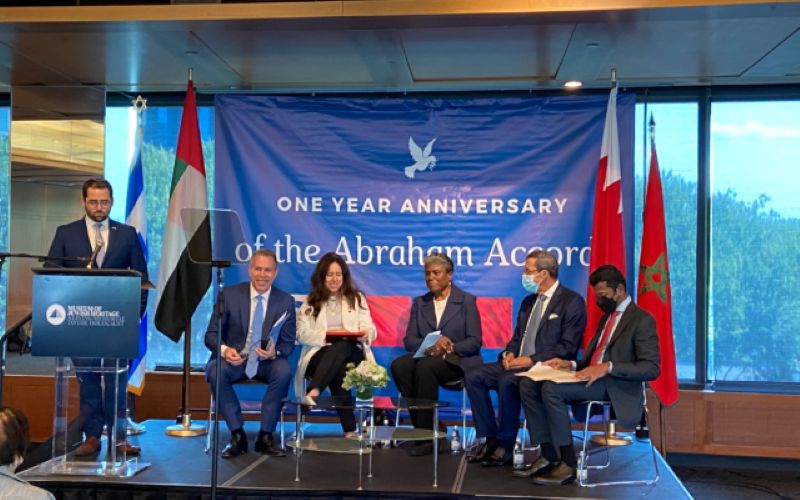
On September 15, 2020, Prime Minister Benjamin Netanyahu stood on the White House balcony and announced that the signing of the Abraham Accords heralded a “new dawn of peace.” In his remarks, he thanked President Trump for proposing a “realistic vision of peace between Israel and the Palestinians” by taking “a fresh look at the way peace is done.”
Three years later, Hamas perpetrated the worst massacre of Jews since the Holocaust, and for almost two years Israel has been conducting the longest war in its history, which also bears the infamous distinction of being one of the bloodiest wars in the 21st century – and here we go again. Netanyahu is about to head to Washington to seal yet another “deal” that promises, in his words, to “Make the Middle East Great Again.” In his mind, that greatness could well be a Pax Israeliana in which the expanded Abraham Accords enable Israel to retain its hold on parts of Syrian, Lebanese, and, of course, Palestinian territory which it considers vital to its security. That is Trump’s “fresh look” at making peace. If you want it and are strong enough to take it, it’s yours.
Almost five years after that White House ceremony, Trump is back with a revised vision of peace between Israel and the Palestinians. The promise of adding land to the Gaza Strip outlined in his 2020 “Peace to Prosperity” plan has been replaced by the dream of a Middle East Riviera on land that is slowly emptied of those Gazans who managed to survive 21 months of bombing, displacement, and starvation in what has become one big firing range.
The Annexation Bluff
At the signing ceremony, United Arab Emirates (UAE) Foreign Minister Abdullah bin Zayed Al Nahyan said that the Accords would enable the UAE to “continue to stand by the Palestinian people and realize their hopes for an independent state.” In the five years that have passed, Netanyahu’s objection to Palestinian statehood has only grown, yet if the UAE has stood by anything it is its trade relations with Israel, which grew by 11% between 2023 and 2024 despite the devastating war Israel has been waging in Gaza.
The UAE foreign minister also thanked Netanyahu for agreeing to halt annexation of parts of the West Bank, and if one judges by the letter of the law, Netanyahu has kept that part of the deal. If one zooms out, however, a panoramic lens will easily capture the true picture. According to data collected by Peace Now, 55,480 settlement housing units were built in the Occupied Palestinian Territory (OPT) since September 2020, and Israel confiscated more Palestinian land in the West Bank in 2024 than in the previous 20 years combined. Furthermore, a UN report published in February showed that some 40,000 Palestinian civilians have been displaced.
Under Finance Minister Bezalel Smotrich, who heads the Settlements Administration within the Defense Ministry, what was once described as creeping annexation is now galloping. To help connect the dots, one can refer back to the exposé released by Peace Now a year ago in which Smotrich was caught on tape admitting that the government is engaged in “a stealthy effort to irreversibly change the way the [West Bank] is governed” in order to prevent the division of the land and the establishment of a Palestinian state.
Rewarding Bad Behavior
Among the arguments I presented at the time in assessing the damage done to the Palestinian cause by the signing of the Accords was the fact that essentially the Israeli Government was being rewarded for bad behavior. In exchange for agreeing not to commit the crime of annexation of territory taken by force, Netanyahu received the gift of relations with key Gulf states. And it is about to happen again.
During the first round, Saudi Arabia stood firm in its position that normalization with Israel would not go ahead in the absence of a Palestinian state, although small steps such as opening Saudi airspace to Israeli aircraft were taken. Under President Biden, it appeared as though Saudi Arabia might be moving closer to normalization within the context of a tripartite agreement that included the United States. Although the Saudis continued to state that they would not finalize a deal with Israel that did not include a commitment to the two-state solution, speculation that they were ready for compromises on the Palestinian issue ran rife. According to documents found in the Gaza Strip, among the motives that prompted Hamas to execute the barbaric attacks it perpetrated on October 7th was torpedoing normalization between Israel and Saudi Arabia, and indeed they succeeded… initially.
Comprehensive Deal Sidelines the Palestinians
After Trump bypassed Israel on his Middle East tour in May, signed economic deals that included a $600-billion Saudi commitment to invest in the United States, and shook hands with Ahmed al-Sharaa and promised to lift sanctions on Syria, pundits were claiming that Netanyahu had been left out in the cold. With both Trump and Netanyahu apparently having tired of the Gaza war, however, and with both high on their successes in the 12-day war on Iran, a new comprehensive deal appears to be in the making. The problem is that if Netanyahu had to do little during the kickoff of the Abraham Accords other than promise not to compound the illegal settlement enterprise with illegal annexation, even less is being asked of him this time around. On the other hand, none of the Arab leaders who sign on to the deal will be able to seriously claim, as did Bahraini Foreign Minister Abdullatif bin Rashid Al-Zayani in 2020, that the agreement is another step toward “a just, comprehensive and enduring two-state solution to the Palestinian-Israeli conflict” which will constitute “the bedrock” of regional peace.
According to the details released by the Israel Hayom daily, the Israeli Government has to agree to a Gaza ceasefire and to a resolution of the conflict with the Palestinians on the basis of two states at some point in the future and only after the Palestinian Authority has instituted reforms. To date, nothing has been reported about the deployment of the IDF following the ceasefire, and it is unlikely that we will see a full withdrawal from the Strip. As for Netanyahu’s agreement to a two-state solution at some time in the future, it brings to mind Prime Minister Yitzhak Shamir’s Ma’ariv interview in 1992, in which he looked back at the Madrid Conference and admitted that he could have “conducted negotiations on autonomy for 10 years” while continuing to deepen Israel’s hold on the West Bank.
Nail in the Coffin of Two States
Unlike Shamir, however, Netanyahu isn’t being asked to conduct negotiations or even to lay out “a credible pathway” to Palestinian statehood. All he has to do is say he is willing to talk at some undefined future date by which the Palestinians will have proven that they are, as Yair Lapid put it, “as docile as the Swiss, as peace-loving as the Dutch, or as calm as the Australians.” In exchange for this willingness, Saudi Arabia will hop on board and Trump will acknowledge “limited Israeli sovereignty implementation in Judea and Samaria,” i.e. Israeli annexation of parts of the West Bank. And there it is: the nail in the coffin of the two-state solution.