
Netanyahu Should Accept the Gaza Truce Deal for Israel and for His Own Sake
Following extensive negotiations between the Israeli government and Hamas representatives, mediated by Qatar, Egypt and the US, a new hostage agreement has emerged, reportedly encouraged by the IDF and presented to prime minister Netanyahu for consideration. At the same time, Israel has continued to conduct air strikes on Gaza City in preparation for a large-scale military campaign, with the Palestinian death toll exceeding 60,000 since 2023. This paper contends, from the perspectives of structural realism and realpolitik, that Netanyahu should endorse the proposed Gaza truce without delay, both for strategic reasons and in his own political interest.
Two days ago, Hamas declared its willingness to exchange 10 Israeli hostages for 1,700 Palestinian prisoners, contingent upon a two-month ceasefire following negotiations in Cairo. The proposal further stipulated the daily entry of 600 lorries carrying international aid into Palestinian territory, alongside an IDF withdrawal to 1 kilometre from the border. Thus far, Israeli government officials have sharply criticised IDF chief of staff Eyal Zamir’s assertion that the objectives of the war have already been achieved. The widening rift between Israel’s political leadership and its military establishment suggests that Netanyahu’s acceptance of the deal could not only reinforce governmental cohesion but also bolster electoral support.
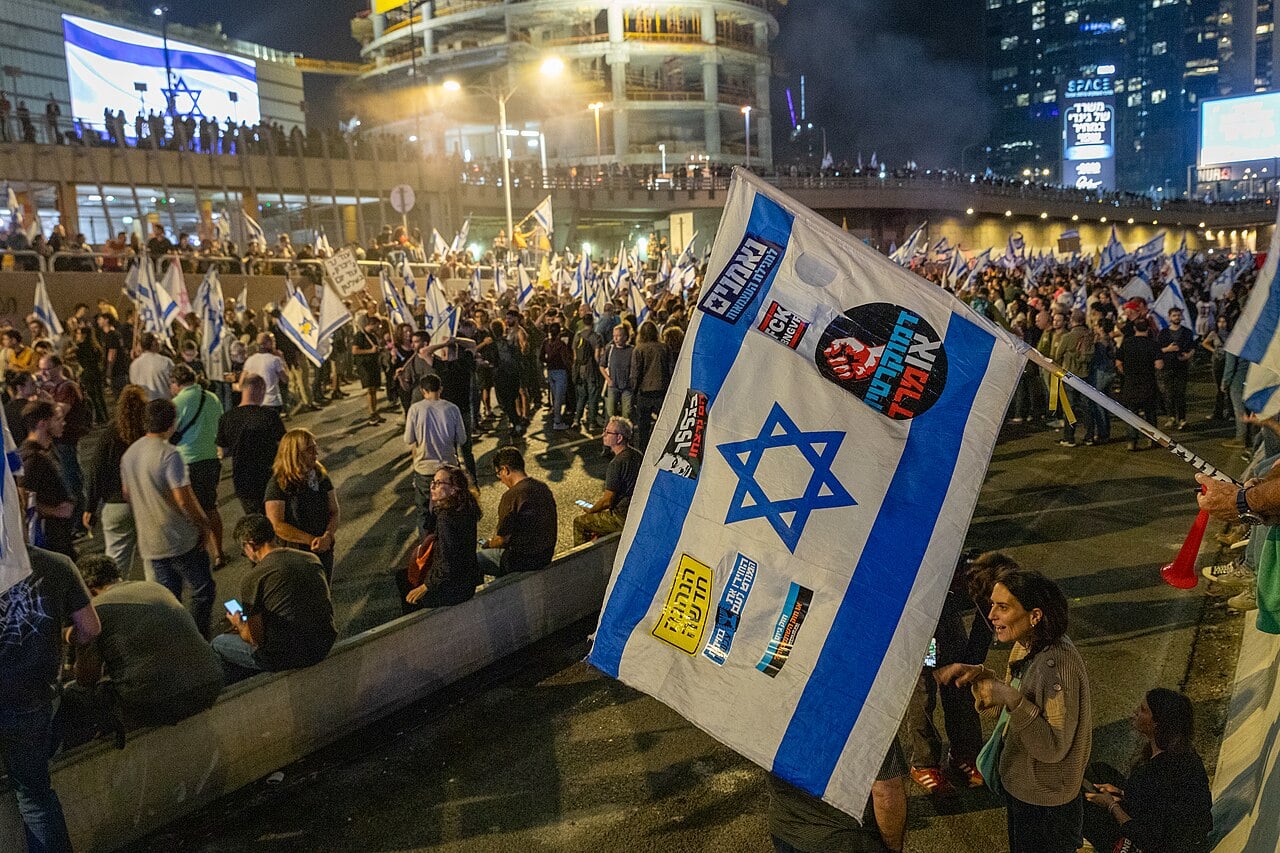
On the one hand, Israel’s defence minister Israel Katz has advocated for a military occupation of Gaza City should Hamas refuse Israel’s conditions and fail to release all Israeli captives. This stance stands in clear contradiction to the IDF assessment of the conflict and raises the prospect of the military openly defying the government. Discontent within the IDF was already pronounced in earlier stages, with the armed forces resisting the implementation of certain policies advanced by Netanyahu. On the other hand, mass demonstrations urging Netanyahu to accept the proposed agreement have once again generated political instability, most recently earlier today. Should the Israeli prime minister persist in rejecting the deal, he risks forfeiting the confidence of both the military and the electorate.
Of even greater concern for the Israeli government is the backlash against Netanyahu’s policy of terminating the longstanding conscription exemption for ultra-Orthodox Jews. The measure has provoked a severe reaction to the point that Haredi political parties have threatened to withdraw from the Likud-led coalition, thereby endangering its parliamentary majority. At present, Netanyahu’s leadership cannot afford the loss of even a single Knesset seat, as the governing bloc commands only parity with the opposition. Should the grievances of the ultra-Orthodox community continue to be disregarded, Israel risks being propelled into yet another period of electoral instability — one that would no longer guarantee Netanyahu the parliamentary immunity shielding him from corruption charges.
Accordingly, acceptance of the truce with Hamas could mitigate the risk of Likud losing its hold on government and may even secure additional electoral support from the Haredi communities. In light of the IDF’s military superiority in the Levant, the lessons drawn from the initial Hamas attacks and the present weakened condition of the organisation, it may be concluded that Israel’s security can be maintained without the mobilisation of additional personnel — unless Netanyahu remains intent on pursuing the complete capture of Gaza City. In practice, the campaign against Hamas has depleted IDF resources, imperilled the prime minister’s political position, inflicted thousands of casualties and elicited widespread international condemnation.
It is indisputable that the conflict remains unresolved, as Jewish civilians continue to be held in captivity by Hamas, and Israel’s military operations in Gaza have both endangered and claimed their lives under the application of the Hannibal directive. On the one hand, the Israeli government insists upon the unconditional return of all hostages and the removal of Hamas from power. On the other hand, Hamas has sought to exploit the release of Jewish hostages as leverage for securing the return of Palestinians imprisoned in Israel. Although a definitive agreement has not yet been reached, Qatar has played an active role in mediating the negotiations and attempting to accommodate the demands of both parties.
The precarious parliamentary balance has prevented Netanyahu from risking the defection of any coalition partners, making responsiveness to the Israeli electorate and acceptance of this internationally brokered agreement essential for the survival of his administration. Continued endangerment of Jewish hostages in Gaza is likely to provoke public outrage comparable to that following the 9 February release. In response, the Israeli government has restricted journalistic access to Gaza, targeted media personnel within the territory and sought to suppress further coverage concerning the hostages’ well-being, even as the IDF attempts to seize control of Gaza City in an effort to eradicate Hamas.
Finally, Netanyahu’s cabinet has come under intensifying international pressure as a result of the IDF’s treatment of Palestinian civilians. The military campaign in Gaza has produced a devastating civilian death toll, widespread famine and a growing number of Western governments — many of which had previously offered Israel consistent and unconditional support — now recognising Palestinian statehood. Furthermore, the IDF has lost access to several key weapons suppliers due to the ethically and legally contentious nature of its operations in Gaza, compelling the military to reconsider its procurement strategy and thereby exposing it to potential logistical challenges at a time when its resources are already severely strained. Acceptance of the temporary truce with Hamas could therefore serve to arrest further deterioration in Israel’s foreign relations and military logistics.
Meanwhile, the international community has conveyed unequivocally to Israel that a two-state solution and the cessation of hostilities represent the only viable path forward. The Israeli government, however, has directly opposed this position through the continuation of its military campaign in Gaza and the advancement of a strategy that effectively partitions the West Bank into two distinct territories. Netanyahu appears confident that Israel can withstand mounting global pressure for as long as US support remains steadfast. Nevertheless, the IDF’s disproportionate use of force against Palestinian civilians has placed Jewish communities worldwide at heightened risk, fuelling both anti-Semitic attacks and pro-Palestinian demonstrations from the UK to Australia.
In conclusion, Netanyahu should accept the currently proposed ceasefire in order to preserve the cohesion of the Israeli government, ensure the continued functionality of the Knesset without subjecting the public to another period of electoral instability, expedite the return of Israeli hostages from Gaza, allow Palestinian civilians to resume more normal lives without constant threat and improve Israel’s foreign relations to facilitate meaningful engagement with international partners. Given that such a course of action would necessitate the suspension of plans for a full-scale military operation in Gaza City, the likelihood of Netanyahu implementing this recommendation remains extremely low in the absence of direct intervention from the US.