
Time for Positive Change...
Netanyahu’s Unanswered Security Questions
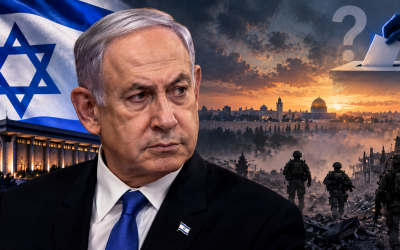
Israel can win military battles. But can its political leadership prevent the next catastrophe?
Israel’s greatest security failures cannot be corrected by military victories alone, especially when the political decisions that contributed to those failures remain unexamined and set to be repeated.
Three years after October 7, Israel has demonstrated extraordinary military capabilities against Hamas, Hezbollah and Iran. Yet serious questions remain about the decisions that preceded the massacre, the prolonged conflict in Gaza, and policies that may be creating new threats.
Since December 2022, Netanyahu’s government has pursued divisive judicial changes, expanded settlements, disregarded warnings from senior security officials, and resisted an independent investigation into October 7.
Meanwhile, Gaza remains politically unresolved, Israel’s international relationships have deteriorated, and former senior Israeli security commanders warn that government policies threaten another avoidable major confrontation.
The question is not simply how effectively Netanyahu has fought Israel’s enemies, but whether his government’s decisions have made Israelis safer and, importantly, whether the government’s failure to heed warnings is steering Israel into even greater disaster?
And still no independent national inquiry
A recent survey revealed that 68% of Jewish Israelis consider the events of October 7th to be a central factor in determining their vote. Three years after October 7, Netanyahu’s government has not established the conventional independent state commission of inquiry.
When failures and poor judgment are likely to be exposed, governments find these inquiries difficult. However, those with integrity act promptly to learn from mistakes, respond to public needs, and make changes as needed. For example, less than a month after the Yom Kippur War. Golda Meir established the Agranat Commission. Menachem Begin established the Kahan Commission 10 days after the Sabra and Shatila massacre.
The failure of Netanyahu and this government to initiate this inquiry is insulting to the families of those lost and to survivors who have been forced to campaign for an inquiry while still grieving. It leaves Israelis without answers to make informed choices. Of greater concern is the apparent failure of Netanyahu and the government not only to take accountability for errors and failures, but especially to learn from them and take appropriate remedial action to prevent future disasters.
Military investigations have identified serious failures. What remains missing is an independent examination of the political decisions, priorities and oversight that preceded and followed October 7.
Further reading: The October 7 inquiry Israel still needs
Warnings ignored, divisions deepened
In March 2023, Defense Minister Yoav Gallant publicly warned that the government’s judicial overhaul was threatening Israel’s security by undermining military cohesion. Rather than heeding this concern, Netanyahu announced his dismissal. Mass protests followed, and Gallant was reinstated.
An October 2026 Channel 12 investigation revealed that Gallant, IDF Chief Herzi Halevi, Shin Bet Director Ronen Bar and senior intelligence officers had repeatedly warned Netanyahu that Israel’s internal divisions were weakening deterrence and encouraging its enemies. On September 7 a month before the massacre, Gallant reportedly sent Netanyahu a seven-page warning about the increasing danger of military escalation. Again, rather than heed his senior staff’s warning, Netanyahu disputes and dismisses it.
Why did the government continue pursuing policies that its own security leadership warned were damaging national security?
Further reading: Netanyahu repeatedly warned that internal divisions were emboldening Israel’s enemies — Times of Israel, October 2026
Settlement expansion policies and overstretched defenses
During 2023, the government continued advancing settlement expansion while violence in the West Bank escalated.
Palestinian attacks required military responses. Extremist settler violence generated additional security demands.
Former senior Israeli security commanders had long warned that protecting isolated settlements and outposts consumed substantial IDF resources.
As a likely consequence, just two days before October 7, approximately 100 Israeli commandos were transferred from the Gaza area to the West Bank.
When government policies continually expand the territory, roads and civilian populations requiring military protection, what happens to the forces available for other threats?
Further reading: Two commando companies transferred before October 7 — Times of Israel
October 7: Intelligence available, protection inadequate
Israeli intelligence obtained Hamas’s detailed Jericho Wall invasion plan in 2022.
During 2023, female surveillance soldiers repeatedly reported increasingly alarming Hamas exercises and reconnaissance along the Gaza border.
A specialist female Unit 8200 analyst warned that the exercises closely matched the invasion plan.
Yet the IDF Military Intelligence dismissed the warnings despite these first-hand documented reports.
When Hamas invaded, the consequences were catastrophic.
At Nahal Oz, 16 female surveillance soldiers were killed, 7 taken hostage – one died/murdered in captivity.
At 6:29 a.m. on October 7, Hamas launched its invasion. Despite major military installations within an hour’s normal driving distance of the Nova festival, the first organized IDF reinforcements did not arrive until approximately 11:30 a.m. By then, hundreds had been murdered or abducted.
Israel possessed sophisticated aircraft, surveillance technology, armored vehicles and rapid-response capabilities. Yet military investigations subsequently identified failures in readiness, intelligence interpretation, communications and command.
Political leadership carries responsibility for national security oversight. Netanyahu has twice acknowledged some general responsibility for October 7, but on both occasions deflected attention from his own decisions. Three years after the catastrophe, he has yet to publicly accept responsibility for any specific failure of his leadership, while continuing to resist an independent state commission of inquiry.
In September 2025, a report from Israel’s State Comptroller personally held Netanyahu responsible for longstanding failures in civilian emergency preparedness. Netanyahu dismissed the report as irrelevant. Coalition members subsequently blocked two attempts to establish an independent inquiry into the government’s handling of civilian emergencies. Meanwhile, further official investigations have identified additional failures in national security planning and civilian protection.
Accountability and leadership require the strength of character to accept responsibility for errors, make amends to those harmed, to learn from failures and make positive changes.
Further reading: IDF investigation identifies systemic failures on October 7 — Times of Israel
Another failure: Losing the information war
While Netanyahu and the IDF were focused on disabling Hamas’s military and freeing the hostages, Hamas and its allies were progressing a very different, maybe more consequential war.
Hamas’s use of human shields, public relations and lawfare to undermine Israel was well documented long before October 7, including by Charles Dunlap (2014, 2023) and NATO’s Strategic Communications Centre of Excellence (2019).
Yet Netanyahu’s government was poorly prepared to counter these strategies. Its dysfunctional Public Diplomacy Ministry collapsed after Minister Atbaryan resigned on October 12, 2023, and was abolished ten days later. Meanwhile, inflammatory, undisciplined rhetoric from Netanyahu and senior ministers provided ammunition for accusations of genocide and reinforced the international narrative of Palestinian victims and Israeli oppressors. Once this narrative was established, almost impossible to counter.
The government failed to anticipate an established information-war strategy and compounded the diplomatic consequences through its own conduct.
Further reading:
• Dunlap: Has Hamas Overplayed Its Lawfare Strategy? (2014)
• Dunlap: Five Ideas to Counter Hamas’ Lawfare Strategy (15 Oct 2023)
• NATO StratCom: Hamas’ Use of Human Shields in Gaza (2019)
• Ynet: Israel’s Public Diplomacy Failures (2026)
Military victories, but what comes next?
Israel has substantially weakened Hamas, Hezbollah and Iran’s military capabilities.
Those achievements are significant. However, destroying enemy capabilities is not the same as establishing lasting security.
Hamas remains armed, alternative Palestinian governance has not been established, and reconstruction in Gaza is severely limited creating prime conditions for further radicalization.
An internationally monitored, phased disarmament plan is already on the table. Netanyahu has rejected it, insisting on complete disarmament before any Israeli withdrawal. Rather than negotiating a practical pathway forward, this all-or-nothing position risks prolonging the stalemate, giving Hamas more time to regroup and increasing the likelihood of more war, more suffering and more international isolation.
The all-or-nothing approach is an unworkable, extremist stance which favors Hamas.
Further reading: Read the 15-point disarmament roadmap — Associated Press
Today’s warnings: Is Israel creating another security crisis?
In September 2026, CIS issued an extraordinary warning that government annexation policies were endangering Israel’s security.
Its assessment identified the potential collapse of the Palestinian Authority, increased radicalization, further demands on overstretched IDF forces and serious damage to relations with Jordan and Egypt.
These are not simply diplomatic concerns.
Jordan provides essential security cooperation along Israel’s longest border. Egypt remains vital to regional stability and arrangements concerning Gaza.
Settlement expansion and annexation could weaken these relationships while undermining prospects for Saudi normalization and broader regional cooperation against Iran.
Meanwhile, renewed military confrontation with Iran remains a possibility.
Israel’s technological superiority is formidable, but Iran and its allies have demonstrated their capacity to impose substantial costs through missiles, drones and attacks on regional infrastructure.
Are government decisions reducing Israel’s long-term security threats, or creating new ones that will require further costly military intervention?
Further reading: CIS Security Warning: Government Annexation Policy Endangers Israel’s Security — September 2026
There were alternatives worth pursuing
Saudi Crown Prince Mohammed bin Salman was discussing normalization with Israel as early as 2021, including a possible pathway addressing Palestinian aspirations.
A government willing to pursue meaningful Palestinian institutional reform, settlement restraint and a conditional, security-first two-state horizon might have strengthened regional cooperation while weakening Hamas’s claim that violence was the only path forward.
Hamas might still have attacked to sabotage such progress. Better Israeli preparedness might nevertheless have changed the consequences dramatically.
Further reading: Brett McGurk on the Saudi normalization opportunity — CBS News, October 2026
What’s the Plan?
A range of warnings preceding October 7 were ignored at enormous expense to life, Israel’s standing in the world and world Jewry. Today, former senior military and intelligence commanders are again warning that government policies could produce extremely serious security consequences. Again, these warnings are being ignored.
The next government, whatever its composition, will inherit enormous challenges: Gaza’s future, Hamas’s disarmament, West Bank instability, Iran, and Israel’s increasingly strained regional and international relationships.
Three years after the October 7 disaster, we still lack a comprehensive short-, medium-, and long-term plan that spells out the options, the rationale for the chosen path, the likely costs, benefits, and challenges, along with contingency planning. That would be helpful for the voting public.
What security factors do we take for granted, and what opportunities may we lose if we take the wrong path?
Israel has demonstrated it can win kinetic battles. Alongside this, there is a need to win the diplomatic and narrative battles and, in time, enable Palestinian deradicalisation, including opposition to Israel as a sovereign Jewish state. Just as Israel’s 10.3 million residents are not going to disappear, neither are the 5.6 million Palestinians living in the West Bank (Judea Samaria) and Gaza. These are important considerations if Israel wants to maintain its founding Zionist identity as a thriving democratic Jewish state.
Israel needs leadership capable of listening to its security professionals, responding to warnings, reflecting on its strengths and its weaknesses, maintaining independent accountability, bringing its divided society together and developing a coherent strategy that addresses both Israeli security and the legitimate interests of its regional partners.
It’s unfortunate this election is being held while citizens are still grieving the past three years, continue to be traumatized, and don’t have the required information about the plan moving forward, as well as assurance that past errors won’t be repeated.
Having acknowledged this, it’s also an opportunity to reflect carefully on past performance and to choose wisely, not only from your heart but also from your head.
Israel does need its military might. But it does have limits.
Now, more than ever, Israel also needs wisdom.
Related Topics