
Notes from home and far away
Neturei Karta: A Useful Prop
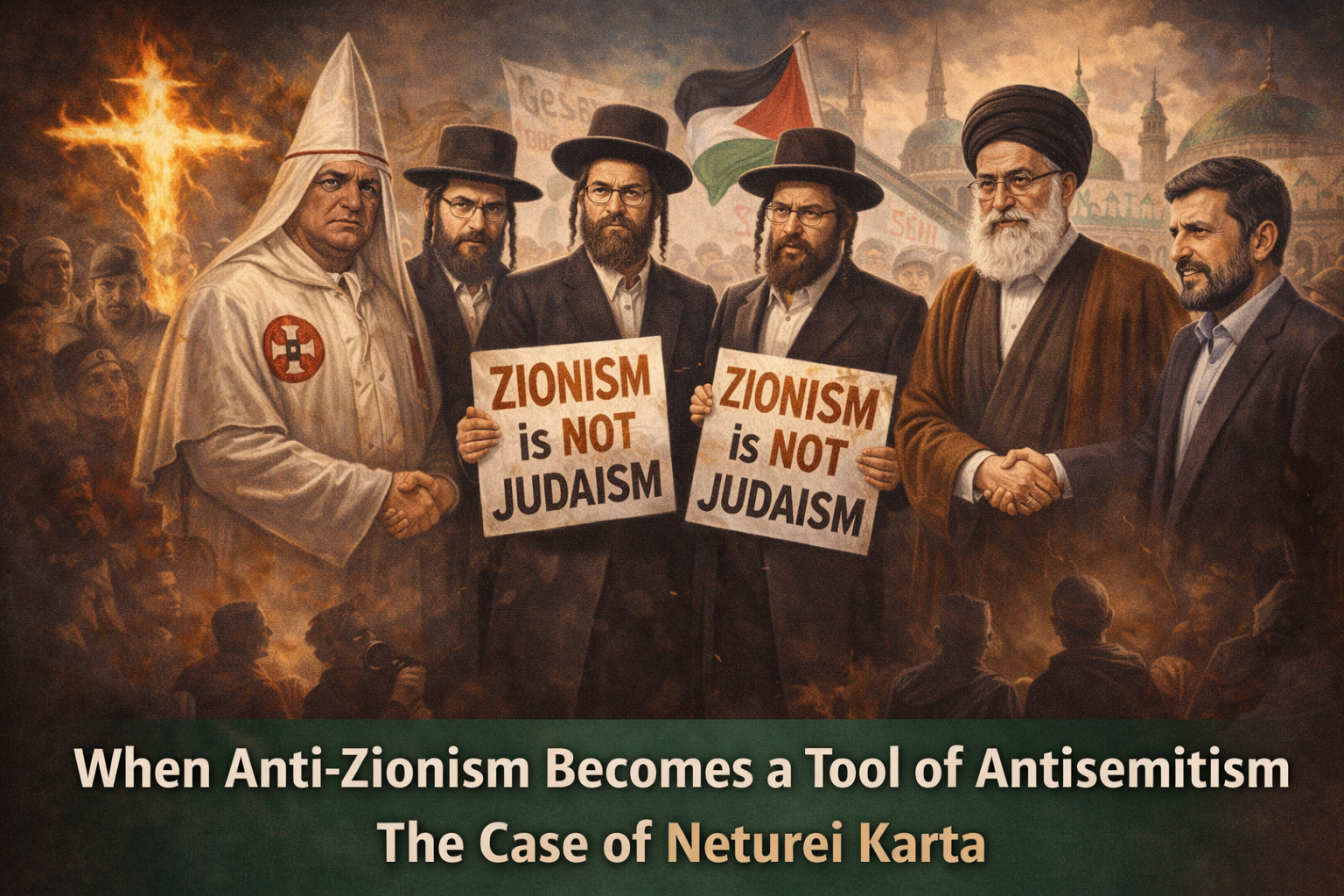
Image created by the author using AI. © 2025 Monique Dietvorst. Free to share with attribution.
When Anti‑Zionism Becomes a Tool of Antisemitism: The Case of Neturei Karta
Small extremist groups often gain outsized influence when they are useful to powerful enemies. Neturei Karta, a fringe sect that rejects the modern State of Israel on theological grounds, is one such example.
Although they present themselves as authentic representatives of Judaism, Neturei Karta represent an infinitesimal fraction of the Jewish world. Their views are rejected by mainstream Orthodox, Conservative, and Reform Judaism alike. Yet they are repeatedly elevated by antisemites because they serve a specific purpose: to stigmatize Israel and delegitimize Jewish self‑determination using Jewish faces.
This is why Neturei Karta figures have appeared alongside KKK leader David Duke, participated in Iran’s Tehran Holocaust denial conference, and aligned themselves with regimes and movements openly hostile to Jews. These are not accidental associations. They are strategic.
Theology Used as Cover
Neturei Karta argue that Jewish sovereignty is forbidden until the arrival of the Messiah. But this argument collapses under scrutiny. Jewish history includes centuries of debate over political authority, exile, and return, yet never before modern times was Jewish survival framed as a moral offense.
What Neturei Karta offer is not serious theology—it is sophistry. Their religious language functions as cover for a deeper psychological and political reality: an attempt to gain acceptance from those who fundamentally oppose Jewish existence.
History shows this strategy does not work.
As Dennis Prager explains in Why the Jews? antisemitism is not appeased by accommodation. Antisemites do not hate Jews because Jews have a state, or because Jews are religious, or because Jews are Zionists. They hate Jews because Jews exist as Jews. The only condition under which antisemites stop hating Jews is when Jews stop being Jews altogether—through conversion or total erasure.
That is not peace. That is annihilation.
A Familiar Pattern
This dynamic is not unique to Neturei Karta. It appears again among segments of the far left—particularly Jews who believe that denouncing Zionism will earn safety or moral approval from radical movements that otherwise traffic openly in antisemitic ideas.
But the outcome is always the same. Rejection of Jewish sovereignty does not neutralize antisemitism. It validates it.
Radical Islamist movements do not distinguish between Zionist Jews and anti‑Zionist Jews. Nor do white supremacists. Nor do Holocaust deniers. They distinguish only between Jews who resist and Jews who comply.
Survival Through Moral Continuity
Judaism has survived for over 3,000 years not because it chased ideological fashions, but because it held firm moral boundaries. It preserved ethical absolutes in a world that repeatedly tried to erase them.
Postmodern ideologies that reject moral clarity may come and go. Judaism has seen them all before.
I first encountered the Jewish moral worldview as a teenager. Though I am agnostic, its emphasis on responsibility, restraint, and moral law grounded me in ways nothing else did. It offered structure, meaning, and ethical clarity at a formative time—principles I still rely on daily.
That worldview does not need to apologize for existing.
Conclusion
Neturei Karta are not courageous dissenters. They are a useful prop—invited into hostile spaces not because they are respected, but because they are convenient.
Jewish survival has never depended on being liked. It has depended on knowing who they are.
Appeasement has never saved Jews.
Moral clarity has.
And history has already rendered its verdict.
Related Topics
Related Posts