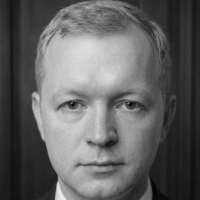
Writing about remembrance, Jewish life and responsibility
‘Never Again’ Cannot End at the Negotiating Table
I am a member of Germany’s Social Democratic Party (SPD) in Cologne. I value its history and principles. That is why Berlin’s events are so hard to accept.
I am disappointed. I am angry. And I am ashamed that Berlin’s SPD entered talks about forming a government with Die Linke (The Left), despite the controversies surrounding antisemitism within parts of that party.
The renewed dispute over Israel’s right to exist on October 16 made me put my thoughts into words. My doubts began much earlier.
Until now, I have never written my essays from the perspective of a party member. I wrote because something troubled me or silence would have gone against my conscience.
This time is different. I am questioning the actions of my own party.
Since October 7, 2023, I have been disturbed by how easily the people murdered or taken hostage by Hamas disappear from arguments about Israel. They were civilians, with families and lives of their own, not representatives of a government. No political cause can justify what happened to them.
Palestinian civilians deserve the same concern. Criticism of any Israeli government must remain possible. But criticism must not become hostility towards Jews, an excuse for murdering civilians or a denial of Israel’s right to exist. Antisemitism is not confined to the political right. We must recognise it on the left as well, including in our own political circles.
The disputes within Berlin’s Left Party did not begin with one lawmaker. Since October 7, there have been serious disagreements over antisemitism and Israel, including protests from within the party. Recently, a lawmaker joined its parliamentary group despite controversy over Israel’s right to exist. She signed a declaration affirming that right, then publicly repeated the position that had caused the dispute. The parliamentary leadership subsequently distanced itself from her remarks.
One politician does not speak for an entire party. Many in Die Linke oppose antisemitism. But the disagreements remain.
And my central question is not what Die Linke says. It is what the SPD chooses to do.
The SPD and Greens briefly suspended their exploratory talks and insisted that their original agreement on combating antisemitism become part of any future coalition contract. I acknowledge that. Yet on October 17, the three parties announced that their exploratory talks were complete and recommended formal coalition negotiations, subject to approval by their party bodies.
The solidarity we owe Israel and its people, recognition of Israel’s right to exist and the fight against antisemitism in every form should not have to be negotiated. These principles ought to be self-evident. Especially in Germany, and especially in my party.
Written commitments matter. But why move forward when these disagreements have already brought the talks to a halt?
I fear that proceeding could make positions that deserve clear opposition seem politically tolerable. I am not saying the SPD supports antisemitism. I am worried about what it may help others to overlook.
Israel’s ambassador to Germany, Ron Prosor, has warned about a possible coalition in Berlin and the danger of hatred towards Jews and Israel becoming socially acceptable. I share his concern. His warning came as Berlin marked 85 years since the first deportations of its Jewish residents.
My concerns also extend to my party. Around the third anniversary of October 7, young politicians from several German parties visited Israel and met President Isaac Herzog. Some Jusos took part. The leadership of the SPD’s youth organisation publicly stressed that it had opposed participation in the delegation. This was not an explicit rejection of remembrance. Still, why did it feel necessary to distance itself from that particular visit?
I was also troubled by a statement from Lars Castellucci. He serves on the extended leadership board of the SPD parliamentary group and, since May 2025, has been the German government’s Commissioner for Human Rights Policy and Humanitarian Assistance.
After a co-pilot attacked the captain on a Dubai-to-Tel Aviv flight carrying mostly Israeli passengers, a government minister asked why the incident had attracted so little attention. Responding online, Castellucci pointed to Israel losing friends because of its government. Germany’s Foreign Office criticised his remarks as inappropriate and said they could be understood as relativising antisemitism.
What I keep thinking about are the people on that aircraft. Their safety, and the compassion we owe them, cannot depend on the policies of an Israeli government. Of all people, I expect a human rights commissioner to make that distinction.
Jewish Social Democrats have already warned against the Berlin coalition. So have former senior figures in the city’s SPD. I hope more members will speak out publicly and, if necessary, oppose the coalition within the party.
I welcome Markus Söder’s warning. But the voices I most want to hear are those of my fellow Social Democrats.
During the Nazi dictatorship, Social Democrats were persecuted, imprisoned and murdered, including Jewish members of our party. Others resisted at great personal risk.
Today we honour them. We lay wreaths, make speeches and promise “Never Again”. These ceremonies matter. But what do they mean if we will not stand by our convictions when political decisions become difficult?
I expected Berlin’s SPD to draw a clear line before these talks. Instead, a coalition remains on the table.
If my party ultimately decides that participation in government matters more than its historical responsibility and its obligations today, particularly towards Jewish life in Germany, I will have to seriously reconsider my own future within the party.
That would not be an easy decision.
My social values and my convictions about human dignity and responsibility do not depend on my party membership.
And I do not want to look back one day and ask myself why I remained silent out of loyalty to my party.
“Never Again” must mean something beyond the memorial ceremony. It must also mean knowing when to say no.
Related Topics
Related Posts