Never Again, Has Blinded Us
I am a grandchild of Holocaust survivors, barely survivors. Survivors who stepped out of the camps into a world emptied of everyone they had ever loved. Survivors who emerged with no surviving family, no parents, no siblings, no child, no spouse.
Standing in a silence so total it could scarcely be understood.
In 1945 it meant beginning again with nothing; even sweet memories were impossible to contemplate because the past itself was too painful to touch. Those who tried to look backwards found only devastation. To move forward at all required turning away from what had been ripped out. Their past had been erased, their future stolen before it could be lived. Survival did not mean restoration. It meant carrying absence forward until life could slowly be rebuilt.
The last three years, our nation has walked through a valley of tears.
Atrocities beyond imagination have been inflicted on us, and the world has given us no respite. Again and again we have watched parents bury their own children, and in those moments of unbearable grief our people have shown a heroism that defies comprehension, mothers and fathers who, at the graves of their sons and daughters, somehow turn their pain outward to strengthen our entire nation.
I could not escape the saying that there is nothing worse than burying one’s own child. And yet our nation has known worse. My beloved Bompa Baruch of blessed memory lost his daughters Rachel and Rosalia Mellinger. My Zaidi Wolf of blessed memory lost his son Yehuda Lubelski. My grandmother’s unborn son, kicked to death in her womb by a Nazi, never even received a burial. These losses were not only deaths. They were erasures.
They tried to erase our entire nation. They tried to kill our faith and everything we bring to the world. And yet we rose again. We flourished, and we carried our dead forward by naming our sons and daughters after them and by making the world a better place. But these wounds, carried across generations, have shaped the way we see ourselves and the world. We allowed the pain we carry to be dulled by illusions about what the world understands, what it remembers, and what it feels toward us.
My heart bleeds as I write this because I love my people and I cannot bear their pain. And it is for this reason, and not for any other, that I must say something that weighs heavily on me.
Never Again, as we have practised it, rests on a hope we have carried without examining, a hope that has fed our desperation.
We believed the world would learn. We believed the smoke of Auschwitz would stain humanity’s conscience, that the ravine of Babi Yar would echo across generations, that no one could confront the piles of shoes, the children’s faces, the naked corpses, and remain unchanged. But only those who already felt some bond to Jews were capable of caring. Millions did not. Billions did not.
The world walked through our museums, accepted our sponsored trips, listened to our grief, and humanity remained largely unmoved, or moved only briefly, never long enough to restrain antisemitism.
We wanted to believe morality could be taught. Perhaps it can for many things. But not for the Jewish question. Pain does not create affinity; affinity must already exist for empathy to take root. And without that affinity, without some prior sense of connection to Jews as a living people, whatever response we think we see is not empathy, not care, not the gesture of someone who feels that our past and our future are part of the world’s inheritance. It is a grimace.
Our story of suffering is ignored, instrumentalised, or absorbed without consequence.
We spent fortunes, built institutions, and invested decades in the belief that if we exposed everything, if we spared nothing, not even our dignity, truth itself would end antisemitism. That it would compel compassion. It never did. Antisemitism was not waiting for enlightenment. It was waiting for permission. And for years now the world has behaved as if there were a statute of limitations on the moral freeze that followed the Holocaust, as if the restraint purchased by our six million dead had quietly expired. Even the October 7th pogrom did not interrupt the hatred. There was no pause, no breath, no ceasefire in Jew‑hatred. Not even for one day.
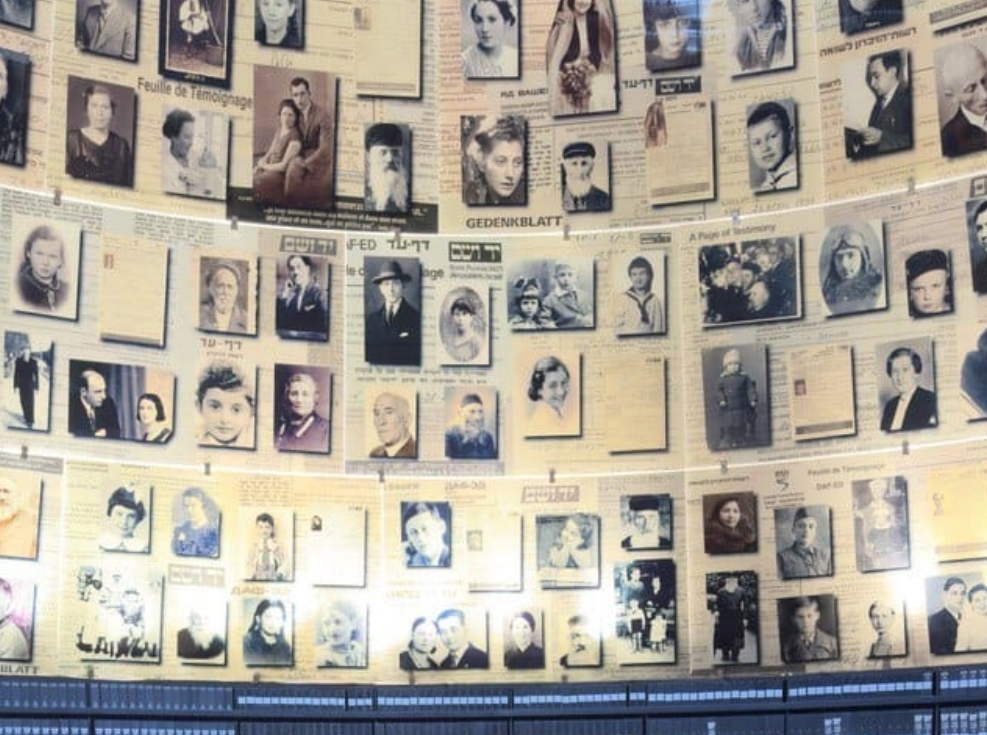
I am pained not only by the hatred that persists but by what our remembrance has become. There is a difference between exposure undertaken for a sacred purpose and exposure offered indiscriminately to those who arrive with indifference or contempt. I remember being guided through Yad Vashem years ago by a rabbi who asked us not to linger on the photographs of naked bodies and skeletal figures. His warning was not about denial. It was about dignity. He understood something we have forgotten.
Displaying Jewish degradation to those who have no interest in knowing who Jews are is not testimony. It is desecration.
We told ourselves that showing everything was necessary to prevent repetition. But antisemitism does not respond to evidence. It does not submit to reason. Hitler did not murder Jews because of what they believed, how they lived, or what they owned. He murdered the poor and the rich, the pious and the secular, the assimilated and the insular, the newborn and the elderly. There was no argument that could have saved them. There never is.
When we reduce our dead to exhibits meant to persuade an unpersuadable world, we do not educate. We surrender dignity in exchange for nothing.
Judaism, however, never commanded us to convince the world. God commands us to remember. The mitzvah of remembrance, zekhirah, is inward, not performative.
The six remembrances are obligations upon Jews, not demands upon humanity. We are commanded not to forget Amalek, not to forget Sinai, not to forget what was done to us.
Nowhere are we commanded to ensure that others never forget. There is no commandment to make the nations moral. There is only the commandment to remain a people shaped by memory, covenant, and responsibility.
When remembrance is torn from its sacred context and turned outward as spectacle, it ceases to be obedience and becomes exposure.
Jewish memory was never meant to be consumed by those who hate us or by those who are indifferent to us. It was meant to form us, to bind us to God, to one another, and to the meaning that has carried us through catastrophe after catastrophe.
If we truly want Never Again to mean something, we must stop trying to impose a single emotional formula on the world, the belief that if we show enough horror, a predictable feeling will arise.
Affinity is not an exact science. It cannot be engineered, no matter how many billions we are willing to spend.
What we have been doing is not inviting others to know us, or to find our Sabbath beautiful, or our history compelling. We have been trying to badger them into not being antisemitic by confronting them with the consequences of antisemitism. Jewish survival has never depended on the approval of empires. It has depended on Jews standing together, rooted in Torah, ritual, culture, and a stubborn insistence on meaning. Those who do not hate us, and there are many, are not threatened by Jewish particularity. They are drawn to it. What has endangered us has never been our strength. It has been our willingness to disappear.
If Never Again is to mean anything at all, it will not come from exposure without dignity or memory without covenant. It will come from being unmistakably ourselves, together, rooted, and held by the One who has never abandoned us. It will not eradicate antisemitism, but it will ignite the souls of the many good gentiles who would stand with us if they knew who we truly are. The world wants our legacy.
We are an extraordinary nation. We are the most resilient people on earth. These years have revealed the beauty of our deepest emotion.
At the funeral of her nineteen‑year‑old brother, a gentle, beloved boy, a soldier, a hero, the best of our sons, his younger sister gave a eulogy of pure dignity. She stood proud but shattered, and through the cracks you could see the force of her love: love for her brother, love for our Father in Heaven.
It was our eternal light in its purest form, shining. She said, “I want to thank our Father in Heaven for sixteen years with the most amazing brother,” and then she began to recite the words of King David: ‘‘A psalm of thanksgiving: Let the entire earth call out to God in jubilation…’’
No matter what the world does or does not do, no matter how it tries to break us,
WE WILL DANCE AGAIN.