
New Lines, Old Sand
Barely a week into the new year, another chaotic race for power is already underway in the Middle East and beyond. In a manner reminiscent of the warmer moments of the Cold War, the world is once again drifting toward overt spheres of influence, renewed bloc-building, and unapologetically bold declarations that amount, in effect, to “get off my yard.”
When Israel recognized Somaliland on 26 December, few understood just how far the shockwaves would travel. A week later, everything seems to have changed. Five countries—including Morocco, the United Arab Emirates, and India—are reportedly preparing to follow suit. Across the Red Sea and the Arabian Peninsula, alliances are shifting, tensions are rising, and a new regional order is beginning to take shape.
The most immediate fallout has appeared within the Gulf Cooperation Council itself. Once seen as twin pillars of regional stability, Saudi Arabia and the UAE are now openly at odds. The UAE backs the separatist Southern Transitional Council (STC), which seeks autonomy for southern Yemen, while Saudi Arabia supports the country’s internationally recognized government in Sana’a. Riyadh increasingly views the UAE’s expanding influence—especially its deepening military cooperation with Israel—as an existential threat.
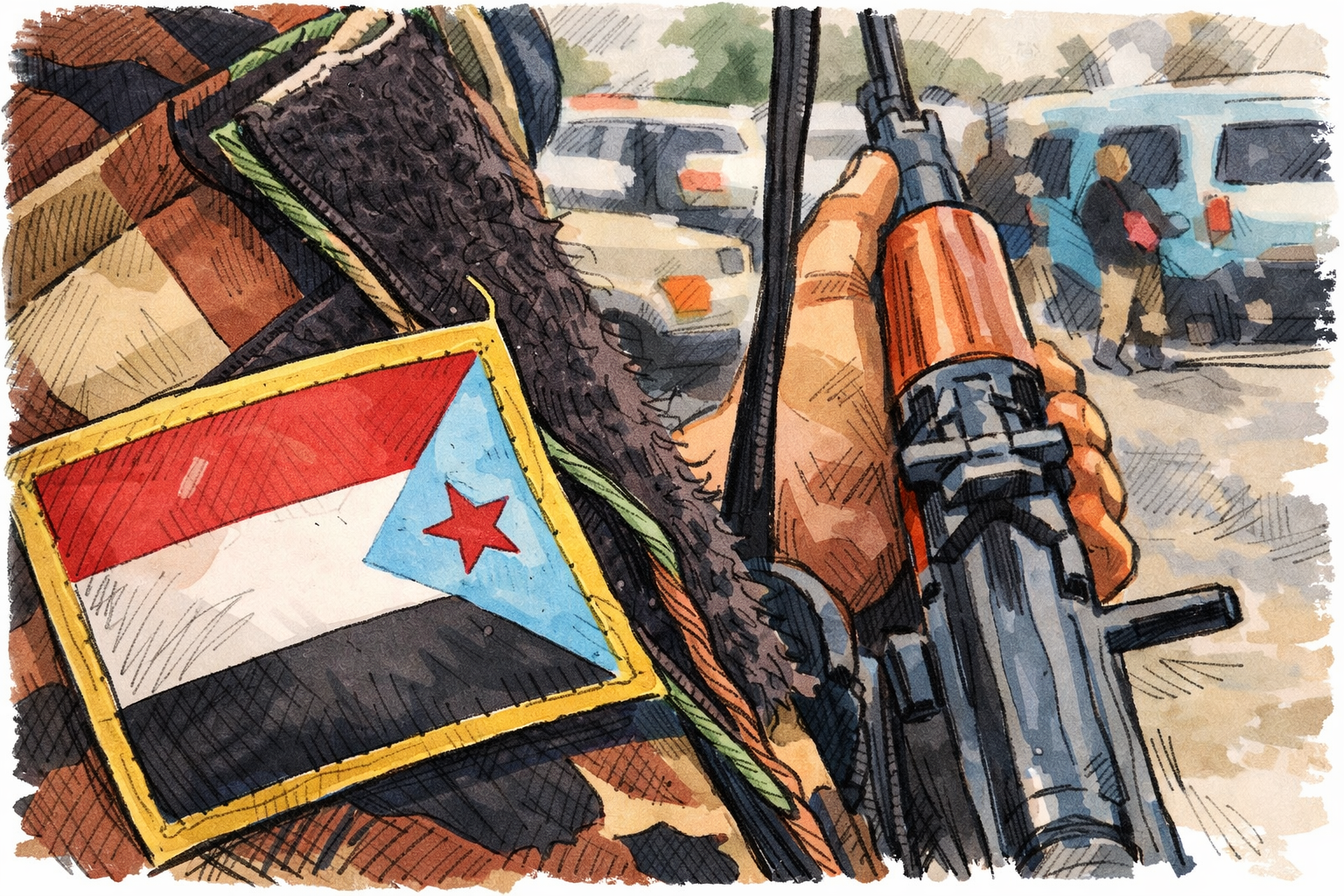
On 2 January, the STC issued a “Constitutional Declaration of the State of South Arabia”, outlining plans for a new anti-Houthi Yemeni microstate with Aden as its capital. That same day, Saudi-led coalition aircraft struck the STC’s 37th Brigade in Hadramout, reportedly killing seven people. Since then, scores of STC fighters have been killed, wounded, or captured as Riyadh moves to reassert control following a dangerously destabilizing loss of cohesion within its coalition.
Although tensions had already prompted the withdrawal of UAE forces from Yemen, the escalation marked a further retreat by UAE-backed separatist units themselves. As a result, the strategically vital eastern governorates of Hadramout and Al Mahra—long viewed as potential candidates for secession—have reverted to government control. Yet the STC’s latest statement accepting Saudi invitations for dialogue shows little sign of retreat. While nominally constructive, it frames the talks as Riyadh belatedly adopting the STC’s own approach and anchors participation explicitly in the STC’s proposed constitution—signals that deeper fault lines lie ahead.
There is a method to this madness. Saudi strategists understand that alliances with Somaliland and a newly emerging South Yemen could allow the UAE and Israel to jointly dominate the Bab al-Mandeb Strait, which links the Red Sea to the Gulf of Aden and the Indian Ocean. According to UNCTAD, the strait carried 8.7 per cent of total global seaborne trade volume in 2023, including significant shares of oil products and crude oil. Control over this passage would amount to dominance over one of the world’s most critical shipping corridors.
From Riyadh’s perspective, even the prospect of effective UAE–Israel alignment over Bab al-Mandeb raises alarming questions about energy exports, freedom of navigation, and Saudi leverage within the GCC. The kingdom would be left with little choice but to engage the Abraham Accords framework simply to keep its trade routes secure—something Crown Prince Mohammed bin Salman has resisted, citing the absence of progress on the Palestinian issue.
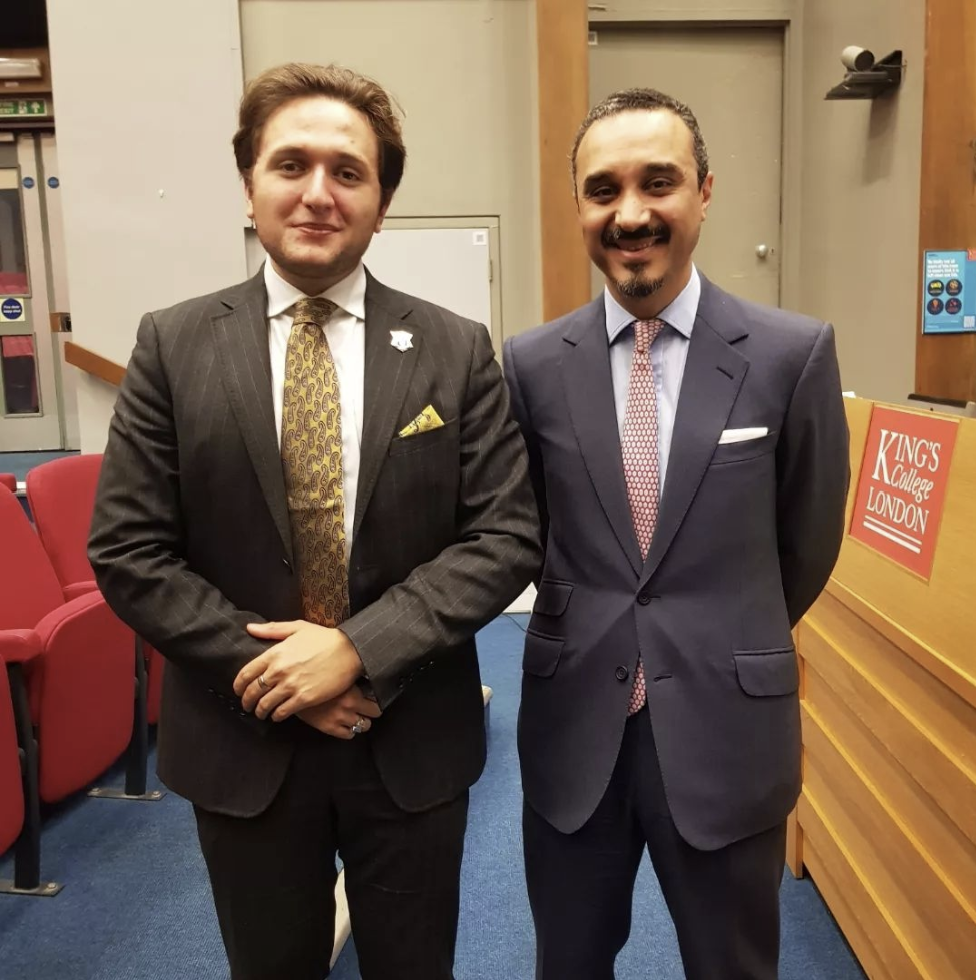
I am reminded of an experience from March 2023, when I was still a rather naïve undergraduate at King’s College London. At a student diplomatic event with the (now former) Saudi ambassador to the United Kingdom, Prince Khalid bin Bandar, I was one of the very few Jewish attendees in an auditorium that was, understandably, largely populated with Arab Muslims. Aware of the room I was in, I raised my hand, introduced myself plainly as an Israeli Jew, and asked whether Saudi Arabia was considering joining the Abraham Accords. To his credit, Prince Khalid responded with equal candor: “Will we normalize with Israel? Probably, if the conditions are good.”
There was a time when Saudi Arabia appeared poised to join the Abraham Accords. Today, Riyadh seems to have concluded that the conditions are no longer favorable, and that any engagement with Israel must occur strictly on Saudi terms. In the process, the kingdom may be forfeiting one of its most significant strategic opportunities—one whose cost is real, even if it has not yet fully come into view.
Meanwhile, Morocco and Israel have signed a landmark defense agreement, formalizing a partnership that was already close. Together, they now anchor an emerging west-to-east security arc—from the Atlantic to the Horn of Africa—aimed at containing Iranian and Islamist influence. Somaliland fits neatly into this architecture, as does the STC’s anti-Houthi secessionist trajectory.
The timing is critical. Iran is in freefall, buckling under economic collapse, public unrest, and elite fragmentation. While regime forces have cracked down brutally on protests, there have been notable defections and pockets of resistance. Iran’s leadership is increasingly locked in a losing battle against its own people. President Masoud Pezeshkian’s recent declaration of “full-fledged war” with the West has left Tehran more isolated than at any point since 1979.
Across the region, governments are preparing for a post-mullahs Iran. The collapse of Tehran’s external influence is forcing rapid recalculations—from Yemen to the Red Sea to the Horn of Africa—as states race to secure chokepoints and alliances before a new equilibrium sets in.
Saudi Arabia, meanwhile, is not standing still. In a move reminiscent of Cold War alliance politics, Riyadh is exploring a Muslim-led collective security framework with partners such as Pakistan and Türkiye, intended to counter both Iranian adventurism and growing Emirati-Israeli dominance. Whether this takes the form of an “Islamic NATO”, a framework suggested by Pakistani Defence Minister Khawaja Muhammad Asif, is still unclear. But there is a risk here. To build such an alliance, Saudi Arabia may once again court Islamist networks as ideological instruments, repeating mistakes that fuelled jihadist movements in the past.
It is against this backdrop that developments along Israel’s northern front are also accelerating. The emerging Saudi–Turkish rapprochement has unsettled the UAE, which now faces allegations of cultivating ties with separatist elements of the Druze community in southern Syria. While Abu Dhabi has not endorsed secessionist aspirations, the prospect of fragmentation in volatile regions like Suwayda may be serving as quiet leverage in Israel–Syria security arrangements. From Israel’s perspective, this pressure is aimed at compelling Ahmed al-Sharaa (al-Jolani) to distance himself from Recep Tayyip Erdoğan, whose Muslim Brotherhood–aligned, neo-Ottoman posture continues to clash with the regional priorities of Abraham Accords signatory states.
And so, in an unlikely turn, we are brought back to first principles. What began as a symbolic act of recognition has become a geopolitical domino effect. Somaliland—a state built without international aid or Islamist patronage—has emerged as a hinge in a new maritime and political order. Its success now forces regional powers to decide whether to engage with a new Abrahamic system or be left behind. The calculated, increasingly dangerous scramble for power and consolidation unfolding today may finally be rewriting the map. Whether this is for better or for worse remains to be seen.