
No, Professor Bartov, It’s Not Genocide
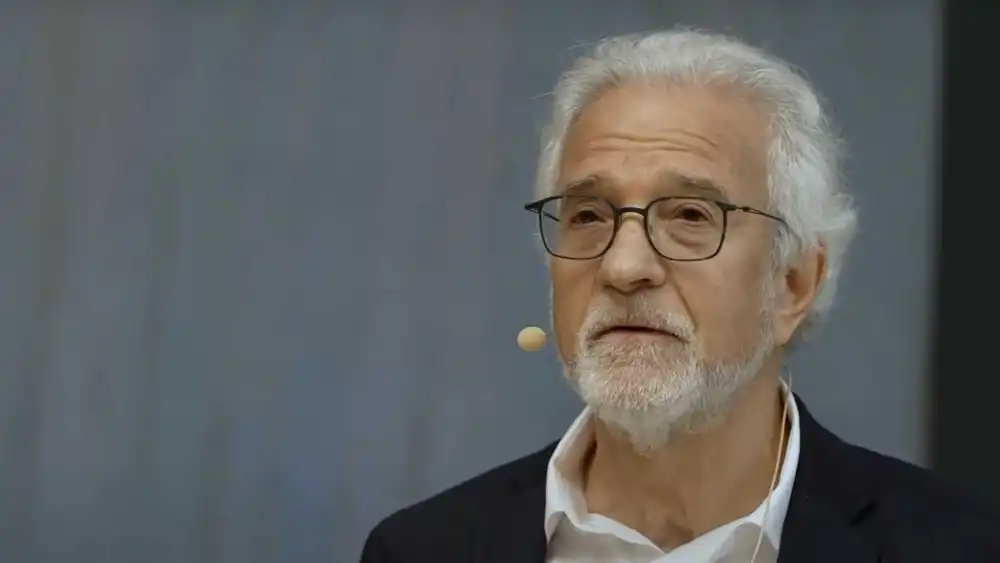
The Israeli academic Omer Bartov may be the most prominent scholar currently making genocide accusations against Israel. His new book, Israel: What Went Wrong, will no doubt add to that reputation. Since 1989, Bartov has been on the faculty at Brown University where, he says, he is a historian specializing in Holocaust and genocide studies. But as his book shows, since joining American academia, he has become more of a propagandist, displaying the anti-Israel bias typical of today’s college campuses. For example, adopting the popular jargon of that milieu, he writes that the Jewish state amounts to “a settler colonial takeover of land and resources from the indigenous Palestinian population.” He views the Hamas attack of October 7, 2023 as “indigenous resistance,” arguing that it “cannot be understood without taking into account the larger historical context” and “the growing despair of the population in the Gaza Strip.” Bartov goes on to liken the current Israeli government to the Zealots of Masada who “had no interest in politics or compromise” and by their intransigence “sent the Jews into two thousand years of exile in the name of their insane, profoundly un-Jewish messianic faith.”
Like many of his colleagues in the American academy, Bartov has become an apologist for the bigoted protests that have occurred since October 7. Thus, in Israel: What Went Wrong, he makes the unsupported claim that antisemitism “has been shown to be rarely present in the multiple protests by students and others around the world.” Somehow, he manages to ignore the harassment of Jewish students that accompanies those protests at nearly every elite college and university, and the fact that many Jewish students feel forced to hide their identities. Continuing, Bartov claims “that the vast majority of the protestors in the United States have not condoned the crimes of Hamas but rather condemned the ongoing massive destruction of Gaza by the IDF using American-made aircraft and bombs.” But he must know that Columbia University protesters – to cite just one example – issued a statement expressing “full solidarity with Palestinian resistance,” claiming that Hamas fighters had “launched a counter-offensive against their settler-colonial oppressor.” And he conveniently ignores the fact that campus protests began immediately after the Hamas attack, before Israel had even begun to respond.
Bartov buys into the Palestinian myth that Jews were unprovoked aggressors in Israel’s war of independence. (He recommends Rashid Khalidi’s book, The Hundred Years’ War on Palestine: A History of Settler Colonialism and Resistance, 1917-2017.) Thus, as Bartov would have it, the 1948 war was not a defensive action against a genocidal Arab enemy. Rather, he writes, “Jewish militias – and later the IDF – were engaged in turning the land’s Palestinian majority into a minority through intimidation and violent expulsion.”
For Bartov, Israel today is “a nation whose addiction to violence and oppression, reliance on great powers and financial clout, and constant harping on the horrors of the Holocaust as an excuse for untethered violence against Palestinians are making even some of its erstwhile supporters shrink from it in discomfort, or horror and disgust.”
Having spent a large part of his career studying the indoctrination of Nazi soldiers, Bartov can’t resist comparing the IDF to the Wehrmacht. In Israel: What Went Wrong, he recounts that in 1987, while teaching at Tel Aviv University, he wrote to Yitzhak Rabin, suggesting that the IDF, in its response to the first intifada, was starting down the same path as the Nazi forces. Continuing the comparison, he notes that his research had shown that German soldiers were indoctrinated with “core elements of Nazi ideology,” which allowed them to view enemy populations as subhuman masses that could rightfully be decimated or enslaved. Citing that research, Bartov explained to Rabin his “anxiety about using the IDF as a tool of oppression against unarmed occupied civilians.”
Throughout the book, he ignores Arab antisemitism and rejectionism, portraying Palestinians only as innocent victims, lacking any agency of their own. For Bartov, the Arab pogroms against Jews in Jerusalem and Jaffa in 1920 and 1921, and the slaughter of Jews in Hebron in 1929, were merely “upheavals that the Jews perceived as riots.” Disregarding Islamic Jew-hatred, Bartov argues that “the rise in anti-Jewish violence around the world, despite claims to the contrary, is . . . associated first and foremost with extreme right, racist, and white supremacist elements.”
Most significantly, Bartov claims in his book that Israel is committing genocide in Gaza. And this is where his intellectual dishonesty reaches an extreme. The crime of genocide is defined by the Genocide Convention, an international treaty passed by the United Nations General Assembly on November 9, 1948. The UN officials who drafted the Convention wanted the definition to be precise, requiring guilty intent, which is the crucial element of any crime. Thus, the Convention limits the crime to “acts committed with the intent to destroy, in whole or in part, a national, ethnical, racial, or religious group, as such.” In other words, there is no crime unless the perpetrators target their victims because of their membership in the group. Moreover, the issue of intent matters more than the number of deaths.
Bartov judges Israel’s government by the statements of its most radical members, taking wartime rhetoric as evidence of genocidal intent. For example, he cites statements by Israeli officials dehumanizing the Hamas fighters that attacked Israel on October 7. However, as a group of scholars has written in Haaretz, “Dehumanizing terrorists who raped women, decapitated babies, tortured their victims, shot and burned them alive . . . is not evidence of genocidal intent but a reflection of the limits of language to describe behavior that truly seems inhuman.” Moreover, the authors note, “The words ‘as such’ impose a stringent intent requirement: an act counts as genocide only if individuals are targeted solely by virtue of their group membership and not for strategic reasons like a military response to a brutal terrorist attack.” As UN Secretary-General Trygve Lie pointed out in early discussions of what became the Genocide Convention, “The infliction of losses, even heavy losses, on the civilian population in the course of [war], does not as a rule constitute genocide.”
It doesn’t matter to Bartov that the accusation of genocide against Israel relies on questionable casualty data provided by the Gaza Ministry of Health, which is run by Hamas. Those reports make no distinction between combatant and civilian deaths. And they are riddled with statistical impossibilities. Indeed, they are largely fabricated, artificially inflating casualties among women and children. Nevertheless, these Hamas reports are laundered through UN agencies, giving them an appearance of credibility. They are then amplified in the media.
As the urban warfare expert John Spencer has written in Newsweek, “Israel has implemented more precautions to prevent civilian harm than any military in history – above and beyond what international law requires.” Those measures include thousands of direct phone calls, millions of warning texts, millions of voice mails, millions of air-dropped flyers, “roof knocking,” drones with speakers, evacuation corridors, and humanitarian zones. Thus, Spencer writes, “The IDF has telegraphed almost every move ahead of time so civilians can relocate, nearly always ceding the element of surprise.” As a result, he argues, the number of civilian deaths in Gaza – as compared to the deaths of combatants – has been “historically low for modern urban warfare.” In sum, the precautions taken by the IDF, and its success in minimizing civilian casualties, hardly indicate an “intent to destroy, in whole or in part, a national, ethnical, racial, or religious group, as such.”
As the historian Benny Morris has argued, “What happened during the IDF counter-offensive in Gaza’s streets – it was a war – was so unlike ‘genocide’ that even a casual reader of genocide literature, say about the Holocaust or the Turkish Muslim massacre of Asia Minor’s Christian communities during 1894–1924, could not avoid noticing the stark differences.”
But none of that is a problem for Bartov. The question whether Israel’s conduct meets the actual definition of genocide is of no moment. As the scholar Sabrina Soffer has reported, “During a lecture on mass atrocities in April 2025, when discussing the Israel-Hamas War and the Israeli-Palestinian conflict, he deliberately stretched and blurred the definition of genocide, while acknowledging that it is indeed a legal term. Bartov also suggested that he insists on using the term ‘genocide’ in debates not because it is legally accurate but because it is rhetorically necessary.” Continuing, Soffer reports that “Bartov also claimed that the integrity of legal standards was superseded by the need to persuade a broader audience by using language that raises awareness.” Thus, although he holds himself out as a “scholar of genocide,” Bartov purposely ignores the definition of genocide agreed to by the international community.
But contrary to Bartov’s view, the actual definition of genocide does matter. And it matters that the definition not be twisted and stretched to accommodate a political agenda. As the Israeli lawyer Tal Becker has argued, “The attempt to weaponize the term ‘genocide’ against Israel” in this manner “does more than tell . . . a grossly distorted story, and it does more than empty the word of its unique force and special meaning. It subverts the object and purpose of the [genocide] convention itself, with ramifications for all states seeking to defend themselves against those who demonstrate total disdain for life and for the law.”
As the professor of Holocaust studies Norman J.W. Goda has noted, during and after the Cold War, dozens of charges of genocide have been leveled against a variety of countries. However, Goda says, “Genocide accusations against Israel are different. First, Israel, unlike other states, has been charged with genocide throughout its existence.” “Second, the speed and fury with which the accusations exploded after the Hamas massacres of October 7, 2023, are unusual in the annals of lawfare.” Moreover, Goda argues, “there has been not only a rush to judgment but an effort to redefine genocide itself so that the constitutive elements of the crime itself are lowered.” (As we have just seen, Bartov is part of that effort.) At the same time, Goda shows, the genocide libel against Israel uses several antisemitic tropes. The most dangerous of these “is the association of all Jews with the crime. Jews worldwide are all in on it, either as Zionist enablers, as dishonest back-room lobbyists, or as community leaders who, we are told, ‘weaponize’ the charge of antisemitism to silence the truth-tellers.” The goal of the accusation of genocide “is political, designed not so much to describe a crime, but to place Israel, its military, its citizens, and its supporters as outside the realm of decency and human values.” In other words, to delegitimize the Jewish state. Thus, it is no surprise that genocide accusations against Israel at the UN have typically come from the same states that voted for General Assembly Resolution 3379, calling Zionism “a form of racism and racial discrimination.”
Today, now that the Cold War is over, “genocide charges are different,” Goda writes, “thanks to settler colonial theory, which developed in the 1990s and greatly expanded in the 2000s.” Since settler colonialism is thought to include “elimination of the native,” it goes hand-in-hand with genocide. According to this line of thinking, because Israel is a “settler colonial project,” it must also be genocidal.
The pattern continues with regard to Gaza. Goda argues “that the genocide accusations of 2023 and 2024 represent a culmination of years-long efforts by everyone from UN special rapporteurs to post-colonial scholars to BDS activists to NGOs such as Amnesty International. And the antisemitic tropes remain.” “In conclusion,” Goda writes, “the widespread genocide accusation has further delegitimized Israel and indeed most Jews in ways that their opponents could only have dreamed of during events like the 2001 UN conference on racism in Durban, South Africa.”
Why does Bartov buy into the genocide libel? He is a historian and says the study of genocide is his specialty. Surely, he knows better. As Sabrina Soffer explains in her comprehensive essay, Bartov’s genocide accusation must be understood in the context of his scholarly evolution, which “illuminates the erosion of boundaries between scholarship and activism.” In 2004, Bartov was an opponent of inflammatory campus rhetoric. But twenty years later, he was joining campus protests permeated with the same rhetoric. He now draws “parallels between the IDF and the Nazis, and between the Israeli public and early 20th-century Germans.” As Soffer also notes, in September 2025 Bartov “claimed that the destruction of Gaza was greater than the destruction caused by the nuclear bombs dropped on Hiroshima and Nagasaki.” Thus, Bartov has become more of a propagandist than a historian. What happened?
To begin with, Soffer notes, “Bartov was never just a scholar. Long before becoming an eminent historian, he was an activist.” (It is telling, for example, that he was a co-founder of the anti-Zionist group, Peace Now.) As the Israeli-Palestinian conflict escalated in the decade leading up to October 7, 2023, Bartov began “to increasingly view history as a tool for justice, accountability, and empathetic engagement with victims.” Probably, “the growing criticism of Israel within American academia through campus rhetoric and lectures” contributed to that change. Following an academic trend, Bartov moved to sever the ties between Judaism and Zionism. At the same time, according to Soffer, he downplayed “the role of Arab antisemitism or anti-Zionism as a significant component of global antisemitism.”
As Soffer argues, “The influence of American academic frameworks on Bartov and his collaboration with scholars critical of Israel in an intensively left-leaning academic environment and a right-wing political climate likely led him to double down on his criticism of Israel.” At the same time, Bartov began to soften his attitude toward the Muslim Brotherhood and Hamas. Those changes, Soffer explains, “correlate with the evolution of a curriculum launched at Brown University in 1989” called the Choices Program. That initiative, hosted by Brown, developed K-12 social studies curricula, using a network of professors, including Bartov. During the time Bartov contributed to the Choices Program (2017-2022) its Middle East curriculum emphasized colonialism; portrayed Muslims as indigenous and Jews as outsiders; ignored facts about Israel’s creation; and equated Holocaust victims with other World War II casualties. The program, which has since been closed down, “was heavily influenced by Qatar Foundation International,” which played “a key role in furthering Qatar’s soft power effort to undermine American interests around the world by funneling billions of mostly undisclosed funds into Western education.” The goal, Soffer writes, was to push “attitudes toward Israel, the orientation of academic departments, and scholarly frameworks in an anti-Western and anti-Israel direction.” Regardless of whether Bartov fully shared that goal, his participation in the Choices Program – and the larger anti-Israel academic milieu – is probably not irrelevant to his evolution as a polemicist.
Notwithstanding the anti-Israel bias that dominates college campuses, Bartov has not escaped academic criticism. Benny Morris is one example. Another is the historian, Jeffrey Herf. An expert on Nazi ideology and the Holocaust, Herf has noted that while Bartov has done “pioneering research” in some areas, his writings on genocide “do not rest on the painstaking archival work evident in his writings” on other subjects. Rather, “he has relied on transferred prestige grounded on his prior meticulous historical research to lend credibility to his opinions about Israel and the war in Gaza.” Herf argues that Israel: What Went Wrong, “is an example of that problem.” Thus, Bartov trades on his expertise in other areas to add weight to his genocide libel. He has done the same thing in op-eds for the New York Times, disingenuously holding himself out as a “scholar of genocide” and a “historian of genocide.” But in fact, when it comes to genocide, Bartov writes as a polemicist, not a historian.
As Herf notes, the main evidence Bartov offers for his accusation of genocide “is angry – and selectively quoted – statements about the inhumanity of the Hamas killers on October 7 made by Israeli leaders.” But Bartov fails to offer and cannot “offer any official statement by the prime minister or official government spokesman that it intends to ‘destroy the Palestinian people,’ because there are no such statements. Israel declared war to defeat Hamas, a fact Bartov represses.”
Moreover, Bartov “refuses to address the reality that Hamas posed an existential threat to Israel’s existence, and that it was thus fighting for its very survival,” writing “as though Israel faces no threats to its existence that are not the fault of its own unjust policies.” “This, too,” Herf says, “is the anger of a polemicist, not a practitioner of the historian’s craft.” As Herf argues, “Bartov, without access to Israeli archives and having made no serious examination of the public record of Israeli decision-making confidently asserts the existence of a ‘deliberately pursued policy.’ There is no reason to take this conclusion seriously. Here again, Bartov has abandoned the historian’s craft in favor of polemics.”
Finally, Herf suggests, it is important to ask “whether the book recycles and skillfully refurbishes the oldest and most enduring accusation at the core of antisemitic ideology: namely, that the Jews, since the time of the Crucifixion, through the Koranic stories of Jews killing the prophets, to the blood libels and modern conspiracy theories blaming them for wars, are a people uniquely inclined by habit, tradition, and character toward the murder of the innocent.” Bartov’s “charge of genocide against the State of Israel should be understood within this long history of antisemitic libels.”
One hopes that Israel: What Went Wrong will fade into well-deserved obscurity. But that is unlikely. Rather, as Herf says, “Bartov’s tome is likely to contribute to the ongoing effort to make hatred of Israel respectable in the faculty lounge, the editorial office, the think tank, and in many political parties.” And it will add “to the global campaign to undermine the legitimacy of the State of Israel.” When that happens, Herf observes, “it will not be the first time that a very bad book has an outsized impact on public and published opinion.” Indeed, some of the damage is already done. As Benny Morris has written, “one thing is already clear: Bartov’s book, and his journalistic ‘Israelis are genocidaires’ campaign that preceded it, have, objectively speaking, assisted the Islamist terrorists in their effort to destroy the Jewish state. This is something he will have to live with.”
A much shorter version of this article appeared in JNS, Aug. 27, 2026.
Sources:
Becker, Tal, “Opening Statement of MFA Legal Advisor Dr. Tal Becker at the ICJ Proceedings,” Israeli Ministry of Foreign Affairs, January 12, 2024.
Friling, Tuvia, et al., “Charging Israel With Genocide in Gaza Is Inflammatory and Dangerous.” Haaretz, November 28, 2023.
Goda, Norman JW, “The Genocide Libel: How the World Has Charged Israel with Genocide,” ISCA Research Paper 2025-3.
Herf, Jeffrey, “From Historian to Polemicist: What Went Wrong with Omer Bartov,” Israel Journal of Foreign Affairs, June 28, 2026.
Jikeli, Gunther and Karpe, Philippe, “Three Accusations Against Israel: Apartheid, Settler Colonialism, and Genocide under Legal and Historical Scrutiny,” September 17, 2026, available on SSRN: https://doi.org/10.2139/ssrn.7501120.
Morris, Benny, “Omer Bartov: What Went Wrong?” Quillette, July 20, 2026.
Soffer, Sabrina, “Omer Bartov and the Politics of Holocaust Memory: From Activism to Historiography – and Back Again,” Institute for the Study of Global Antisemitism and Policy, ISGAP Occasional Papers Series, No. 8/2026.
Spencer, John, “Israel Has Created a New Standard for Urban Warfare. Why Will No One Admit It?” Newsweek, March 25, 2024.