
October 7th, a date which will live in infamy
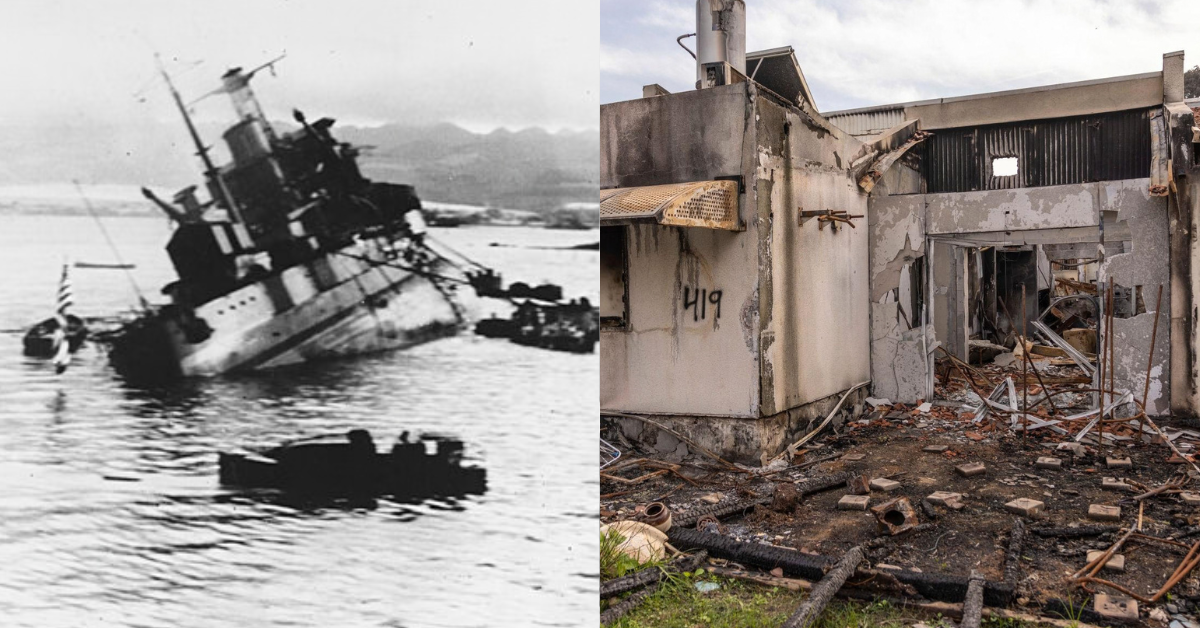
Calendars run our lives.
Dates—birthdays, holidays, yahrzeits—guide us through time as it passes, giving us moments to pause and consider people, things, or events we might not otherwise think about. Some of these dates are given to us, like the day we are born or the day a loved one dies, and others we make ourselves, like wedding anniversaries. But every so often, a new date appears on our calendars — a new moment of significance — but not everyone notices.
When I was in grade school, I gave a presentation to my class about Pearl Harbor. On December 7th, 1941, the Japanese executed a surprise attack on the US naval base, killing 2,400 Americans. My grandfather, US Navy Capt. David A. Isquith, used to tell me about my great-uncle, US Navy Rear Admiral Solomon S. Isquith, who was the senior officer aboard the battleship USS Utah. The USS Utah was the first ship the Japanese sank in the attack on Pearl Harbor, but it’s known as the “Forgotten Ship of Pearl Harbor,” given that only 58 crew members died on that ship, in contrast to the 1,177 who were killed on the USS Arizona.
My great-uncle received the Purple Heart and the Navy Cross for rescuing crew members from the hulls of the capsized ship while under fire from Japanese fighters. That event was what led to the United States declaring war on Japan and officially entering World War II. The next day, President Franklin Roosevelt gave a famous speech, calling it “a date which will live in infamy.” However, given my family history, I think I’m one of the few people for whom it really is a day that lives in infamy, baked into my mental calendar. When someone brings it up, I pause, recalling the significance of the day that most people miss.
For myself and so many Jews living in predominantly non-Jewish spaces, October 7th became one of those moments — a date which will live in infamy — but for most of the world it’s just another day.
I remember talking to a non-Jewish parent at my daughter’s old school the year after the October 7th attack. We were talking about birthday plans, and I asked her when her son’s birthday was.
“October 7th,” she replied.
She said something else afterwards, but I couldn’t hear her anymore. I was hit with a rush of pain and sorrow that I hadn’t expected, and suddenly, it dawned on me that a new date had been added to my calendar without my knowing.
A couple of weeks ago, while scheduling a doctor’s appointment for my daughter, the nurse looked at me and asked, “Does October 7th work for you?” and I froze again. I felt a pit in my stomach, almost insulted that the nurse hadn’t realized how painful a day that was for me. For a second I thought, “How could you say that date to me?” But quickly I pulled myself back together
I don’t really blame anyone for not knowing about Pearl Harbor or the USS Utah, nor do I blame anyone who isn’t Jewish or Israeli for not remembering October 7th, but it still hurts. It hurts to carry the burden of remembering an atrocity that others overlook. And it is a deeply Jewish pain too. Our calendar is replete with memorial days of atrocities because we are a culture of memory. In contrast to many other cultures, we truly never forget, and that can feel isolating. It can even make me feel like I’m the weird one for feeling so sad on a day in October.
Most people don’t think about Pearl Harbor or the USS Utah, but I do. And most people don’t think about October 7th, 2023, but we do. For us, it is a day which will live in infamy.
For anyone struggling with this date on your calendar as you go about your day in a world that doesn’t think about what happened 3 years ago, know you’re not alone.