Israel-based writer
October 7th Is Not Over
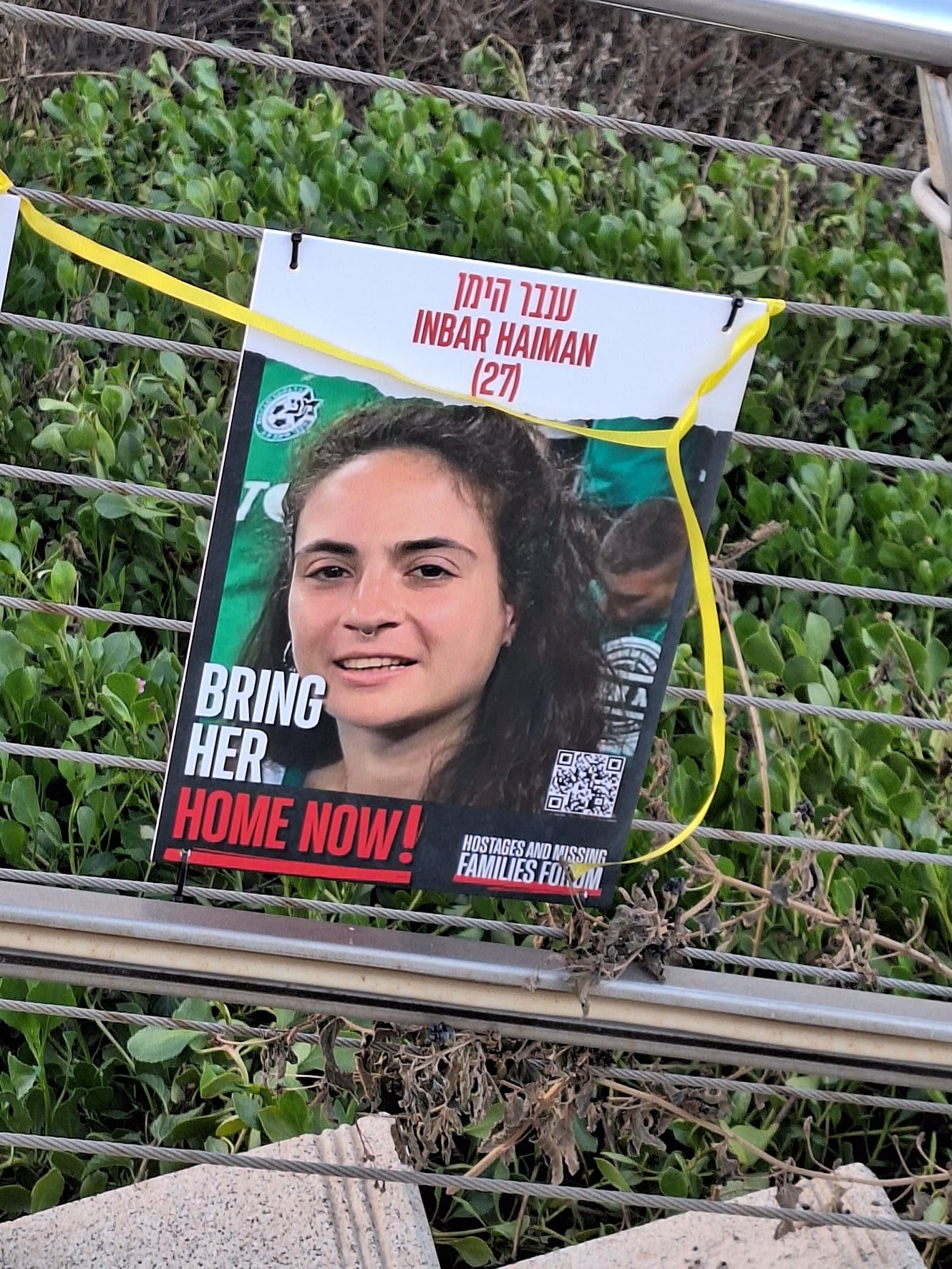
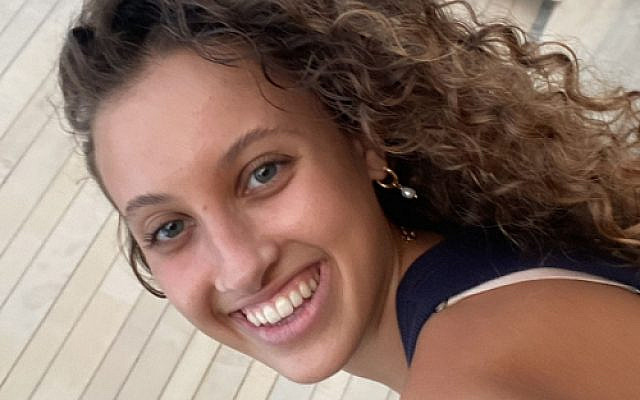
Inbar Haiman Abducted and Murdered on October 7, 2023 fleeing Nova Music Festival (courtesy Ken Toltz)
“And then October 7th happened.”
The sentence is repeated so often that it can sound as though the date explains itself. It does not.
For many Israelis, October 7th is not a historical marker or shorthand in a political argument. It is a last WhatsApp message. A call that stopped. A child’s room left untouched. It is a face on a hostage poster, a name spoken at a funeral, a siren that returns the body to a morning of panic. It is the question asked by people hiding in homes, shelters, fields, and military outposts: Where is the army?
The savage Hamas attacks of October 7, 2023, were an atrocity marked by extraordinary cruelty. In the first days and weeks afterward, its details emerged in fragments that no one could easily absorb: attacks on homes in the Gaza-envelope communities; terrified young people fleeing from the Nova music festival; families trying to keep children silent; people sending messages to loved ones as they waited for rescue. Survivors described a frenzied hunt for unarmed people. The country watched private terror become public testimony.
But “and then October 7th happened” must not become a substitute for thought. It does not end a conversation. It begins one. The phrase names a national catastrophe, but it also requires Israel to ask how communities were left so exposed, why help so often came too late, what was known or misunderstood, and whether those entrusted with public safety have fully accounted for their decisions.
The stories of the Nahal Oz observers make these questions unavoidable.
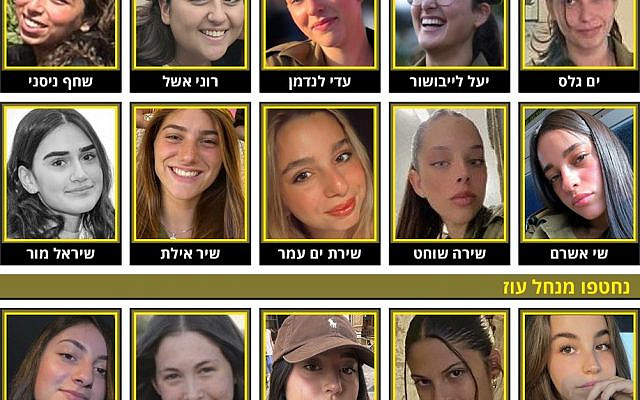
Many of the young women stationed at the Nahal Oz military outpost were early in their military service. They were daughters and friends, barely out of high school, tasked with monitoring a border that Israel believed it understood and could secure. Their parents entrusted them to the Israel Defense Forces. On the morning of October 7, some found themselves trapped in a base under attack, trying to survive with the limited protection available to them.
The words of their families have become part of Israel’s moral record. A mother texts after the rocket barrage. A daughter answers that she is afraid. The mother tells her to hide, to stay quiet, to remain focused. Then the messages stop.
In my original essay I quoted Keren Neubach, an Israeli public broadcaster and journalist with Kan 11, who interviewed the parents of soldiers and observers at Nahal Oz. Among them was Edva Abramovich, the mother of Noam Abramovich, a nineteen-year-old surveillance soldier serving at the outpost. Edva described communicating with Noam as the attack unfolded. The trauma of Edva’s account lies not only in its horror, but in the helplessness it reveals: a parent at a distance trying to protect a child by text message when the institution meant to protect her has failed.
There were acts of extraordinary courage that day. Civilians, local security teams, police officers, soldiers, medics, and volunteers saved lives, often at terrible personal risk. Israel should honor them without qualification. But heroism does not erase failure. It exposes the failure more sharply, because it shows how much was demanded of people who should never have been left to carry that burden alone.
The failure was not only operational. It was a rupture of trust.
For decades, many Israelis lived with a deep, if often unspoken, confidence that the state and the IDF would protect them. October 7th shattered that confidence. The destruction in the border communities, the prolonged absence of rescue, the vulnerability of the surveillance outposts, and the scale of the attack forced a reckoning with assumptions that had become ingrained: that deterrence was working, that warnings could be managed, that the frontier was secure, and that the unimaginable was not possible.
Israel can survive such a rupture. It cannot responsibly ignore it.
This is why the voices of bereaved families matter not only as expressions of grief, but as demands on the nation. Eyal Eshel, the father of Roni Eshel, a nineteen-year-old IDF observer at Nahal Oz who was killed on October 7, has described the struggle by families of the observers to obtain material and documentation related to their daughters’ final hours. In a public Facebook statement, he writes of years spent searching for answers, meeting silence and changing explanations, and fighting institutions that should have helped establish the truth.
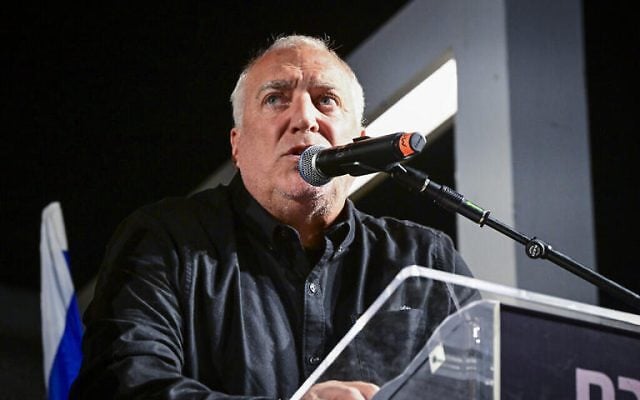
His questions are painfully direct. Who made decisions about evidence? Under what authority? What material was preserved, what was removed, and why? If families have a recognized legal right to information, why must they continue to fight to receive it?
Eshel is not writing as an analyst or a politician. He is writing as a father who lost his daughter. “I do not ask for mercy,” he writes. “I demand responsibility.” He then states the principle that must guide any genuine national reckoning: “Without the truth, there is no responsibility. Without the truth, there is no correction.”
These are not partisan slogans. They are the minimum obligations of a democratic state toward its citizens, its soldiers, and the families left behind. Claims about records, evidence, official decisions, and court proceedings must be established with care and tested against the facts. But the state’s duty is clear: preserve evidence, answer questions plainly, disclose what can responsibly be disclosed, and permit meaningful scrutiny. Bereaved families should not have to fight a second war against the bureaucracy of the country their children served.
Benjamin Netanyahu, Israel’s longest-serving prime minister, and his government have deflected persistent calls for a full and credible accounting of the failures before, during, and after October 7. This demand is sometimes treated as though it were a distraction from war, an attack on national unity, or merely another political dispute. It is none of those things. Accountability is not revenge. It is a condition of trust.
A government that asks its citizens to make immense sacrifices must accept examination of its own actions. It cannot invoke unity only when unity shields those with power from scrutiny. Nor should citizens be asked to choose between supporting Israel’s security and demanding to know why their communities, their children, and their country were left vulnerable. A serious inquiry does not weaken Israel. It is one way Israel can become stronger.
The life of Inbar Haiman brings the national argument back to its essential human scale.
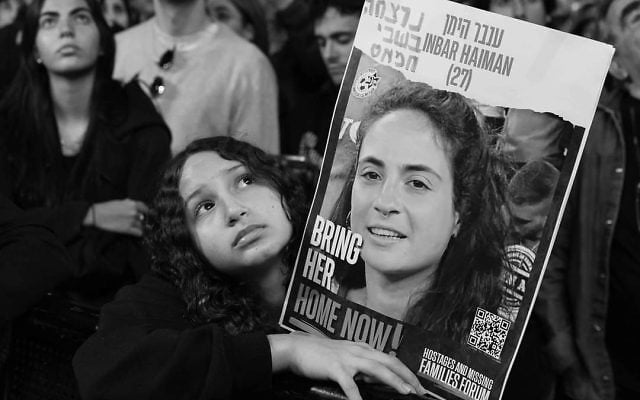
Inbar was a twenty-seven-year-old artist, visual-communication student, volunteer, daughter, partner, and friend. She signed her street art “Pink?”—a name that was playful and questioning, a small declaration of color and possibility in public space. Before pursuing her artistic work, she served as a commander in the IDF’s Caracal Battalion, a mixed-gender combat unit. Service and creativity were not opposites in her life. They were expressions of the same character: responsibility, compassion, resilience, and imagination.
On October 7, Inbar was volunteering at the medical tent at the Nova music festival near Re’im. The festival was a gathering organized around music, openness, and celebration. Hamas’s attack turned it into a scene of terror. According to accounts cited by her family and her partner, Noam Alon, Inbar tried to escape before she was abducted and taken into Gaza.
Her family and community then entered the terrible uncertainty endured by hostage families: the appeals, the public campaign, the refusal to let a loved one become anonymous. Her bright pink poster, displayed throughout Israel, was not simply an image of a hostage. It carried Inbar’s artistic identity into the public square. It insisted that behind a photograph was a whole person with a history, a future, and people who loved her.
Her family’s vigil later ended in grief when she was confirmed to have been killed. The subsequent effort to recover her remains became part of a long public struggle. Inbar’s remains were the last female hostage released by Hamas on October 16, 2025 more than two years after her violent abduction and murder.
The moral meaning of Inbar’s family’s vigil is unmistakable. Israel cannot honor a person’s memory only with ceremonial words. It must also confront the circumstances that allowed so many lives to be destroyed, so many families to be left in uncertainty, and so many questions to remain unanswered.
Inbar’s life resists the flattening effect of national tragedy. She cannot be reduced to a number or an image from a day of mass violence. She was a young artist who brought color into the world, a student with a vocation, a volunteer helping others, and a person still building a life. Her “Pink?” signature remains a kind of question: What does it mean to keep creating after darkness? What does it mean to insist that beauty and kindness still matter?
That question belongs to all of Israel now.
The country has endured continuing attacks, alarms, displacement, mourning, reserve duty, and a long atmosphere of uncertainty. We have also witnessed the devastating humanitarian suffering in Gaza resulting from the war that followed. Acknowledging that suffering does not minimize the atrocities of October 7, just as affirming Israel’s right to defend its citizens does not excuse the avoidance of responsibility at home. Moral clarity must be large enough to hold more than one truth.
Israel needs security. It needs the return and care of those harmed by war. It needs a realistic vision of the future. And it needs leaders prepared to say more than that the country will continue.
Signs, banners, and bumper stickers declare, “Together We Will Win.” The determination behind those words is real. But winning cannot mean merely surviving, or returning to the habits of denial and institutional self-protection that made catastrophe possible. It cannot mean asking survivors and bereaved families to bear the memory while officials postpone answers and call it unity.

October 7 is not over for those who lost someone. It is not over for survivors whose lives were divided into before and after. It is not over for parents such as Eyal Eshel, who continue to demand the truth about their children. And it is not over for a country that has yet to complete its own reckoning.
“And then October 7th happened” is not the end of the sentence.
The sentence must continue: We listened to the witnesses. We named the failures. We preserved the truth. We held those responsible to account. We learned enough to change.
Only then can remembrance become more than mourning. Only then can it become responsibility. Only then can it become accountability. Only then can it result in change.
Related Topics
Related Posts