Miriam Frankel is a writer on religion, politics and culture.
Olami Manhattan Took Me To Poland: Day Five (Part Two)
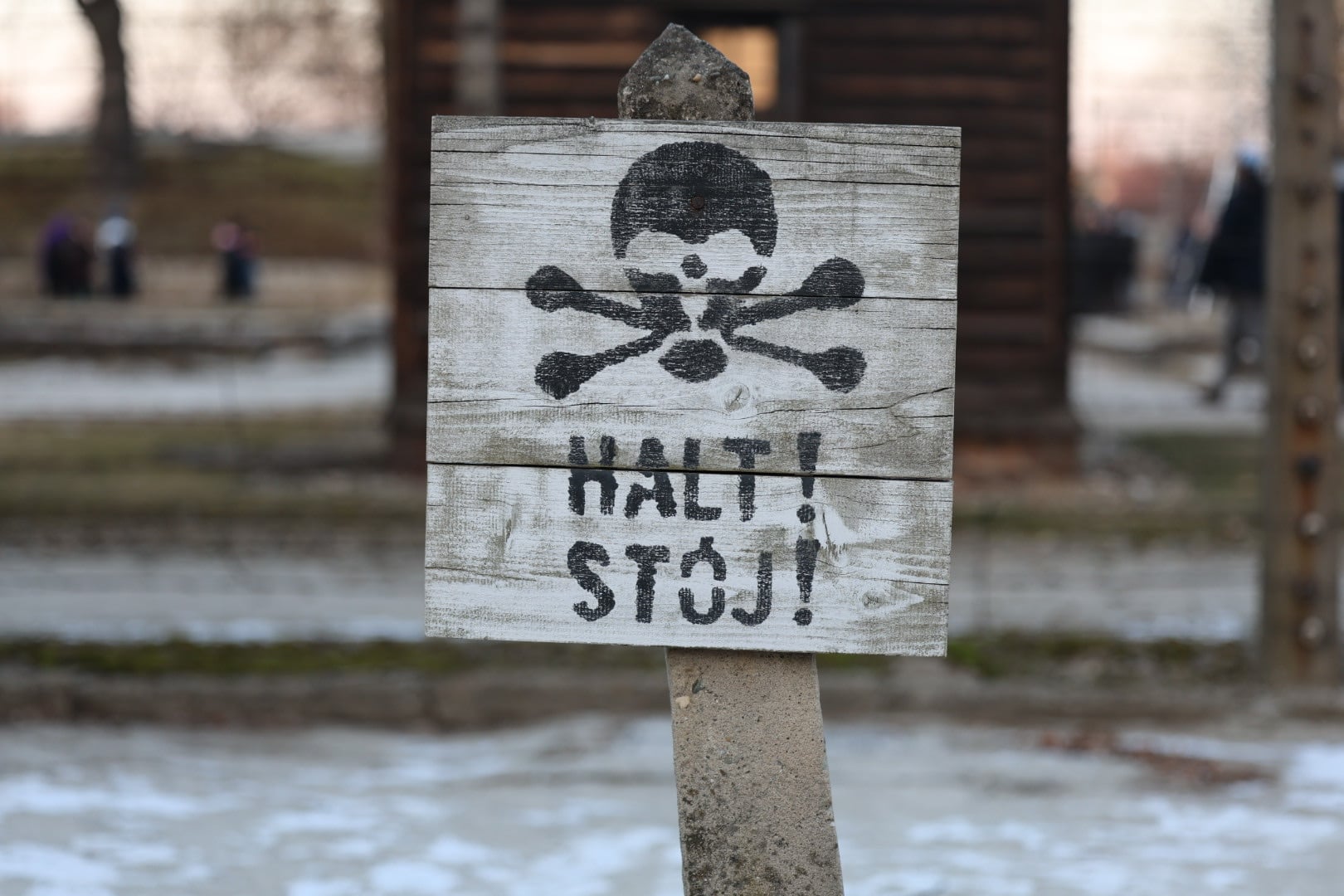
A "Halt" sign marks a boundary or warning at the former Auschwitz concentration camp. (Margaux Betesh/ Photo Credit)
It’s nearly impossible to put into words what I felt walking through the Permanent Exhibition in Auschwitz I, Block 4, titled “Extermination.” My emotions were so tightly wound that I moved through the room in a kind of fog; grief and rage, gratitude and desolation all collided inside me. As a Jew and a descendant of both survivors and victims, I thought I knew what to expect. I was wrong. Nothing could have truly prepared me for what I saw and felt that day.
Auschwitz was not just a camp but a complex of camps operated by Nazi Germany during World War II. It was the largest center of the systematic extermination of Jews and others deemed “undesirable.” Over 1.1 million people were murdered there between 1940 and 1945. The “Extermination” exhibit lays bare the machinery of genocide, and it leaves little room for emotional distance.
Of all the horrors documented in that space, the Zyklon B canisters that once hissed death into gas chambers, the cold, mechanical camp records cataloging human lives as mere numbers, the photographs of those who suffered torture inflicted with chilling detachment, nothing struck me with more visceral disgust than the wall-to-wall display case containing over 4,000 pounds of human hair.
The Nazis shaved the hair from victims upon arrival, part of a systematic process designed to strip them of their humanity and identity. Hair was collected en masse, then repurposed, some sold as raw material for German military uniforms, socks, and gloves. The rest was found matted and decaying, scattered throughout the camp after its liberation on January 27, 1945, by the Soviet Red Army.
I couldn’t look away. Grief, disgust, and nausea twisted inside me as my eyes lingered on the graying braids.
My thoughts kept wrestling with themselves. I understand why the curators chose to include this part of the exhibit. Everything in Auschwitz is real, but it’s easier to stay emotionally removed from objects like glasses or dishes. Hair is literal dead cells from the human body. It proves that someone was here, and now they’re gone. That kind of evidence is hard to ignore.
Even with this understanding, I felt furious.
In Jewish law, even the smallest part of a human being, a finger, a bone, is considered sacred. Burying it is one of the greatest mitzvot because it is a gift that can never be returned. It is a final responsibility we have to the dead, a step on their journey to the World to Come.
And here was this hair, perhaps the last remaining physical trace of victims, sealed behind glass for public display.
After such pain, trauma, and profound abuse were done to the person and their remains, how could anyone with the ability to lay even a part of them to rest choose instead to put them on display?
I imagined if the hair belonged to my mother or sisters, God forbid. I would shatter that glass in an instant to give them the last act of respect and love they deserve.
To preserve or to let rest? To educate or to give peace? Memory or dignity? I still don’t know the answer. I only know that it hurts in a way for which I have no language.
As I wondered all of this, Tzvi Sperber, founder of JRoots, invited an Olami Manhattan student to read aloud a poem written from the perspective of one of the hairs behind the glass. The words filled the room, heavy and haunting. Some people stepped away, needing a moment to collect themselves. Others took tentative steps forward, unsure what to feel or how to act under the weight of the moment.
I chose to move on to the next exhibits and left the room.
A few minutes later, I stood before a wall-to-wall display of children’s shoes, my own feet practically glued to the floor. My heart dropped. I looked down at my own shoes and realized they were far larger than any pair in that glass case.
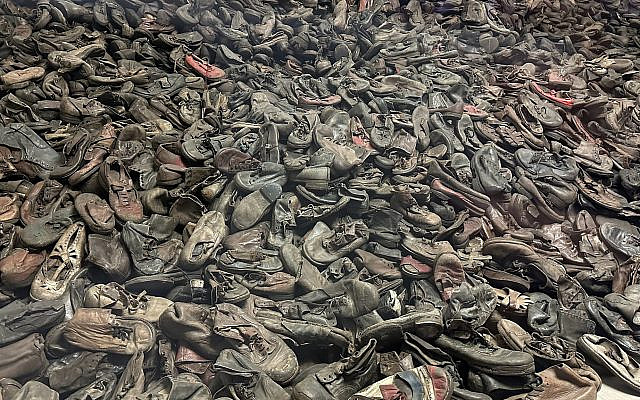
These were the shoes of babies and toddlers who never had the chance to grow up.
During the Holocaust, children were among the most vulnerable victims. The Nazis targeted Jewish families for complete destruction, often murdering entire households. Many children were sent directly to gas chambers, denied even a chance to survive.
I stared at them and broke open. I cried so hard I could barely stand, whispering over and over, “I’m so sorry, I’m so sorry,” as if the shoes might respond, as if the souls of those children were tied up in the laces.
Quietly, I found myself asking: What are your names? What did you want to be when you grew up? What made you laugh? What did you dream of? What food did you love most?
Then the answer came to me in a silent, devastating wave: Maybe they never got to dream. Maybe they were too hungry, too cold, too scared to laugh. Maybe they were too young to even know the meaning of the word “freedom.” Maybe they never got to play. Maybe they never felt safe.
Maybe they died without ever knowing they were loved or wanted.
I stayed long after my group had moved on. At first, I couldn’t figure out why. But eventually, I realized simply, I couldn’t bear to leave. I spoke quietly into the abyss, “You were here. I see you.”
Later that day, I found names from my fiancé’s family in the Book of Names. This memorial records the names of Holocaust victims collected by Yad Vashem, Israel’s official Holocaust remembrance center. It is a painstaking effort to restore identity to those who were systematically erased.
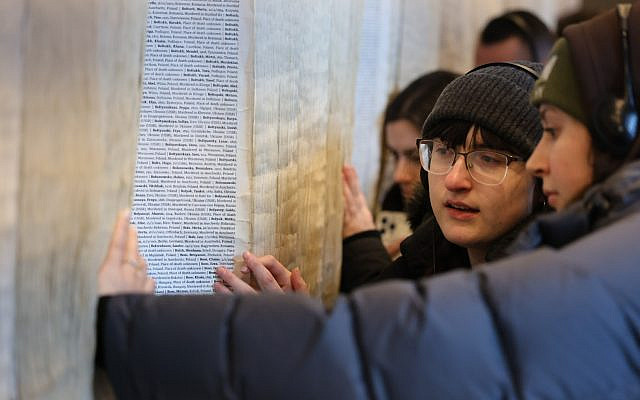
His grandmother, who miraculously survived Auschwitz, even walked out of a gas chamber, is listed among those once enslaved in the camp. To anyone who does not know her story, they would most likely assume she had died. But she lived. She lived long enough to have children, including my future mother-in-law, who eventually had my fiancé.
Because of her, I have a future. There’s no way to repay that debt, not in this life.
Then I found my own name: Miriam Frankel.
Seeing that name shattered something in me. I’ve always known it could have been me. But at that moment, it felt like it was.
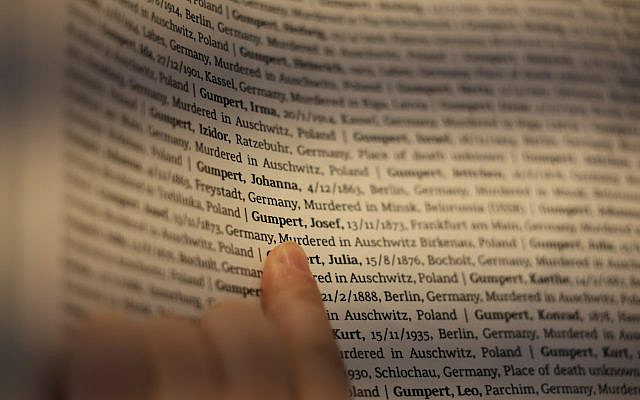
Still, I found myself hoping, irrationally, that maybe she survived; that she found a way out and lived a life outside the war, like my fiancé’s grandmother. But with six million dead, that hope feels impossible. And yet, I chose to hope anyway.
Because what else was I meant to do?
At this moment, Michael Seidman, a member of our group, received a message from his mother. It was a reminder that the day marked exactly eleven months since the passing of his grandmother, Helen Dymant. According to Jewish tradition, it was the final day he could recite Kaddish, the memorial prayer, for her soul.
Helen Dymant, originally from Łódź, Poland, survived Auschwitz, while the rest of her family perished in the Łódź Ghetto and at Chełmno. The Łódź Ghetto was one of the largest ghettos established by the Nazis, where thousands of Jews were confined under brutal conditions before many were deported to death camps. Chełmno was one of the earliest extermination camps, known for its use of gas vans.
Seidman turned and asked a member of the trip to join him in saying the Kaddish on his grandmother’s behalf. Together, as they prayed Mincha, the afternoon prayer, beside the Book of Names, the final Kaddish for Helen Dymant was recited on the very ground where so many perished and where she had once survived.
If the day had ended there, it would have been a beautiful finale to a soul-rending experience, but we still had one more part of the camp to face.
The gas chamber.
I had entered gas chambers earlier in the trip, but stepping into this one, cement walls underground, surrounded by fellow Jews, felt surreal and harrowing beyond words. It was hard to grasp that this gas chamber had only been silent for nearly 80 years, especially knowing that my 93-year-old grandmother was already alive when it was still in use. That single fact collapsed time, making the past feel terrifyingly close.
Surrounded by fellow Jews, passports clutched or tucked away, and silently observed by Polish Auschwitz staff trailing behind us, I felt a cold shiver run through me. We were entering the mouth of the monster.
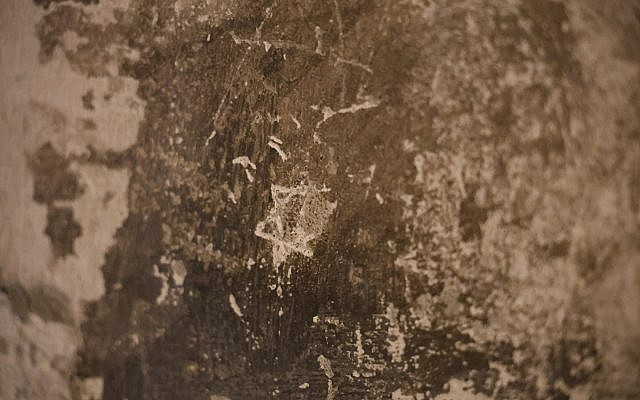
Inside, I saw where someone, maybe many, had scratched a Star of David and words of prayer into the cement wall. As I traced the star with my finger, feeling the slight roughness of the carving, I wondered who might have left it.
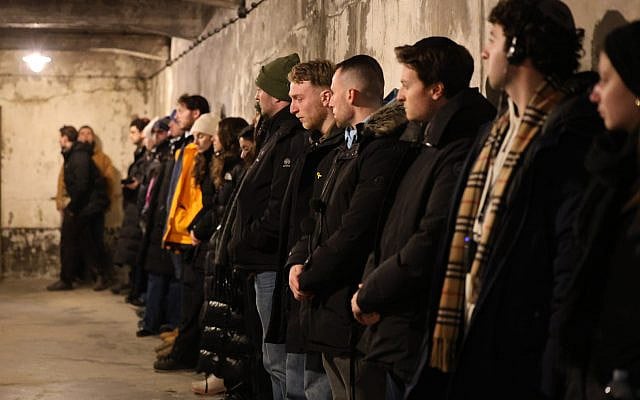
We were quickly told to stand with our backs against the wall and I felt the severe cold even through my coat. It must have been freezing against the bare backs of the murdered. Rabbi Lynn began to speak. He said something that struck me deeply:
“This gas chamber is like a synagogue, with the largest congregation in the world.”
Jews had entered these rooms, this very room, crying out to God, “Shema Yisrael” on their lips. Their last breaths were uttered with God’s name.
Together, we sang those same prayers, those same songs. My heart and brain couldn’t process what had happened here, and what was happening now.
We were then guided into the next area, the crematorium. The ovens stood before us, menacing and incomprehensible. That’s when the sounds of grief reached a level I hadn’t yet heard on the trip, sobbing, screaming, the kind that rattles your soul.
Someone in our group pounded the wall repeatedly, crying uncontrollably, until Rabbi Lynn himself gently walked him out.
Every part of my body screamed to leave that place. But something deeper, my soul, maybe, needed more time. I felt this deep pull demanding I take time to absorb what I’d seen and my people experienced.
The pull was profoundly collective, nearly every trip-goer felt it deeply. You could see it in their eyes: either red and raw from crying, or distant and vacant, staring at nothing as if dissociating to protect their own sanity.
One by one, we slowly exited the chamber. Outside, Rabbi Lynn cradled two boys in his arms, sobbing uncontrollably, whispering, “How can they… can they… can they?” None of us could grasp such cruelty. It’s impossible to understand unless you are the evil itself or see the world through its warped lens.
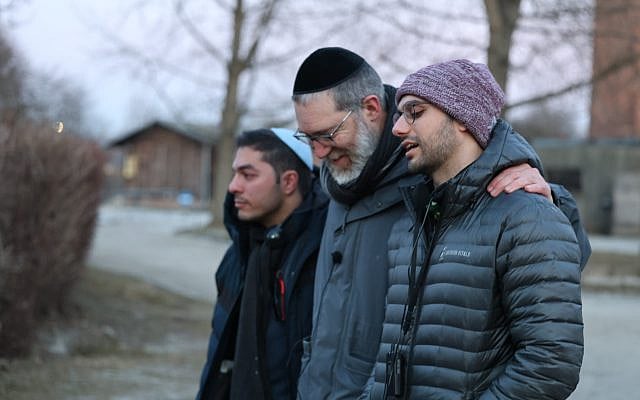
Leaving the chamber felt like ripping open a fresh wound. But exiting the camp was the opposite, an overwhelming release. As I fought back tears that kept threatening to fall, a fellow trip-goer, Niki Kuczborski, suddenly appeared from behind, running, singing “Am Yisrael Chai,” pulling me into a side hug and guiding me toward the group of new friends ahead.
Together, we formed a circle, dancing and chanting loudly, “Am Yisrael Chai! Am Yisrael Chai!” over and over again. If anyone outside our circle was there, I couldn’t tell, because in that moment, surrounded by singing, dancing, and the powerful joy of survival, nothing else mattered. The Nazis? Dead. The Jews? More alive and resolute than ever in our identity.

We danced round after round, and in the quiet corners of my mind, as the circles slowly came to an end, this psalm echoed:
מִזְמ֡וֹר שִׁיר־חֲנֻכַּ֖ת הַבַּ֣יִת לְדָוִֽד׃
A psalm of David. A song for the dedication of the House.
אֲרוֹמִמְךָ֣ יְ֭הֹוָה כִּ֣י דִלִּיתָ֑נִי וְלֹֽא־שִׂמַּ֖חְתָּ אֹיְבַ֣י לִֽי׃
I extol You, O LORD,
for You have lifted me up,
and not let my enemies rejoice over me.
יְהֹוָ֥ה אֱלֹהָ֑י שִׁוַּ֥עְתִּי אֵ֝לֶ֗יךָ וַתִּרְפָּאֵֽנִי׃
O LORD, my God,
I cried out to You,
and You healed me.
יְֽהֹוָ֗ה הֶעֱלִ֣יתָ מִן־שְׁא֣וֹל נַפְשִׁ֑י חִ֝יִּיתַ֗נִי (מיורדי) [מִיׇּֽרְדִי־]בֽוֹר׃
O LORD, You brought me up from Sheol,
preserved me from going down into the Pit.
זַמְּר֣וּ לַיהֹוָ֣ה חֲסִידָ֑יו וְ֝הוֹד֗וּ לְזֵ֣כֶר קׇדְשֽׁוֹ׃
O you faithful of the LORD, sing to Him,
and praise His holy name.
כִּ֤י רֶ֨גַע ׀ בְּאַפּוֹ֮ חַיִּ֢ים בִּרְצ֫וֹנ֥וֹ בָּ֭עֶרֶב יָלִ֥ין בֶּ֗כִי וְלַבֹּ֥קֶר רִנָּֽה׃
For He is angry but a moment,
and when He is pleased there is life.
One may lie down weeping at nightfall;-b
but at dawn there are shouts of joy.
וַ֭אֲנִי אָמַ֣רְתִּי בְשַׁלְוִ֑י בַּל־אֶמּ֥וֹט לְעוֹלָֽם׃
When I was untroubled,
I thought, “I shall never be shaken,”
יְֽהֹוָ֗ה בִּרְצוֹנְךָ֮ הֶעֱמַ֢דְתָּה לְֽהַרְרִ֫י־עֹ֥ז הִסְתַּ֥רְתָּ פָנֶ֗יךָ הָיִ֥יתִי נִבְהָֽל׃
for You, O LORD, when You were pleased,
made [me] firm as a mighty mountain.
When You hid Your face,
I was terrified.
אֵלֶ֣יךָ יְהֹוָ֣ה אֶקְרָ֑א וְאֶל־אֲ֝דֹנָ֗י אֶתְחַנָּֽן׃
I called to You, O LORD;
to my Lord I made appeal,
מַה־בֶּ֥צַע בְּדָמִי֮ בְּרִדְתִּ֢י אֶ֫ל־שָׁ֥חַת הֲיוֹדְךָ֥ עָפָ֑ר הֲיַגִּ֥יד אֲמִתֶּֽךָ׃
“What is to be gained from my death,
from my descent into the Pit?
Can dust praise You?
Can it declare Your faithfulness?
שְׁמַע־יְהֹוָ֥ה וְחׇנֵּ֑נִי יְ֝הֹוָ֗ה הֱֽיֵה־עֹזֵ֥ר לִֽי׃
Hear, O LORD, and have mercy on me;
O LORD, be my help!”
הָפַ֣כְתָּ מִסְפְּדִי֮ לְמָח֢וֹל לִ֥֫י פִּתַּ֥חְתָּ שַׂקִּ֑י וַֽתְּאַזְּרֵ֥נִי שִׂמְחָֽה׃
You turned my lament into dancing,
you undid my sackcloth and girded me with joy,
לְמַ֤עַן ׀ יְזַמֶּרְךָ֣ כָ֭בוֹד וְלֹ֣א יִדֹּ֑ם יְהֹוָ֥ה אֱ֝לֹהַ֗י לְעוֹלָ֥ם אוֹדֶֽךָּ׃ {פ}
that [my] whole being might sing hymns to You endlessly;
O LORD my God, I will praise You forever.
Related Topics
Related Posts