On showing my paintings in Auschwitz
A few weeks ago, an interviewer for Polish Radio asked me whether Auschwitz can be an appropriate venue for contemporary art. His question struck me as a bit disingenuous—perhaps hinting at some misgiving about my ongoing exhibition there, or at remonstrations I’ve received elsewhere for having made the paintings in it.
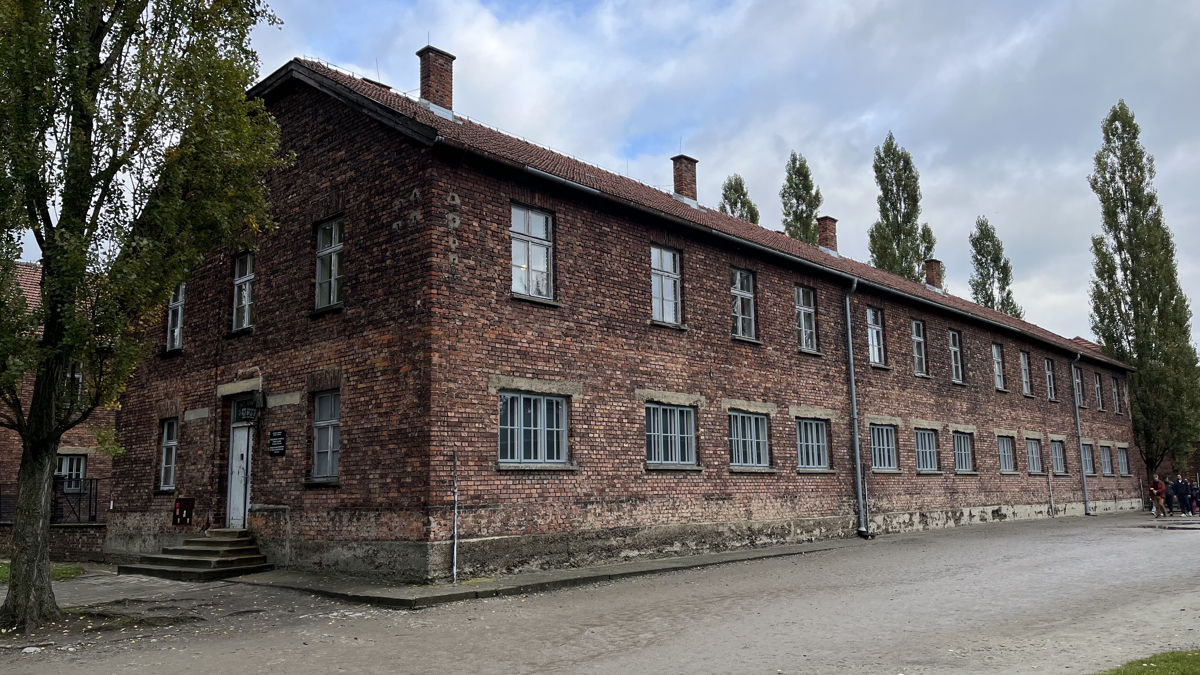
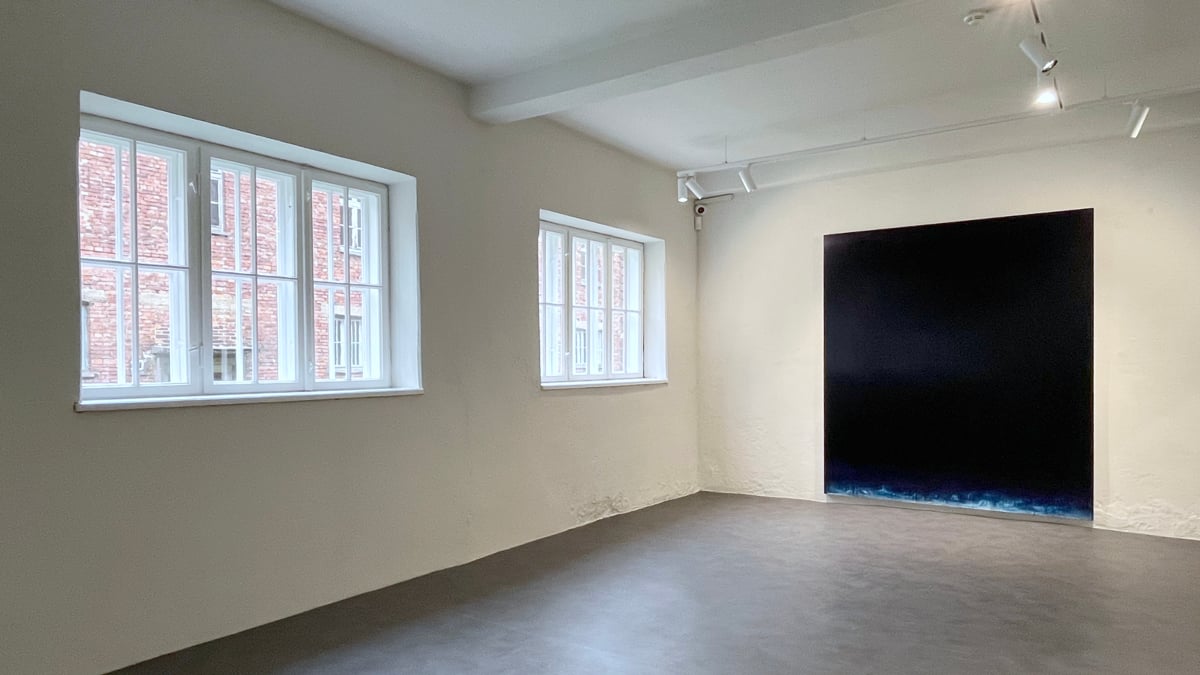
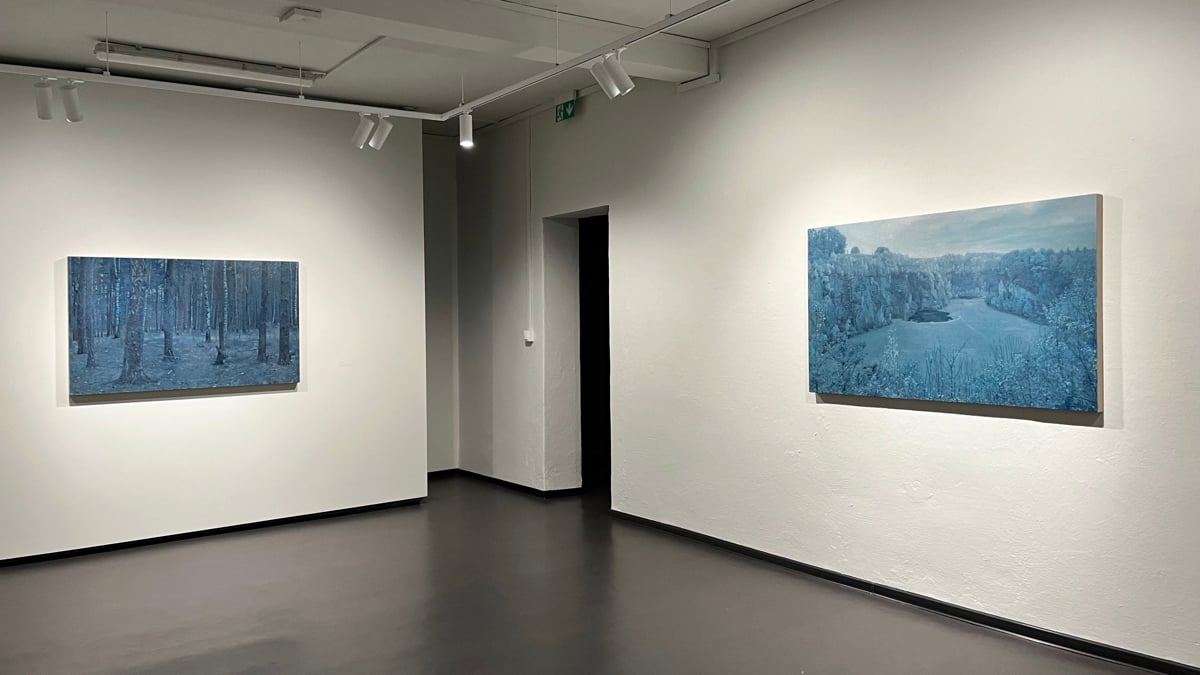
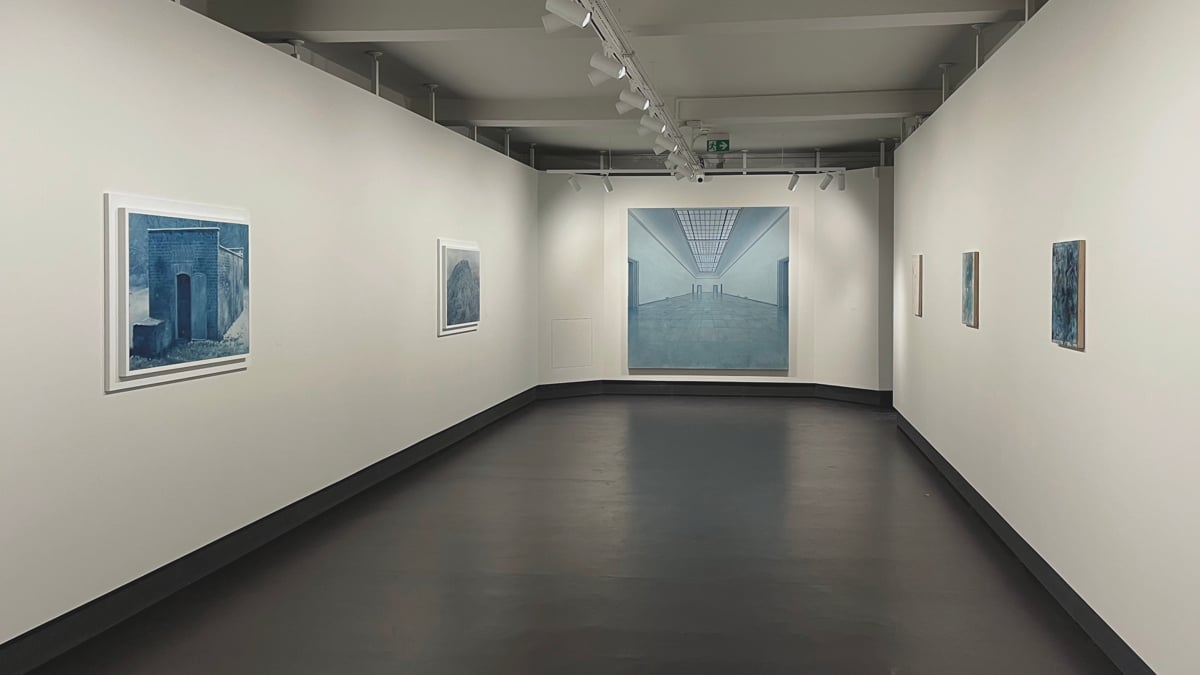
The paintings in question are on view at Block 21, a brick barrack that once served as the prisoners camp hospital. The exhibition is the first large-scale presentation of contemporary art hosted by the Auschwitz-Birkenau Memorial and Museum, and showcases Prussian Blue, a body of work I produced between 2010 and 2016. Back then I didn’t imagine my work would end-up on display at Auschwitz. The paintings had travelled to a number of art museums over the course of a decade when the memorial reached to me to suggest the project. I was taken aback at first, but welcomed the proposal after thorough deliberation. The peculiar hurdles for mounting the artwork at the historical site were cleared prudently as well. Regardless, as my Polish Radio interlocutor intimated, the very idea of such an exhibition can set off a reflexive resistance to seeing contemporary art in Auschwitz, and even reignite the enduring reluctance to seeing art about the Holocaust. I believe these mutually-reinforcing apprehensions are due for a reassessment, for the sake of clarity and of what that clarity may in turn demand.
The most widespread admonition against making art about the Holocaust stems from Theodor Adorno’s categorical declaration, published in the early 1950’s, that “to make poetry after Auschwitz is barbaric”. Though he later retracted it, Adorno’s dictum spread among the bien-pensant as a simplified memo: artists should avoid the Holocaust. The received wisdom evolved into the presumption that an artwork cannot convey the magnitude of the Shoah, that any attempt at approaching it through art ends up cheapening its memory.
There’s been a parallel admonition against instrumentalizing the sites of Nazi concentration and extermination camps. Spanish intellectual and once Buchenwald inmate Jorge Semprún (1923-2011) maintained that, the last survivor having passed away—“…when there will no longer be any real memory of this, only the memory of memories told by those who will never know…what all this really was…”—then grass, roots and brambles should be allowed to encroach on Buchenwald and efface “this camp constructed by men” (The Long Voyage, 1963). Inherited memory, Semprún believed, cannot do justice to the suffering, physical and moral, experienced by the Nazis’ victims.
The sensibilities of Adorno and Semprún retain a large measure of deference. Nevertheless, the implementation of their extreme strictures, let’s face it, would have been much too detrimental to the preservation of the Holocaust’s memory. To wit, Semprún’s wishes were swiftly sidestepped with the establishment of memorials at Buchenwald, Auschwitz-Birkenau, and most other previously Nazi-operated camps. They now receive millions of visitors every year. For its part, Adorno’s dictum restrained reputable painters, but did not much hamper the profusion of Holocaust-themed productions in literature, film, theater, and the other visual arts.
That said, legitimate concerns as to the value (or even validity) of Holocaust themed artworks must not be downplayed. The tensions necessarily implicated in their layered purposes are not always coped with, let alone acknowledged—e.g., the quirky ties between aesthetics and ethics, the troubling overlap of artistry and the allusion to horror. In parallel, there are genuine concerns as to how far the Holocaust’s historical sites may be intervened in order to advance their respective institutions’ educational mission while also safeguarding their grounds’ solemnity and their victims’ dignity— a dilemma readily apparent in-situ.
The post-War custodians of the Holocaust’s sites devoted their initial efforts to preserving the buildings standing, documenting the atrocities committed there, and honoring their victims’ legacy. Monuments were commissioned and erected. Surviving facilities not safeguarded for future evidence as found were retrofitted into administrative offices, warehouses, documentation centers, exhibition halls. If that was sensible overall, the new memorials’ stance was often tainted by Cold-War machinations, mostly of the Soviet kind. But not exclusively. When I first visited Auschwitz, in 2012, a whitewashing Austrian pavilion still boasted the welcome title: “March 11, 1938: Austria—The First Victim of National Socialism.” Fortunately, such aberrations have been corrected.
As the historical sites turned into tourist destinations, their respective managers developed up-to-date presentations to streamline their moral message to the flows of visitors. Nowadays, the more vexing tampering is not encountered in the content distributed but in the manner of its distribution. The educational exhibitions are increasingly conducted by fashionable pedagogical know-how delivered in lavish visual montages and enhanced with the latest technologies for visitor engagement. I concede these elaborate displays may confer the necessary precept—Never Again—to the largest share of people. Even so, I’ve found myself yearning for Semprún and his admonitions whenever the presentations verge into the needlessly fanciful and sentimental. The fact is these memorials have evolved over time. And they will keep evolving, responding to new circumstances in invariably compromised ways that will give rise to scrutiny and debate.
The ruins of the camps are no longer the settings for quiet personal reflection that self-declared sophisticates like myself (and, I’d guess, my radio interlocutor) would consider fitting. Hence, the question as to whether contemporary art can be shown at Auschwitz should lose much of its pathos. One may even elaborate: Could the introduction of art provide a reprieve from the expedient didacticism brandished by the memorials?
Not so fast. Contemporary art became a means to extraneous interests a while back. Its “art” component is presently subordinated to interior-décor at art-fairs, to commodity-trading at auction-houses, to propaganda-purveying at biennials, and to most-of-the-above at galleries and museums. What’s more, artists who’ve advanced the postmodern “critique” of the Holocaust’s memory seem to find common cause in the slogan There’s no business like Shoah business—contemptuously regurgitated by antisemites, anti-Zionists and even a cynical variety of Jews. A memorable instance, the 2002 exhibition Mirroring Evil at New York’s Jewish Museum (of all places…) featured purportedly critical artworks in the shape of, for instance, cute Hitler-esque figurines, a children Lego set of a concentration camp, and gas cans repackaged as luxury designer gifts—provocations which others like me found, beyond insulting, indeed evil.
That these contrivances might show up camouflaged as art in Auschwitz is a thought conducive to nausea. Admittedly, the pondering of mass murder at Auschwitz may also produce the said physiological response. From this unsavory correlation follows that conveying the feeling of the Holocaust through art is less an impossibility than a bad idea. So, what should one seek when representing the Holocaust in art? And how can an artwork actually achieve that? My belief is that a pertinent approach to an answer will lead to one’s understanding of art being scrutinized, rattled, and reshaped in return of a strengthened aesthetics. Correspondingly, the judicious deployment of art in Auschwitz can emerge after probing and reinforcing the foundation of what Holocaust memorials are expected to do. Rather than litmus-tests, these are definitional undertakings.
I was nearing 50 when I decided to take on the first challenge. For me, sidestepping the self-indulgence of dark humor and the vagaries of metaphor was a self-evident prerequisite to pursuing an effective representational bridge to the Holocaust. I tentatively considered that some connection between painting and the historical record would assist the task at hand. To my astonishment, my hunch led me to a prospect both daunting and baffling.
This is what I found: The first synthetic blue pigment available to European artists, Prussian blue, was discovered in Berlin in 1704, hence its designation. It was quickly adopted and has been a standard of the painter’s repertoire since. A strong colorant, Prussian blue is fit for industrial use: The uniforms of the Prussian army were tinted with it through the following century. Much later, the commercial disinfectant Zyklon-B—developed in the 1920’s by the Jewish chemist Fritz Haber—was implemented for mass murder at the Nazi gas chambers. The cyanide in the lethal product also seeped persistently into their brick walls and chemically bonded to their ferrous contents, developing ferrocyanide residues conspicuous as saturated-blue stains. These stains remain prominent at the still-standing gas chambers of the Majdanek and Stutthof memorials. As it happens, the compound ferrocyanide is employed in the artists’ trade—under the label Prussian blue. Oddly enough, a substance present on my palette had literally colored, not just the German past, but the Holocaust itself.
Thus my paintings would summon the Shoah’s memory through a clear-cut association to its colored traces. Prussian blue enabled me to bypass the feebleness of symbol, sentiment and commentary. Ditto the iconography of inexpressible experience, since I reserve no privacy rights to what ended up being seen in my works: The empty architecture of systematic murder, the picturesque landscapes grown out of atrocity, the deepest darkness of their shared color, the painterly stains left by it in my studio rags. All of it could stand, in Jorge Semprún’s estimation, for the memory of memories told by one who will never know…what all this really was… (and God willing none of us will). And yet, while the individual memories still carried around by survivors will soon all evanesce, the void they’ll leave behind can be partly filled by memory of a different order—as the sort impressed in that fateful, witness-bearing color.
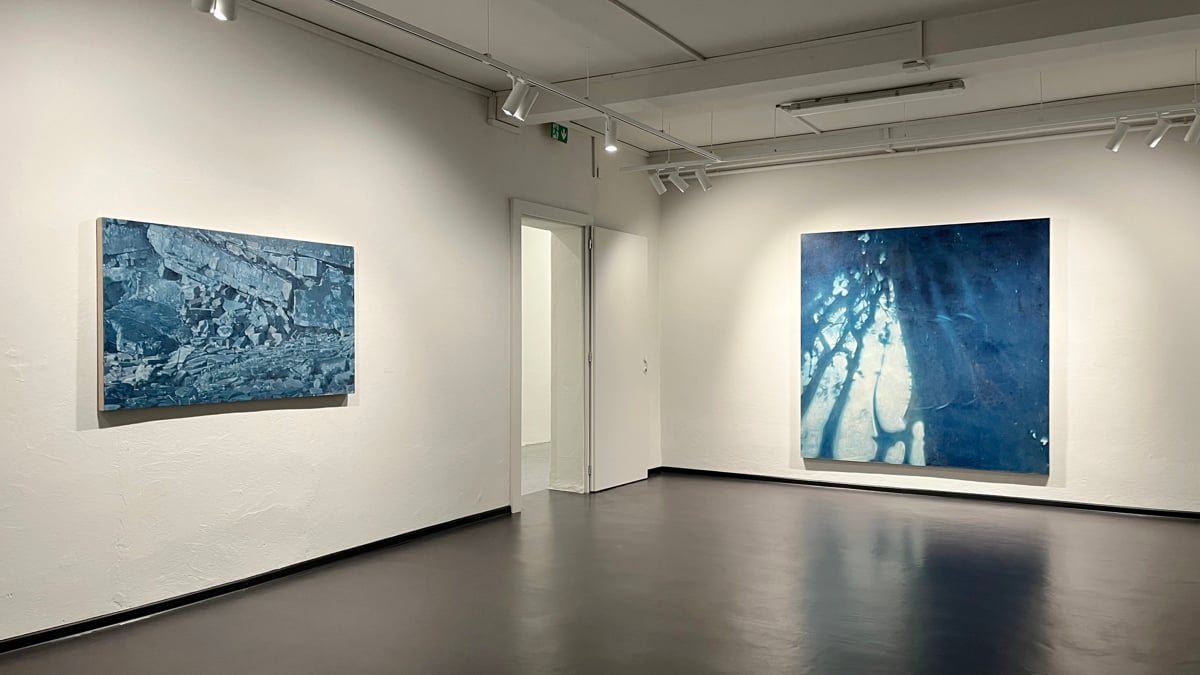
The chromatic framework of my paintings resonates with their photographic fidelity, their art-historical clues, their palpable labor-intensiveness. Together, they stimulate responses that the Auschwitz exhibition has reoriented and enhanced. Like every viewer there, the artworks become engulfed by the site depicted in more than a few of them. The gap conjured up elsewhere shrinks, as the there in those paintings becomes here where one stands—the memorial ground that, we sense, will forever know what all that really was. A multilayered give-and-take between art and site occasions harmonies, counterpoints, contrasts and dissonances that prompt one to reflect on the there and here, the then and now, the what and how… All told, this dynamic unravels into the very experience of a communal memory, one in which those in the presence of the paintings partake. While at it, one might realize, before one’s own eyes, that art not only can, should, but in fact must continue the strife to represent the Holocaust—insofar as keeping its memory alive remains imperative.
Artworks traditionally served as vehicles of historical memory. The better ones from the past still captivate us by arousing thoughts/feelings of common humanity across ages, geographies and cultures. To extend, even minimally, painting’s potential for bringing about that outcome has been my aspiration as an artist. To attempt doing so at the Auschwitz Memorial has been my life’s privilege.
♦♦♦
Prussian Blue is on view through October 2026 at Block 21 in the Auschwitz-Birkenau Memorial and Museum.