
Founder | Children’s Book Author | Empowering Women and Girls & Supporter of Global Peace Initiatives | Mom | Yema
On the Road for Peace — A Hopeful Step Forward
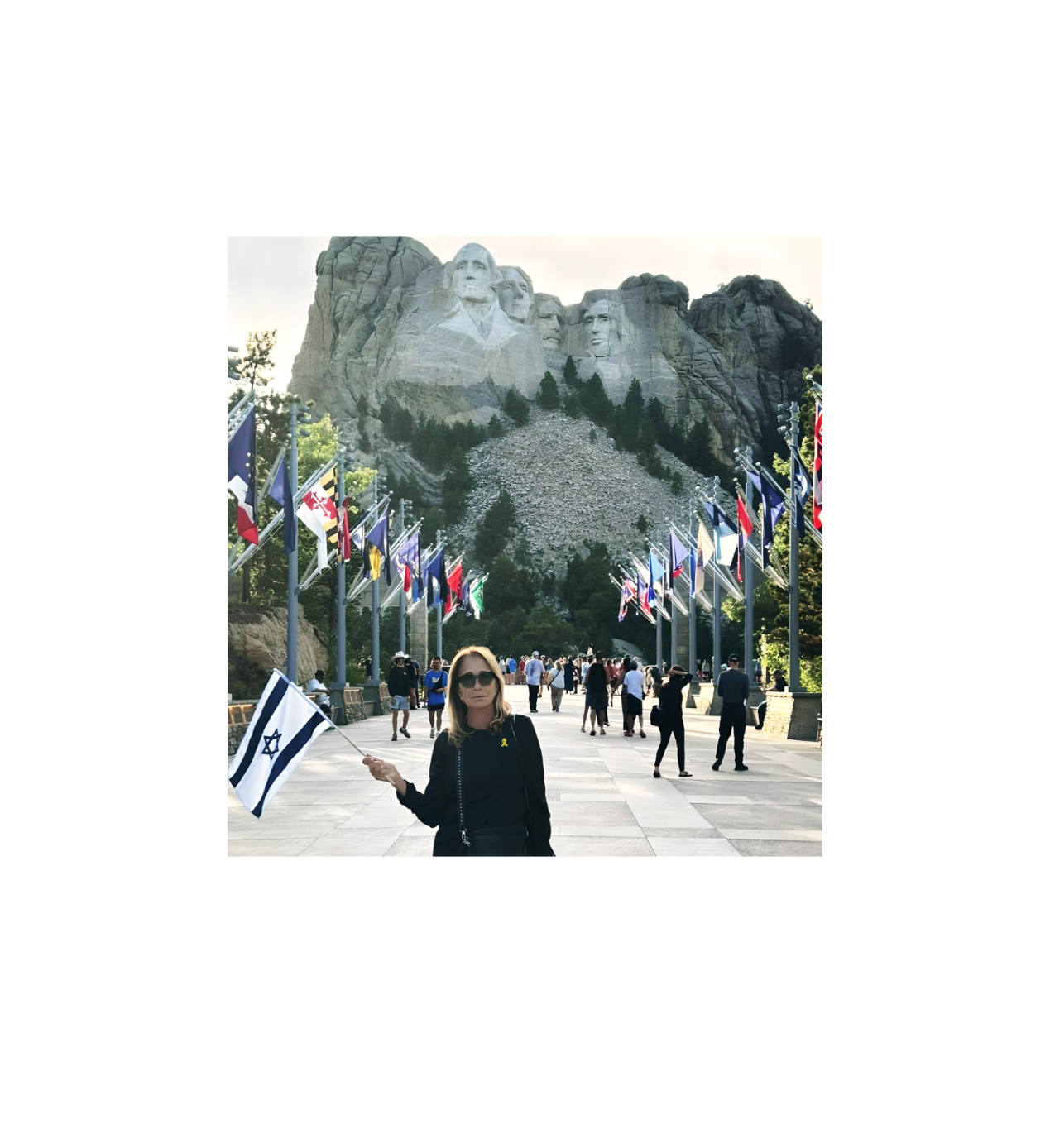
The author at Mount Rushmore, holding the Israeli flag — a call for peace, unity, and justice.
For the past three months, I’ve been traveling across the United States and Canada—literally on the road—carrying the Israeli flag. But this flag represents more than the current conflict or those held hostage in Gaza. To me, it stands as a symbol of peace itself.
From bustling city streets to quiet country roads, I’ve met people from all walks of life. Despite the diversity, one message resonated everywhere, voiced in many languages and tones but always clear and urgent: enough.
Enough war. Enough suffering. Enough loss—on both sides.
A Moment of Solidarity at Mount Rushmore
One moment that remains etched in my heart was standing in front of Mount Rushmore, surrounded by the flags of all 56 U.S. states and territories. Holding the Israeli flag there felt profoundly symbolic—a call for unity, hope, and the urgent need for dialogue, right in front of one of America’s most iconic symbols of democracy and leadership.
A Step Toward Peace
After months of despair, there is finally a tentative glimmer of hope. A preliminary agreement between Israel and Hamas has been announced—potentially the first step toward ending the devastating war in Gaza. If this fragile deal moves forward, it could pave the way for a broader peace process—one aimed not only at halting violence but at building something lasting.
But hope alone isn’t enough. It must be matched with urgent action, including:
-
A complete and immediate ceasefire.
-
The safe return of all hostages to their families.
-
A substantial and sustained influx of humanitarian aid into Gaza.
International mediators, particularly from the United States, Egypt, Qatar, and Turkey, have been critical in reaching this moment. Yet the real challenge lies ahead: ensuring all parties honor their commitments and protect this delicate progress.
Accountability Must Be Universal
Too often, conversations about peace feel one-sided. Important reforms are needed on the Palestinian side—including disarming Hamas and advancing democratic governance. But accountability must also extend to Israeli decisions, such as ending the previous ceasefire. Lasting peace demands that all parties be held to the same standards.
What Comes Next?
This agreement is not the finish line; it is a crucial fork in the road. The future hinges on bold, sustained leadership—especially from Israel and from Palestinian leaders who truly represent their people and are committed to peace. International mediators have helped bring us to this point, but without courageous action from those on the ground, no outside force can build lasting peace.
The hoped-for outcomes include:
-
A rebuilt Gaza where families can live safely and with dignity.
-
An end to the cycle of violence, where rockets and airstrikes no longer define daily life.
-
A future in which Palestinians can live in freedom, dignity, and security—alongside Israel—grounded in mutual recognition, justice, and economic opportunity.
A Fragile but Vital Hope
The past two years have been devastating. The wounds are deep, and the pain remains raw. Trust is fragile.
But perhaps today marks a turning point.
Perhaps this is the beginning of the end of this terrible war—and the start of a new chapter for both Israelis and Palestinians.
Let peace be more than a word. Let it be our future.
Related Topics
Related Posts