
Oversimplifying the Middle East Conflict
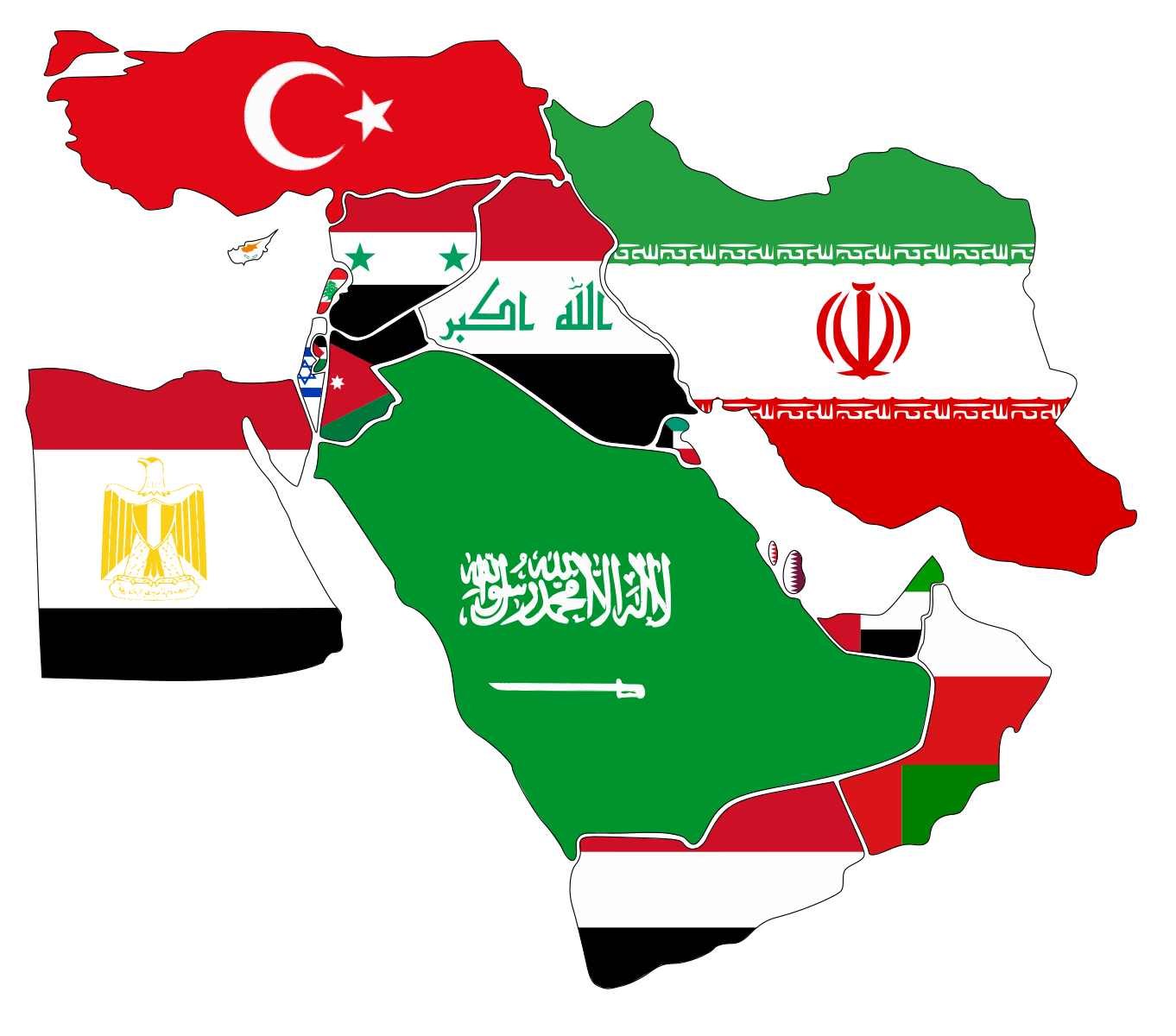
On Saturday, November 8, Standing Together Co-Director Alon-Lee Green made the following statement during the group’s tour in Boston: “I think that one of the things we need to do is to make (the conflict) not complicated…to make it easy to stand with humanity or with solidarity with the Palestinians.”
Let me begin by saying that I have the utmost respect for Standing Together. I follow their work closely and believe they play a vital role in advancing justice and a peaceful solution to the Israeli–Palestinian conflict. I also have deep respect for Alon-Lee Green, both as an activist and as a person. I have met him a couple of times and know the good work he does.
My comments here, therefore, are not meant to discredit Standing Together or the people involved. They are offered out of tough love.
Many people who engage in the Middle East conflict attempt to simplify it. On much of the political left, the conflict is often framed primarily as a human-rights struggle—an oppressor-versus-oppressed dynamic in which ending discrimination and promoting equality appear to be the core and only issues.
But if there is one truth that can itself be stated simply, it is that the conflict is not simple. The Israeli–Palestinian conflict, and the broader Middle East dynamics surrounding it, is not about a single issue. It is multifaceted. Attempts to view it through only one lens, however morally compelling, risk missing other critical dimensions.
Of course, one does not need to be an expert to understand the conflict or contribute toward a solution. But understanding its complexity requires acknowledging that multiple narratives and grievances operate at the same time.
In an effort to preserve the spirit of Alon-Lee’s call for clarity — while simultaneously explaining why genuine simplicity is elusive — this article offers a multilayered framework inspired by Micah Goodman’s analysis in Catch-67 to make sense of the different facets of the Middle East conflict.
First Layer: Safety vs. Freedom
The first layer of the conflict is the most tangible, grounded in the daily realities and lived experiences of ordinary Israelis and Palestinians.
For Israelis, the central day-to-day concern is safety. For decades, Israelis have endured suicide bombings, shootings, rocket fire, and now the trauma of October 7. These experiences — combined with the deeper collective memory of Jewish persecution and the Holocaust — shape a worldview where physical safety becomes the highest priority.
For Palestinians, the foremost concern is freedom. Palestinians living under Israeli military rule in the West Bank face movement restrictions, checkpoints, land-use limitations, and bureaucratic controls that affect nearly every aspect of life. These daily hardships, combined with historical memories of displacement and lost sovereignty under previous powers, drive a deep and enduring desire for self-determination and dignity.
It is largely within this layer that many observers — especially on parts of the political left — frame the conflict as one of oppressor versus oppressed. Israel is a sovereign state with one of the most powerful militaries in the world, while Palestinians are a stateless people whose armed factions are no match for a modern army. As a result, Israelis do not experience the daily burdens of the conflict in the same way Palestinians do. Given the stark material imbalance and the clear visibility of Palestinian suffering under occupation, it is understandable that some view the core issue of the conflict as a human-rights struggle that centers on Palestinian freedom.
But this perspective, while morally compelling and grounded in real injustices, captures only the surface layer of the conflict. Beneath it lie additional layers — ideological, regional, and civilizational — that complicate the picture and make lasting solutions far more challenging than this first layer alone suggests.
Second Layer: Nationalist Rivalries
Beneath the daily grievances lies the ideological struggle between Zionism and Palestinian nationalism, both of which see the entire land between the Jordan River and the Mediterranean Sea as historically and morally theirs.
For many Israelis, even if long-term security could be guaranteed under a two-state solution, ideological commitments would still lead them to oppose relinquishing parts of the land — especially the West Bank, which many Israelis refer to by its ancient Hebrew names, Yehuda ve-Shomron. From their perspective, this territory is the historic heartland of the Jewish people and indispensable to Jewish identity.
Likewise, for many Palestinians, even if they were to gain independence in the West Bank and Gaza Strip, the land within the Green Line — what many refer to as Filastin al-Dakhil — remains part of their national homeland. From this perspective, conceding those areas is not simply a political compromise but a relinquishing of ancestral claims and historical justice.
In this layer, even without the power imbalance, you still have two national movements locked in a zero-sum struggle over the same land. Palestinians in the West Bank and Gaza have no other homeland. Israeli Jews inside the Green Line have nowhere else to go either. Here the conflict becomes existential for both sides.
Third Layer: Regional Conflict
Yet, the Israeli–Palestinian conflict never existed in isolation. For decades, it was embedded within a larger struggle between Israel and the surrounding Arab states.
Since declaring independence in 1948, Israel has fought multiple interstate wars with neighboring countries: the 1948 Arab–Israeli War, the Suez Crisis (1956), the Six-Day War (1967), and the Yom Kippur War (1973), among others.
Israel has also often been perceived as the “other.” It is the only Jewish-majority state in a region dominated by 22 Arab-majority states with far larger populations and territories. Viewed from this angle, the power balance is not between Israelis and Palestinians; it is between a small minority population and a predominantly Arab and Muslim region.
This regional framing helps explain why earlier generations of American progressives sympathized strongly with Zionism. As Joshua Muravchik notes in Making David into Goliath, before 1967 many American progressives saw Israel as an underdog struggling for survival in a hostile environment. The recent memory of the Holocaust reinforced this sympathy, and the narrative of a small Jewish state surrounded by powerful Arab nations shaped much of American liberal support for Israel.
However, the aftermath of the 1967 Six-Day War dramatically shifted these perceptions. After Israel took control of the West Bank, Gaza Strip, East Jerusalem, the Sinai Peninsula, and the Golan Heights — and demonstrated overwhelming military superiority — the conflict was reframed in much of the West. No longer viewed as David against a regional Goliath, Israel increasingly appeared to be the dominant military power governing a stateless Palestinian population.
These new realities undeniably matter. But from the Israeli perspective, the regional layer never vanished. Israel remains a demographic and cultural minority in the Middle East and continues to view itself as surrounded by adversarial forces. In addition to historically hostile states, Israelis now face newer regional threats — most notably the Islamic Republic of Iran and its network of proxies, including Hezbollah, Hamas, and the Houthis.
Fourth Layer: Clash of Civilizations
The fourth and final layer is the most abstract: the way the Middle East conflict fits into Samuel Huntington’s broader theory of “Clash of Civilizations” — specifically, the tension between the West and the Islamic world.
Although the conflict is, at its core, a modern struggle over land and national self-determination, the deeper historical memories of religions and civilizations influence how each side interprets the conflict, perceives the other, and approaches reconciliation.
Setting aside debates about whether Israel is a “Western colonial project,” Israeli society today is more Westernized than Palestinian society or much of the broader Arab and Islamic world. Meanwhile, the Muslim memory of suffering under Western colonialism is embedded in Palestinian historical consciousness. For many Palestinians, Israel can evoke or symbolize those older traumas, shaping attitudes toward compromise and trust.
Civilizational differences also introduce practical barriers to reconciliation. The Israeli–Palestinian conflict is often compared to the Northern Ireland conflict, where people-to-people dialogue helped pave the way for the Good Friday Agreement. But an important difference lies in the cultural and linguistic distance between the two sides. In Northern Ireland, the communities spoke the same language and shared a broadly Western cultural framework. Communication — both literal and symbolic — was easier.
In contrast, Israelis and Palestinians are divided not only by politics but also by language and cultural worlds. Israelis speak Hebrew and are embedded largely within a Western sociopolitical orientation; Palestinians speak Arabic and are part of the broader Arab and Muslim cultural sphere. These civilizational differences do not preclude peace — but they introduce obstacles to mutual understanding that the British and Irish did not have to overcome.
Still Oversimplified
As the four layers illustrate, the conflict is anything but simple. Even this framework — helpful as it may be — likely leaves out other key elements that shape the Israeli–Palestinian conflict and the broader Middle East.
Still, the purpose of this multilayered approach is not to offer an exhaustive explanation, but to provide a structured way of thinking. When new events unfold, we can ask: Which layer do they fit into? The first? The second? The third or fourth? Or do they point to a new layer altogether?
Developing this habit of “layered thinking” helps us recognize the deeper forces at work beneath any headline or moment of crisis.
If people can better identify the contexts and narratives that underpin each event, they can respond with more nuance, empathy, and realism. And perhaps that — understanding the complexity without being overwhelmed by it — is one small but meaningful step toward contributing to a future solution for this intractable conflict.