
From Kibbutz to the global stage
Pakistan, Turkey, Egypt mediate Iran war as India, IMEC may gain, China
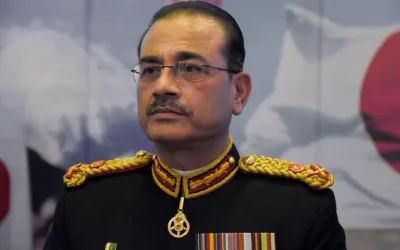
As Pakistan and Turkey Move to Stop the Iran War — They Are Defending 21st-Century Trade Routes.
When Pakistan, Turkey, and Egypt step in to mediate an end to the fighting between Iran and the United States, their move is not driven by security considerations alone — but by deep geo-economic interests.
As I assessed on March 15, the war in Iran is creating significant uncertainty around the Belt and Road Initiative (BRI) — China’s central trade corridor, which passes, among other routes, through Iran. At the same time, India — Pakistan’s strategic rival, and a country with a long history of tensions with China, Pakistan’s key ally — is not only maintaining but strengthening its position in IMEC- trade corridor.
India continues to import oil from Iran through the Strait of Hormuz, operates the Chabahar port, and at the same time benefits from incentives to expand its use of Russian and Iranian oil.
The implication is clear: while the BRI is weakened by instability, India is consolidating itself as a viable alternative axis.
Today, Barak Ravid reported in Axios and Israel’s Channel 12 that Pakistan, Turkey, and Egypt are actively working to mediate between the parties, with a meeting reportedly planned in Pakistan’s capital. Such mediation could not only lead to a ceasefire — but also help stabilize Chinese trade routes before deeper US strikes on Iranian infrastructure cause long-term damage to the BRI and China’s global trade network.
At the same time, China is signaling that it is not merely waiting on developments. This week, Chinese state media reported agreements with Kenya and Tanzania to develop and upgrade Lake Victoria as part of expanding its trade routes in Africa. This move is also directed toward India and the West — signaling accelerated Chinese positioning in East Africa.
On the other side, alternative corridors are also taking shape — ones that are not welcomed by China and its partners. These include initiatives such as VICMED — linking Lake Victoria to the Mediterranean — alongside routes through Somaliland, Ethiopia, and the port of Berbera, supported by India, Israel, and the UAE, with a possible extension to Benghazi in Libya if Egypt refrains from cooperation via Alexandria.
Within this system, Turkey and Pakistan are not neutral players. Both are significant arms producers, with expertise in drones and ballistic missiles, and both maintain long-standing rivalries with India. Tensions between Pakistan and Afghanistan — a country experiencing development momentum with Indian support — further intensify the strategic dimension of their involvement.
Pakistan, in particular, holds unique advantages as a mediator: strong ties with the United States, a large Shiite population — second only to Iran — strategic relations with Saudi Arabia, and its status as a nuclear power, which makes it a relevant actor in discussions over the future of Iran’s enriched uranium.
According to reports in the Financial Times, multiple rounds of contacts have taken place in recent days between Pakistan, the United States, and Iran, as well as between Pakistan, Turkey, and Egypt, with each engaging different Iranian actors. Turkey and Egypt have also involved Steve Witkoff, President Trump’s envoy, who was previously engaged in talks with Iran in Oman and Geneva.
Meanwhile, markets are signaling cautious optimism: stock markets in the US and Europe are rising, oil prices have dropped by around 10%, and while Iranian officials continue to deny developments, the broader picture suggests a shared interest in containing escalation.
With great power interests on the line, and with a potential meeting between President Trump and China’s leader on the horizon, this may not be merely a moment of a possible ceasefire — but a turning point.
The war in Iran is not just a regional conflict — it is a struggle over control of the trade routes of the next global era.
Related Topics
Related Posts