
Political analysis, conflict dynamics & human rights
Pakistan’s Nukes, America’s Folly: Sacrificing India for a Rogue Ally
Source X
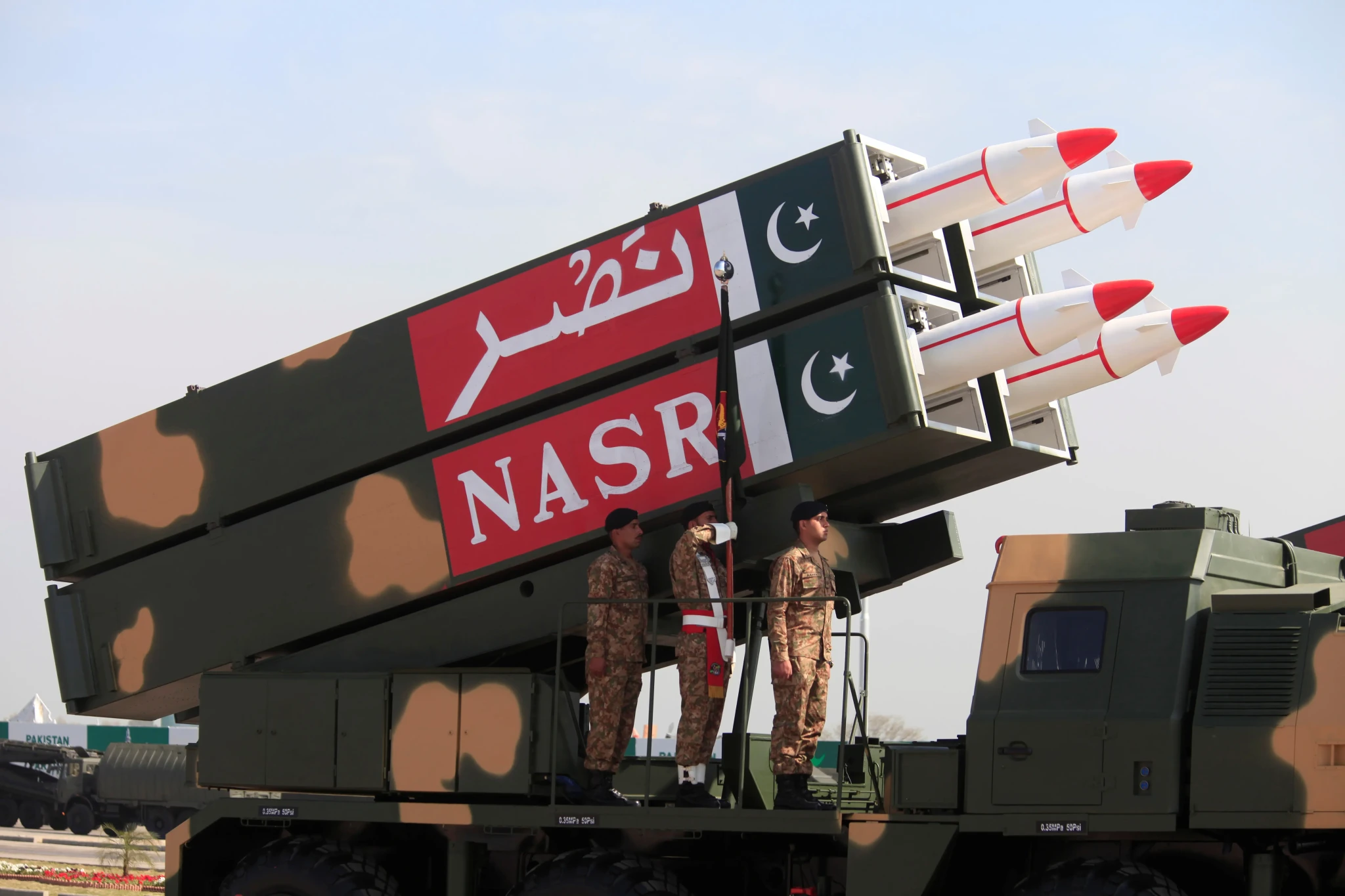
Pakistan’s duplicity has long strained its relationship with the United States, but recent events demand a reckoning. The audacious remarks of Pakistan’s Army Chief, Field Marshal Asim Munir, who reportedly threatened to “take half the world down” alongside India while on American soil, expose a reckless brinkmanship that no ally should tolerate.
Yet, the Trump administration’s apparent leniency toward Islamabad risks emboldening a state with a sordid history of enabling terrorism and destabilizing the region. As John F. Kennedy warned, “Fool me once, shame on you; fool me twice, shame on me.”
America cannot afford to ignore Pakistan’s dangerous double games, especially when they threaten global security and strain ties with a steadfast ally like India.
A Legacy of Betrayal
Pakistan’s track record as a US ally is riddled with deceit. Declassified US documents from 2010, cited by Reuters, reveal that Pakistan’s Inter-Services Intelligence (ISI) paid $200,000 to the Haqqani network for the 2009 Khost attack, which killed seven CIA officers. This act of treachery, funded by a supposed partner receiving billions in US aid, casts serious doubt on Pakistan’s reliability.
The 2008 Mumbai attacks, orchestrated by Lashkar-e-Taiba (LeT) operative David Coleman Headley, a Pakistani-American, further illustrate this betrayal. Headley’s extensive surveillance in Mumbai, facilitated by ISI connections, led to 166 deaths, including six American citizens at the Taj Mahal Palace Hotel and Nariman House.
The 9/11 attacks, planned by Khalid Sheikh Mohammed (KSM), a Pakistani al-Qaeda operative, remain the deadliest assault on US soil, claiming 2,977 lives, predominantly Americans. KSM’s nephew, Ramzi Yousef, also a Pakistani, masterminded the 1993 World Trade Center bombing, aiming to topple the towers.
These attacks, enabled by Pakistan’s permissive environment for jihadist groups, highlight a state that has either failed to curb terrorism or actively abetted it. Michael Rubin, a senior fellow at the American Enterprise Institute (AEI), a center-right think-tank, described Pakistan as behaving like “a rogue state.”
Commenting on Munir’s nuclear threats, Rubin told ANI, “Pakistan is raising questions about whether it can fulfill the responsibilities of being a state. The field marshal’s rhetoric is reminiscent of what we’ve heard from ISIS and Osama bin Laden.”
Munir’s Nuclear Provocation
Munir’s alleged remarks, delivered during a meeting with US military officials in Tampa, Florida, mark a dangerous escalation. Middle East expert Zahack Tanvir aptly noted, “Asim Munir’s speech in the United States, threatening to bring half the world down alongside India, is one of the major reasons why the world fears Muslim countries acquiring nuclear weapons.” Such brazen threats, made on American soil, are unprecedented and alarming.
Tanvir’s question cuts to the core: “Why is the United States tolerating this thuggery on its own soil?” When Iran threatens to wipe Israel off the map, the US responds decisively, yet Pakistan’s similar rhetoric elicits little reaction.
Professor Brahma Chellaney, a prominent Indian strategist, remarked, “Nuclear saber-rattling is Pakistan’s stock-in-trade.” Munir’s comments, however, go beyond posturing, signaling a willingness to leverage Pakistan’s nuclear arsenal for geopolitical blackmail.
Hudson Institute scholar Aparna Pande, in a 2024 analysis, warned that Pakistan’s nuclear capabilities, combined with its history of supporting terrorism, pose a “unique threat” to global security. Pande’s perspective, rooted in center-right skepticism of unchecked alliances, underscores the need for the US to reassess its approach to Pakistan.
Trump’s Miscalculated Leniency
The Trump administration’s apparent warming toward Pakistan is baffling. Munir’s second US visit in under two months, including meetings with General Michael Erik Kurilla at CENTCOM and an invitation to Pakistan, suggests a troubling prioritization.
Indian journalist Vikram Chandra warned, “It hurts Trump’s efforts to describe himself as ‘The Peace President’ if his new favorite Pakistani Army Chief is sitting on US soil threatening to blow up half the world.” Chandra’s critique highlights the contradiction between Trump’s peace rhetoric and his tolerance of Pakistan’s provocations.
Max Abrahms, an international security professor and author of Rules for Rebels: The Science of Victory in Militant History, noted, “The most unexpected foreign policy development of this administration has been the downgrading of US relations with India for Pakistan.”
Abrahms added, “What’s also unexpected is that the fallout really began over Operation Sindoor when India was responding to Pakistan-backed Islamist terrorism against civilians.”
This operation, a defensive measure against Pakistan-sponsored attacks, should have strengthened the US-India ties, not driven a wedge. Instead, Trump’s engagement with Pakistan risks alienating India, a democratic counterweight to China and a reliable partner in counterterrorism.
Vienna-based Geopolitical strategist Velina Tchakarova observed, “This is the real reason for the deterioration of the US-India ties, not tariffs or Russia.” India’s strategic importance far outweighs Pakistan’s unreliable partnership.
In a 2018 congressional testimony, Jeff M. Smith, a research fellow at the Heritage Foundation, criticized US policy toward Pakistan, highlighting that Pakistan’s selective counterterrorism efforts—cooperating against al-Qaeda but tolerating groups like the Haqqani network and Lashkar-e-Taiba that target Afghanistan and India—undermine US interests.
Smith urged stronger measures, including withholding aid and imposing sanctions on Pakistani officials linked to terrorism, to pressure Pakistan to align with US goals in South Asia.
Experts argue that, if the United States wants to pull Pakistan away from China, it cannot be done at the cost of losing a permanent and non-bothering ally like India.
Ideological Blindness and Regional Risks
Pakistan’s actions reflect a deeper ideological challenge. Rubin’s stark assessment—“Asim Munir is Osama bin Laden in a suit”—captures the danger of Pakistan’s military leadership embracing a worldview that justifies nuclear threats and terrorism.
In a 2005 testimony before Congress, Danielle Pletka, a senior fellow at the American Enterprise Institute, highlighted Pakistan’s complex role as a US ally, noting that it has been an important partner in the war on terror but has also allowed domestic extremists to operate freely and failed to fully address nuclear proliferation risks, such as those posed by A.Q. Khan. This duality, which enables Pakistan to maintain ties with both the U.S. and problematic actors, underscores the need for stronger US pressure to ensure Pakistan’s reforms align with American interests.
This ideological disconnect, as Rubin noted, stems from America’s tendency to view terrorism through the lens of grievances rather than ideology, a misstep that enables Pakistan’s duplicity.
Munir’s threats also raise concerns about Pakistan’s nuclear arsenal. Rubin warned that such rhetoric could provide cover for terrorist elements to “go rogue” with nuclear weapons, a scenario that demands urgent attention.
He suggested that the international community consider a “managed decline” of Pakistan, potentially recognizing breakaway regions like Balochistan or even securing its nuclear arsenal through military intervention. While extreme, Rubin’s proposal reflects the gravity of the threat.
Pande, at the Hudson Institute, emphasized that Pakistan’s nuclear capabilities, paired with its terrorism ties, require stricter international oversight.
A Path Forward
The US must confront Pakistan’s double games with decisive action. Rubin’s recommendations—expelling Munir, revoking Pakistan’s major non-NATO ally status, and considering terrorism sponsor designation—offer a starting point.
The US should also bolster its partnership with India, which shares democratic values and a commitment to counterterrorism. Abrahms’ observation about the fallout from Operation Sindoor underscores India’s role as a victim of Pakistan-backed terrorism, not a provocateur.
Strengthening US-India ties, as Pande suggested, provides a strategic hedge against both Pakistan and China. Multilateral pressure is essential to address Pakistan’s nuclear threat.
The Heritage Foundation has advocated for coordinated efforts to enforce oversight of Pakistan’s nuclear program, a pragmatic step to mitigate risks. The U.S. must also hold Pakistani military officials accountable for terrorism links, as Smith proposed, through targeted sanctions and visa bans.
A Call for Strategic Resolve
Pakistan’s troubling legacy of enabling terrorism—from the 2008 Mumbai attacks to the catastrophic 9/11 tragedy—combined with Field Marshal Asim Munir’s alarming nuclear threats on US soil, signals an urgent need for a bold recalibration of American policy.
The Trump administration’s apparent leniency toward Islamabad risks empowering a state that has consistently undermined US trust while straining the vital partnership with India, a democratic anchor in the Indo-Pacific.
John F. Kennedy’s timeless admonition, “Fool me once, shame on you; fool me twice, shame on me,” serves as a clarion call for action. By embracing strategic clarity—holding Pakistan accountable for its duplicity, deepening ties with India, and decisively addressing the nuclear risks—America can protect its interests, reinforce its global leadership, and ensure Pakistan’s dangerous double games no longer threaten international stability.
Related Topics
Related Posts