
From Kibbutz to the global stage
Will Iran Join a Saudi-Pakistan-Turkey Pact: What Would It Mean for the Houthis?
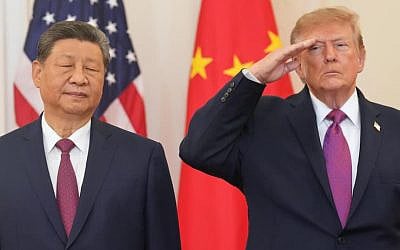
’According to Fox Business, oil began the week at $102 a barrel, fell to $97 by midweek, and is settling at $92.5 toward the end of the week. The decline signals that the oil market currently expects diplomatic easing more than escalation, following President Donald Trump’s meetings with Chinese President Xi Jinping, Volodymyr Zelensky’s visit to New York, tensions between Europe and Russia, the question of Taiwan, Trump’s meetings with Arab leaders, and other developments.
Americans are also watching a significant coastal storm intensify off the Atlantic coast this weekend. It is expected to bring heavy rain, flooding, and wind warnings for gusts exceeding 45 mph in parts of the eastern United States. Whether a round of golf in Florida will be a practical plan for President Trump remains to be seen. The world’s problems, however, will certainly continue to occupy him after a busy week in New York.
After more than a thousand drones attacked the Moscow region earlier this week and struck an oil refinery, Zelensky arrived at the UN General Assembly, met with Trump, and declared his willingness to move toward a ceasefire process. In a surprising move that displeased European leaders, Trump invited Vladimir Putin to attend the G20 meeting in Miami in mid-December, this time at a golf resort owned by the Trump family. Putin thanked him for the invitation, though it remains unclear whether he will attend.
Europe began the week on heightened alert over concerns about a Russian response to the drone attack on Moscow. It is now showing greater concern for Saudi Arabia, which faces threats from the Houthis, particularly after Trump declined Crown Prince Mohammed bin Salman’s request for active American military assistance.
France to deploy forces to protect Saudi oil facilities; Britain sends a refueling aircraft
France plans to deploy troops, radar, and air defense systems to the Saudi port of Yanbu to protect a vital oil export facility amid intensified Houthi attacks on Saudi territory and energy infrastructure. The attacks have also increased tensions along regional shipping routes. Britain has responded to Saudi requests and concerns about Red Sea trade routes by sending a refueling aircraft to support Saudi aircraft operating over Yemen.
In the middle of the week, Trump met with officials from across the Middle East on the sidelines of the UN General Assembly. The war involving Iran and the conflict between Saudi Arabia and the Iran-backed Houthis continue to shake the region, with few signs of an imminent resolution.
According to the White House press schedule, the meeting was initially planned as a discussion between Trump and officials from Persian Gulf states. It developed into a broader summit that included leaders from across the region, among them Turkish President Recep Tayyip Erdoğan, Syrian President Ahmed al-Sharaa, and Jordan’s King Abdullah II.
Before the closed-door meeting began, Trump told reporters that he intended to maintain pressure on Iran and keep open the possibility of expanding military action against it.
The meeting’s results remain unclear. The continued decline in the oil price suggests that, for now, expectations of moderation are outweighing fears of escalation in the market. Meanwhile, Iran’s president and an Iranian delegation arrived in New York for the UN General Assembly and held talks with an American delegation led by Steve Witkoff and Jared Kushner, with Qatar acting as mediator.
In the Horn of Africa, against the backdrop of Houthi threats to maritime traffic, Pakistan is seeking closer ties with Ethiopia and trying to persuade its Saudi ally to give a approval to Pakistani military support for Sudan. India and Ethiopia, meanwhile, are strengthening their defense ties.
Middle Eastern newspapers have reported an emergency meeting between the allies Turkey, Pakistan, and Saudi Arabia in response to Houthi attacks. Other reports describe a possible expansion of their defense agreement to include Iran and additional Muslim countries.
On Friday, the speaker of Turkey’s parliament said that the defense pact between Turkey, Saudi Arabia, and Pakistan could develop into a broader agreement “for the Muslim world” that would include Iran. He added that the agreement was expected to be submitted for parliamentary approval next month.
The three regional powers signed the Mecca Joint Defense Agreement in August, weeks before the Iran-backed Houthis in Yemen launched attacks against Saudi Arabia in response to the wider war involving Iran. In a provision resembling Article 5 of the NATO treaty, the agreement treats an attack on one member as an attack on all three. Representatives of the signatories have met to determine the agreement’s parameters and assess Riyadh’s needs.
Turkey’s parliament speaker, Numan Kurtulmuş, added that the agreement is still under preparatory discussion and is expected to be presented to parliament for approval when lawmakers return from recess in October.
Could bringing Iran into the three-country defense agreement open a path toward resolving the long-running conflict between Saudi Arabia and the Houthis?
Related Topics
Related Posts