
Palestinian Authority Urgently Needs Reforms to Remain Relevant
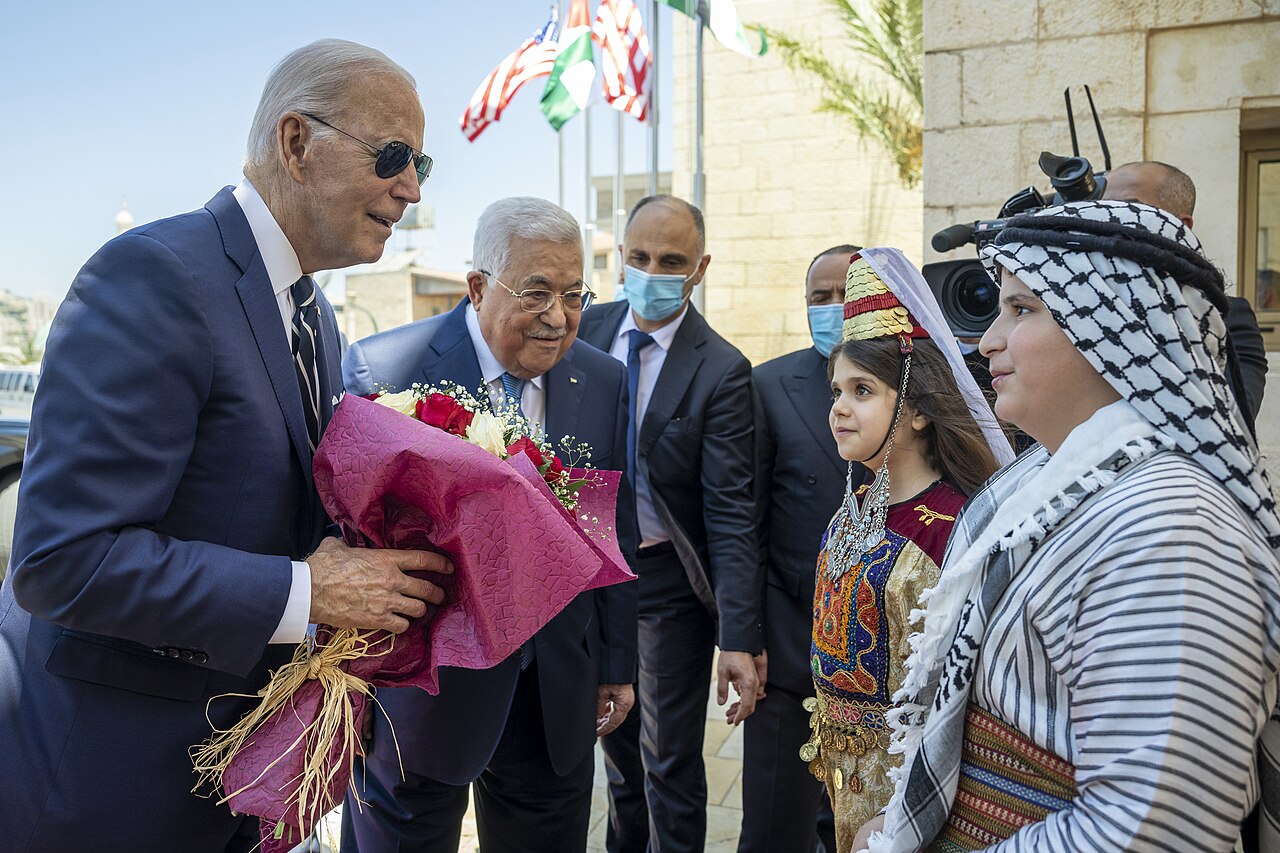
As the UN General Assembly is taking place in New York, where several Western governments are expected to formally recognise Palestine’s sovereignty, the US has barred all holders of passports issued by the Palestinian Authority, including diplomats, from applying for visas. Meanwhile, Israel continues to assert its security dominance in the West Bank by forcefully dividing the territory through the expansion of settlements, while also maintaining separation from the Gaza Strip by means of further IDF offensives. Moreover, the Netanyahu administration has explicitly expressed its opposition to the Palestinian Authority taking control of Gaza, a position now echoed by the US. The Palestinian Authority, created under the Oslo Accords, urgently requires reform if it is to remain relevant to the peace process.
At least on paper, the Oslo Accords remained functional prior to the Second Intifada, began to falter before Israel’s withdrawal from Gaza in 2005, and ultimately collapsed during the 2006 Palestinian legislative elections, which Hamas won in a landslide, resulting in political deadlock. For decades, Israel has regarded the Islamist movement as a terrorist organisation. Meanwhile, Fatah, the political party with which Israel maintains dialogue, has continued to dominate the Palestinian Authority in the West Bank. It is therefore evident that electoral reforms are essential both to advance the peace process and to prevent future political crises in which a terrorist organisation might achieve electoral victory.
Although complete disarmament ought to be a basic requirement for any political party to qualify for elections — ensuring that electoral fairness is not undermined by threats of violence, that Israel’s national security is safeguarded, and that the peace process can proceed — implementing such a reform will be far from straightforward. It would also require all paramilitary organisations to be integrated into the PSS if the Palestinian Authority is to serve as Palestine’s sole functional government. While Hamas may eventually withdraw from the political arena, the PLO still encompasses a range of factions with armed militias, including Fatah and the PFLP, that continue to contest Palestinian legislative elections.
Problematically, and perhaps most controversially, the Palestinian Authority is required to meet Israel’s reasonable security demands. Despite the Oslo Accords stipulating cooperation between the Israeli government and the Palestinian Authority on security matters, this arrangement has frequently been strategically manipulated and abused in practice. In 2023, Fatah’s Abbas was accused of acting as an Israeli proxy, leading the Palestinian Authority without democratic legitimacy, as the PSS often assisted the IDF in apprehending suspects — an action regarded by many Palestinians as treasonous. Abbas subsequently suspended this security cooperation, and Israel’s trust in him has diminished, falling short of the confidence once placed in Arafat.
Undoubtedly, the Palestinian Authority must cooperate closely with Israel on security matters. However, the specific arrangements for such cooperation need to be codified and legislated in both the Palestinian and Israeli parliaments. The Oslo Accords offered the West Bank only a general blueprint for jurisdictional distribution, without providing practical detail. Reforms are therefore necessary to specify the location, methodology and frequency of collaboration between the IDF and the PSS as well as between the Shin Bet and the PPS. While it is foreseeable that Israel would continue to retain the upper hand in operations within Palestinian territory, the establishment of a clear legal framework would nonetheless constitute a significant improvement, aligning with regional agreements aimed at consolidating lasting peace.
Since the Hamas attack of 7 October 2023, the curriculum produced by the Palestinian Authority — funded in part by the EU — has been revealed to contain anti-Semitic material. Palestinian textbooks have included deeply offensive content, such as the glorification of the Hamas massacre in southern Israel, portrayals of Jewish people as “liars and manipulators” and suggestions of Jewish control over global affairs. Even more troubling, the curriculum places strong emphasis on a religious struggle against perceived Islamic enemies. In response, the European Parliament has demanded that future EU funding for Palestinian textbooks be made conditional on the complete removal of hate speech and anti-Semitism.
Thus, educational reform within the Palestinian Authority is also urgent to prevent the radicalisation of future generations, and it must proceed along two complementary dimensions. On the one hand, as recommended by the European Parliament, Palestinian schoolbooks should be free of hatred and adopt a constructive approach to controversial topics, fostering critical thinking and problem-solving skills. On the other hand, all teachers should be trained to implement the new curriculum, which prioritises individual development over ethno-nationalistic propaganda. While history and politics remain important, they should be taught with an emphasis on progress and reconciliation rather than the perpetuation of hatred.
Finally, the Palestinian Authority must pursue peaceful coexistence with its Jewish neighbour as the peace process progresses. At present, the Israeli government exerts military and financial control over Palestine’s security, economy, and energy sectors, rendering cooperation with Israel unavoidable. Nevertheless, following the horrific killing of six Israelis in Jerusalem this morning, Israeli foreign minister Saar accused the Palestinian Authority of sponsoring terrorism, and the IDF has conducted operations in Area A without Abbas’ consent. Urgent reforms are therefore required to restructure the security arrangements between Israel and the Palestinian Authority.
Although the Trump administration has, for the time being, aligned itself with Netanyahu’s cabinet, the US has historically played a pivotal role in mediating negotiations between Israeli and Palestinian representatives, as demonstrated by the Oslo Accords and more recent agreements with Hamas. Consequently, the US is well-positioned to assist the Palestinian Authority in implementing reforms that adequately address regional security concerns by providing a clear roadmap and coordinating with Israel. Furthermore, the US, together with other Arab states, can support the Palestinian Authority in negotiating fairer arrangements with Israel regarding security, energy and infrastructure, thereby enhancing the Authority’s effectiveness as a government serving ordinary Palestinians.
In conclusion, the Fatah-led Palestinian Authority urgently needs to reform its electoral rules for the legislative elections to exclude de facto militias and terrorist organisations from seeking government office. Equally important, the security partnership between Israel and the Palestinian Authority must be clearly defined and codified in law to prevent future disputes over jurisdiction. For the next generation, Palestine’s education system requires a comprehensive review to eliminate all content that promotes hatred, both in the curriculum and in teaching practices. Finally, the Palestinian Authority must cooperate with, rather than oppose, Israel to achieve lasting stability. Failure to do so risks permanently diminishing its political relevance in the Israel-Palestine peace process.