The views expressed herein are solely mine.
Palestinian Statehood Threatens Arab Stability
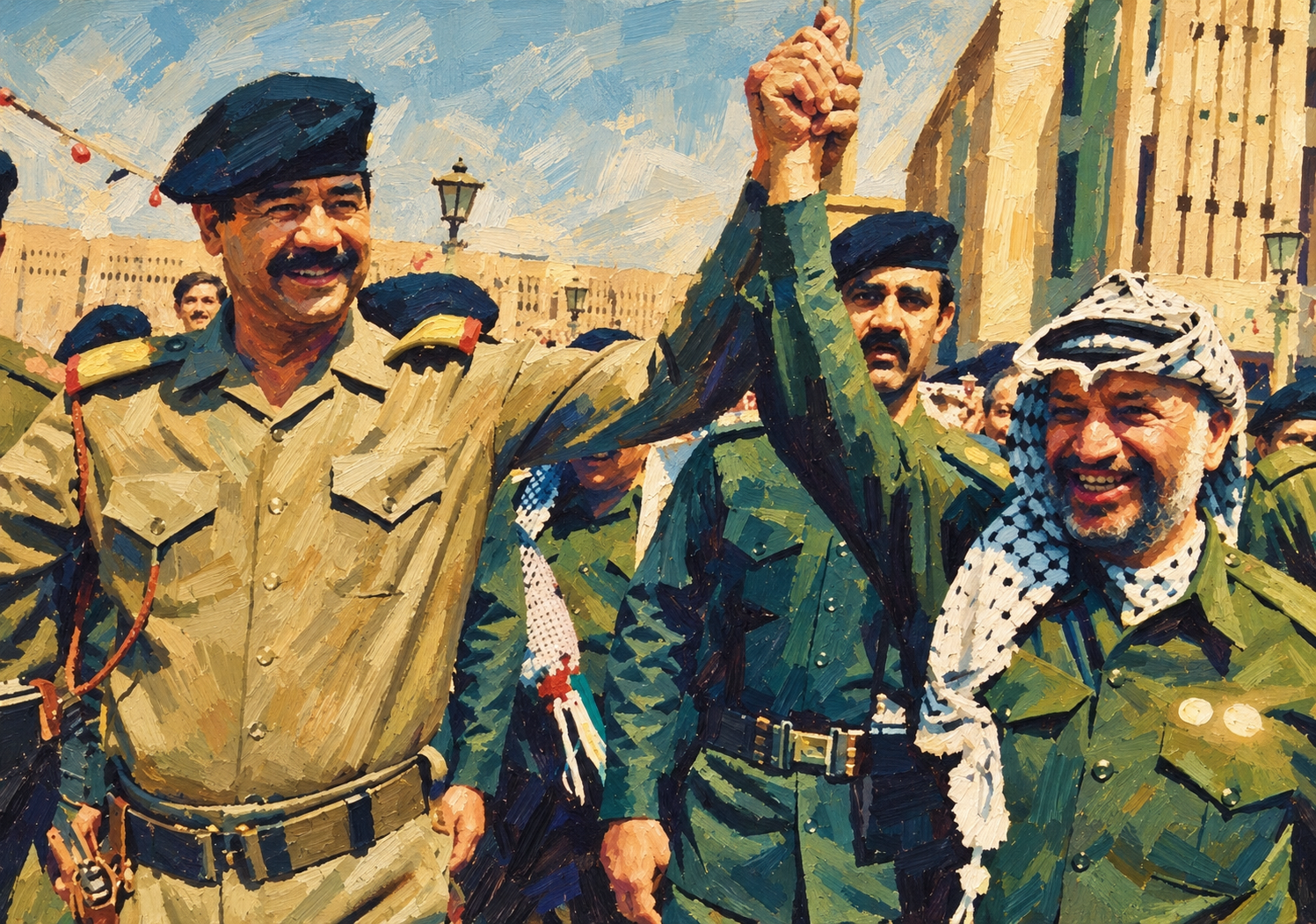
Credits: AI-Generated Image.
Arab governments must reverse their long-standing support for a Palestinian state. Historically, this so-called “statehood project” has fractured regional sovereignty from within, presenting a direct national security threat to the wider Levant and the Gulf. Palestinian political and military formations routinely convert host-state territory and refugee concentrations into bases for parallel authority, external patronage, and subversion. This record of systemic regional destabilization stretches from the 1930s to the present day.
In May 1936, radical followers of the Grand Mufti Haj Amin al-Husseini—whom Adolf Hitler later designated an “Honorary Aryan”—attempted to assassinate the moderate Arab mayor of Haifa, Hassan Shukri, following his public endorsement of peaceful regional coexistence and economic cooperation. This targeted assault inaugurated a terrifying historical pattern in which radical Palestinian factions treat independent, pragmatic regional governance not as a partner, but as an existential target for violent elimination.
This pattern of structural subversion struck the Hashemite Kingdom next, beginning violently in July 1951 when a Palestinian network tied to Husseini assassinated King Abdullah I of Jordan at the entrance to the Al-Aqsa Mosque. Abdullah had annexed the West Bank and conducted discreet contacts with Israeli representatives, actions that the killers treated as a “supreme betrayal.” This assassination removed a highly pragmatic Hashemite voice, reinforcing a violent precedent where radical factions ruthlessly police Arab diplomatic compromise. By 1970, the Palestinian Liberation Organization (PLO) and its affiliates had constructed a dangerous parallel state inside Jordan. Armed groups taxed residents, operated rogue courts, and launched reckless border raids that invited devastating Israeli reprisals. In September that year, the Popular Front for the Liberation of Palestine hijacked international airliners, detonated them at Dawson’s Field, and declared a “liberated territory.” King Hussein swiftly declared martial law, ordering the Jordanian army to crush the factions during the bloody “Black September” civil war. Following their expulsion from Jordan, these armed operatives relocated to Lebanon, fracturing the host state’s monopoly on violence and triggering the catastrophic 1975–1990 Lebanese Civil War.
Shifting focus to the Persian Gulf, the pattern of Palestinian ‘balagan’ fracturing regional stability becomes even more pronounced. During the 1960s Dhofar Rebellion, the Palestinians exported revolution to Oman, training Marxist guerrillas in structural warfare to overthrow the monarchy. Decades later, the PLO replicated this subversion in Kuwait. Following Saddam Hussein’s 1990 invasion, Yasser Arafat openly aligned with the Iraqi dictator, biting the hand of the very Gulf monarchy that hosted and funded his movement. The backlash was swift: a liberated Kuwait expelled hundreds of thousands of Palestinians. Ultimately, all of this geopolitical instability, historical betrayal, and mass displacement is now entirely concentrated in the Gulf, forcing regional states to permanently shoulder the profound fiscal and security costs of a Palestinian leadership that routinely prioritized aggressive autocrats over host stability.
This refusal of political accountability persists today under Mahmoud Abbas. Fearing defeat, the crystal-jawed dictator postponed the scheduled late-2026 legislative elections to late 2027 immediately after Hamas, the Palestinian Islamic Jihad, and Mohammed Dahlan agreed to a threatening joint list. This is another good example of how rejectionist leaders consistently prioritize power monopolies over democratic processes, leaving Palestinians without a legislative election since Hamas’s 2006 victory and subsequent violent seizure of Gaza in 2007.
Consequently, a potential Palestinian state represents a permanent national security threat because radical Palestinian rulers subordinate institutional governance to armed maximalism. In tandem, rogue Palestinian formations convert sovereign territory into dual-use infrastructure that hostile external patrons, like Iran, activate against moderate governments. These historical episodes demonstrate that a Palestinian state would lack economic viability, serving instead as a radicalized proxy launchpad that actively destabilizes neighboring states.
This historical reality demands two structural adjustments. First, Gulf and Levant capitals must adopt a strict ‘Sovereign Host Protocol.’ This protocol must condition all financial and logistical support on the verifiable dissolution of extraterritorial military structures and a binding renunciation of claims against existing borders. Second, regional governments must redirect traditional aid into a ‘Regional Integration Ledger.’ This ledger should fund skill-matched employment and citizenship pathways exclusively inside host societies, using fixed sunset clauses to extinguish political claims once integration milestones are verified.
True patriotism requires preserving established sovereign capitals before indulging an inherently revisionist statehood experiment. Underwriting a non-viable Palestinian polity does not fulfill a sacred pan-regional duty; rather, it imports a permanent, self-inflicted engine of subversion directly into the foundation of the Middle East. The Arab World must learn from the current disaster of tolerating the Houthi thugs in Yemen, recognizing that fueling an identical, disloyal Iranian proxy state in the Levant guarantees future cross-border aggression against moderate regimes, just as Arafat’s factions turned against their Kuwaiti benefactors. My fellow Arabs, the time has come to wake up from the Palestinian utopia and abandon the empty romanticism of ‘resistance’ in favor of real regional reform, true transnational stability, and lasting economic modernization.
Related Topics
Related Posts