Parashat Re’eh
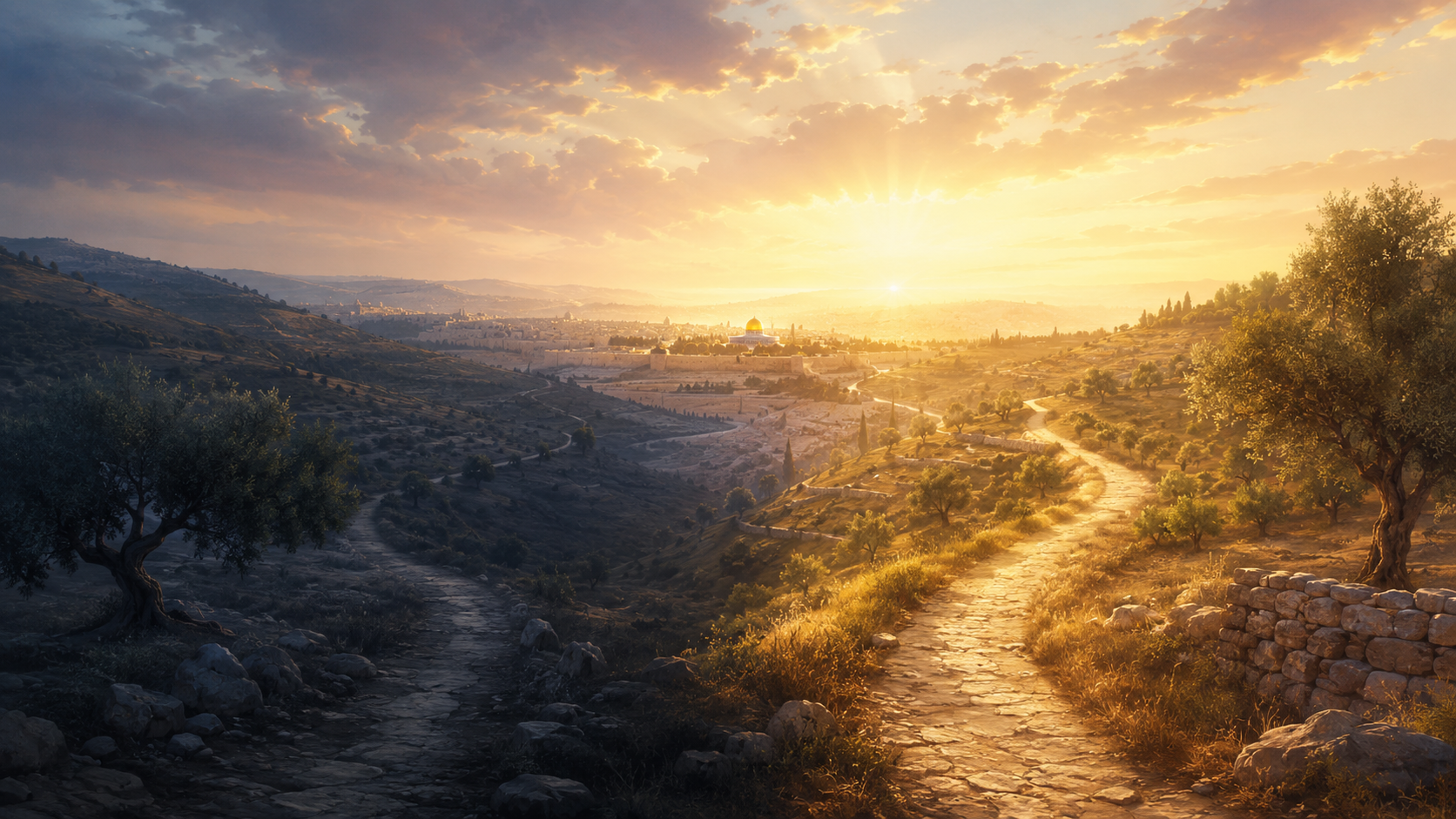
To See in Order to Choose
✦ ✡ ✦
Re’eh — See. The imperative is singular, though the people listen in plural. That tension is not accidental: choice always occurs in the singularity of the soul, even when framed within a collective history. Before you I place today blessing and curse. Not as punishment nor as threat. As structure.
The parashah opens with an unsettling clarity: everything depends on the direction of the gaze. Not on the intensity of desire, not on the quantity of effort, but on where perception is oriented. Seeing with structure produces conscious choice. Seeing without structure produces dispersion.
The text unfolds a map of decisions that covers almost every sphere of life: the place of encounter with the sacred, the laws of food, the rules of the year of release, the obligations towards the poor and the slave, the pilgrimage festivals. It is not a disconnected legal code: it is an architecture of attention.
✦ ✡ ✦
The Chosen Place — The Centrality of the Centre
The place that God will choose. The phrase appears repeatedly in Re’eh as an invisible axis. The multiplicity of altars disperses spiritual energy; centralisation organises it. Not every place is the same. Not every practice carries equal weight. Choosing the centre is an act of discernment.
Idolatry is not only the worship of external figures: it is the dispersion of attention into multiple competing centres. The soul that has many small gods has none. Fidelity requires concentration, and concentration requires choice.
✦ ✡ ✦
The Year of Release — Programmed Freedom
At the end of seven years you shall grant release. Debt is cancelled. The slave is freed. The land rests. Re’eh constructs freedom not as a permanent state but as rhythm. Slavery, when it occurs, has an expiration date. Debt, when it accumulates, has a legal limit.
This structure reveals an economic and spiritual wisdom no modern system has surpassed: the indefinite accumulation of power and wealth destroys the fabric of community. The rhythm of release is a safeguard against the concentration of domination. Freedom is not the absence of limits: it is the limit that protects the dignity of all.
✦ ✡ ✦
The Pilgrimage Festivals — Sacred Time
Three times a year you shall appear before God. Pesach, Shavuot, Sucot. The festivals are not interruptions of ordinary time: they are its essential structure. Time without sacred rhythm becomes monotonous and loses direction. The pilgrimages organise the people’s experience around memories that must not be forgotten.
Each festival corresponds to a phase of the spiritual cycle: the exodus from slavery, the receiving of the law, the dwelling in the provisional. The soul that walks this cycle annually is not repeating empty rituals: it is remembering with the body what the mind tends to forget.
✦ ✡ ✦
The Archetypes That Dwell Within Us
Re’eh unfolds the archetype of vision as transformative power. Seeing is not passive perception: it is the first act of choice. The text also presents the archetype of the poor as mirror: “You shall not harden your heart nor close your hand.” The one who does not give when able reveals the true state of the soul, regardless of what is proclaimed. And the archetype of the chosen place as organising centre: without a clear centre, all energy disperses.
These archetypes are present in every daily decision. Each time we choose where to look, each time generosity or stinginess reveals inner state, each time a centre organises or fragments attention: Re’eh is taking place.
✦ ✡ ✦
Re’eh in the Present Time
It has never been so difficult to see clearly. The algorithms of attention are designed to multiply centres of perception and fragment the gaze. Every notification is a small blessing or curse placed before the eyes. Choosing where to look has become the most fundamental political and spiritual act of our time.
Re’eh does not call us to ignore the world nor to create artificial isolation. It calls us to choose the centre from which we look at the world. Without that centre, abundance of information produces disorientation. With that centre, even fragmented information can be integrated into a coherent narrative.
The year of release today speaks of an economy of attention that requires rhythms of rest and release. The soul that never rests, that never cancels accumulated emotional debts, that never allows certain cycles to end, becomes enslaved to its own past. Liberation is not an event: it is a rhythm.
✦ ✡ ✦
Inner Activation
Re’eh — see with intention. Perception begins by identifying the centre from which you observe your life. Is there a clear centre organising your decisions, or multiple centres competing with one another? The intention is to choose a centre consciously, not by inertia. The action is to practise release: to cancel an emotional debt you have been accumulating for too long.
The synthesis of this parashah traces the arc: See → Choose → Sustain the centre. Without vision, choice is blind; without choice, the centre dissolves; without sustaining the centre, vision fragments. The cycle is completed only when the three movements are carried out with continuity.
Where does your gaze point when you are not choosing consciously?
✦ ✡ ✦
“Re’eh — See. Before you I place today blessing and curse. Seeing with structure produces choice; seeing without structure produces dispersion.”
Re’eh does not demand perfection. It demands direction. A gaze that knows where it is aimed can transform even missteps into part of the path.