


Parham Shahrjerdi, Jean-Luc Nancy and the Crisis of Modernity VI
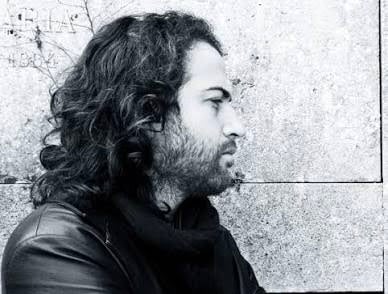
Parham Shahrjerdi is an Iranian writer, critic, translator and editor, born in Tehran in 1980 and living in exile in Paris. He has translated Maurice Blanchot, Marguerite Duras, Georges Bataille, Pascal Quignard and Antonin Artaud into Persian. He founded the Espace Maurice Blanchot website and the publishing houses Nashr-e Paris and Namomken, which publish e-books banned in Iran, and he co-edits the review Hors-Sol. He also practises psychoanalysis. In 2020 he co-signed with Jean-Luc Nancy a text against the sanctions imposed on Iran.
An unlikely friendship
Jean-Luc Nancy (1940–2021), best-known idea, the “inoperative community” of La communauté désœuvrée (1986), has never been translated into Persian. In a text published in the French review lundimatin on April 13, 2020, under both names: “Iran : la double peine.” In a later text, “Ma madeleine est un missile,” Shahrjerdi recalls writing against the sanctions with his friend Nancy.
(Editor’s note: Both Shahrjerdi and Kamran Baradaran, who has interviewed Nancy, sit on the editorial team of Philosophy World Democracy, whose website carries a section titled “The Grace of Jean-Luc Nancy.”)
From Blanchot to Nancy
Shahrjerdi’s own intellectual home is Blanchot. He founded the Espace Maurice Blanchot, serves as vice-president of the Association des amis de Maurice Blanchot, and has translated him into Persian. The detail matters, because Nancy’s thinking of community began as a conversation with Blanchot. La communauté désœuvrée followed Blanchot’s La communauté inavouable (1983), and Giorgio Agamben answered both in The Coming Community (1990).
Nancy’s core claim is easily stated. A community is not a body fused around an essence, a nation, a religion or a common project. Such “operative” communities, in his analysis, end in exclusion and violence. Community is rather the condition of existence itself: to be is to be exposed to others, “singular plural,” as his 1996 book puts it. It is my reading, not his, that translating Blanchot and publishing banned e-books from exile in Paris already works on the same question: what binds readers and writers who share neither an essence nor a common work, nor any institution behind them?
The Heidegger precedent, once more
As with Derrida in the previous installment, Nancy did not arrive on virgin soil. Ahmad Fardid had fused Heideggerian suspicion of technology with a call to return to an authentic, pre-Western essence. Reza Davari Ardakani turned it into a philosophical justification for the Islamic Republic’s suspicion of the West. Daryush Ashuri spent his career dismantling the slogan, and Bijan Abdolkarimi has excavated the same terrain.
Nancy reads the same Heidegger in the opposite direction. A Persian commentary published by Radio Zamaneh after his death notes that he understood Being as Mit-Sein, being-with, but refused to follow Heidegger in treating life in common as inauthentic. For Nancy, authenticity belongs to being-together. Seen from there, the road from Fardid to Nancy is less a rupture than a fork: one Heideggerian inheritance can yield a return to essence, another an exposure without essence.
Shahrjerdi stands at the far end of this landscape. Fardid and Davari worked close to the centres of power and the university. Shahrjerdi works from exile, from small presses and from banned files, and according to a biographical note published by Lundi matin, he left Iran when the Ministry of Intelligence was organizing the serial assassination of intellectuals and writers. His field is more fragile than Pârsâ’s, but it runs on the same question: who gets to say what an Iranian is?
Against testimony, against fantasy
Invited to write the text for Les Réso_nances, an exhibition of twenty-five Iranian artists at the Galerie Oraxe in Paris (June 25 to July 13, 2026), he explains that he wanted to avoid a trap: making the artists speak in place of their works and turning them into witnesses. There is, he writes, an expectation that precedes every encounter with an Iranian artist, which murmurs: tell us, explain, say what it is like over there. To comply is to leave one censorship for a softer one that demands testimony and reassurance. The work has no mission. Twenty-five artists are twenty-five worlds that need not agree, and “Iranian” says almost nothing of what each invents alone.
It is hard not to hear Nancy here: singularities that share a world without sharing an essence. In “Iran : Concéder l’ignorance,” Shahrjerdi turns the same suspicion on the West’s convenient certainties: Iranian cinema, Iranian women, the Iranian people, everyone has something to say, and indignation is calibrated for the screen. He recalls that Iran was bombed in 2025 and that embargoes have produced monstrous inflation, which the people alone pay for.
“Ma madeleine est un missile” refuses two illusions at once: that of the regime, and that of a miracle of foreign intervention that would save what still lives. He speaks of the death drive of Israeli leaders and of that of the leaders of the Islamic Republic alike, and he warns that the Israeli government plays on the register of intervention. One may agree with him or not. The debate over sanctions and intervention is a large one of its own, and I do not settle it here. The philosophical gesture is consistent: do not fuse the Iranians into a single body that can be spoken for.
Nancy in Persian: a reception by the periphery
It is worth setting this against the Persian record, which is thinner than one might assume. Nancy’s translators are many and scattered:
- Baqer Parham for L’Évidence du film, his book on Kiarostami;
- Afshin Hafizi for Justice, Love, Beauty (Nashr-e Markaz, 2013), translated from the English;
- Ehsan Kianikhah for The Fall of Sleep (2016);
- Ehsan Pourkhiri and Hossein Tayyeb for his dialogue with Alain Badiou, German Philosophy (2021);
- and, most prolifically, Narimân Jahânzâd, who translated an interview volume, the essay After Fukushima: The Equivalence of Catastrophes (2021), Marie-Eve Morin’s study of Nancy and an introduction to his thought.
Essays on populism and democracy circulate on websites, among them an interview on democracy, the people and sovereignty translated by Shidan Vasiq. Kamran Baradaran, translator of Baudrillard, Gramsci, Virilio and Žižek, counts Nancy among the figures he has interviewed.
The community trilogy enters mostly by its title. Radio Farda renders the first volume with a Persian phrase that means roughly “community that cannot be put to work,” while another translation simply transliterates communauté. The vocabulary is not stabilized. An interview carried by the Iranian outlets IBNA and CGIE asks why Nancy has been so little noticed in Iranian thought, and is titled in a way that calls him ultimately a Derridean philosopher. It is a telling label for a thinker whom Derrida himself honoured with a whole book. The reception is largely a matter of diaspora media and small presses rather than of the university.
Community in Persian: ommat, mellat, jâme’e
The problem of saying “community” in Persian begins before any translation of Nancy, because there is no neutral word for it. Each candidate carries its own history.
Ommat (امت) is the Qur’anic umma, the community of believers. It comes from an Arabic root that also gives umm, mother, and imâm, the one who stands in front: etymologically, the umma is a body oriented toward a direction and a leader. Mellat (ملت), borrowed from Arabic milla, once a religious community, has become the ordinary word for “nation” and “people.” Jâme’e (جامعه) and ejtemâ’ (اجتماع) come from a root of gathering and cover “society” and “the social,” while anjoman names an association or assembly.
Constitutional language shows how the first of these can be put to work. Article 5 of the Constitution speaks of the guardianship and leadership of the umma (velâyat-e amr va emâmat-e ommat), and Article 11 invokes the Qur’anic verse that the umma is one. In Nancy’s terms, this is the operative community: it has a direction, a leader and a work, the realization of a divine order. The umma is, of course, a far older and broader notion than the state’s use of it, and it is this political use that Nancy’s critique reaches.
Now the titles. Radio Farda renders La communauté désœuvrée as ejtemâ’-e ‘amal-nâpazir (اجتماع عملناپذیر), roughly “a community that cannot be put into action.” A translation of an interview on Iran Liberal speaks of komunte-ye bi-asar (کمونتهی بیاثر), a transliterated communauté “without work or effect.” The choice between ‘amal and asar is not neutral. In my reading, ‘amal sends the reader toward deed and action, including the religious register of faith and works, whereas asar evokes the finished work, the product, the artwork. Œuvre is both.
A review of Morin’s book published by IBNA glosses Nancy’s community as dar-eshterâk-budan (being-in-sharing) and bâ ham budan (being-with-one-another). Here is an observation I have not found a Persian author making. Eshterâk (اشتراک), participation or sharing, comes from the same root as shirk, the association of partners with God, the gravest sin in Islamic theology and the opposite of tawhid, divine oneness. To say Nancy’s “being-in-common” with the word for sharing is quietly to bring the doctrine of the One into play. It is the same collision as the one noted in the previous installment, a philosophy of multiplicity applied to a theology of the One.
The Persian lexicon therefore asymmetrically favors the umma. Its positive name is already occupied by the Qur’anic term, while Nancy’s community can be said only by negation: bi-asar, ‘amal-nâpazir. French does the same with désœuvrée, but in Persian the negation stands against a word that is not neutral. The question for translators is less which word renders communauté than which word remains free of the umma.
A mirror, once more
Nancy refuses the community built on an essence, and Persian seems to resist him: the word that names community is already taken by the umma, while his own can be said only by negation.
In June 2026, the review of the École de psychanalyse des Forums du Champ lacanien published Shahrjerdi’s reading of Colette Soler’s Traumatisme$. He has also taken part in an evening devoted to her Lacan et l’être-femme. From Soler he draws a distinction between two registers of trauma. The first is the traumatic event. The second is a more radical real, owing nothing to contingency: the entry into language, the “troumatic” One that no speaking being escapes. This trauma is incurable, he notes, but not without recourse, and what opens there is “une éthique sans plainte, sans promesse.”
The operative community, whether the umma or any other, promises exactly the wholeness that the “troumatic” One rules out. Nancy had his own passage through Lacan, from Le titre de la lettre (1973, with Lacoue-Labarthe) to L’« il y a » du rapport sexuel (2001), and the thread may be less accidental than it looks. Community as exposure and finitude, trauma as the incurable wound of language: both unwork the dream of a fused body.