
An Aging Jewish Feminist
Parshat Ki Teitzei: Deuteronomy’s Response to Genesis
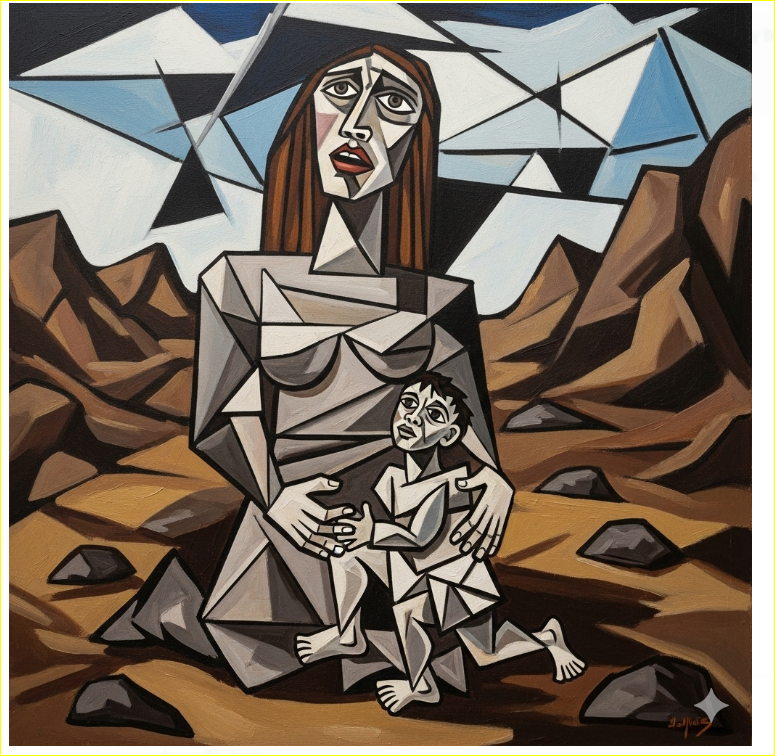
Parashat Ki Tetzei (Deut. 21:10–25:19) contains more mitzvot than any other portion in the Torah. Reading through them, one notices a common thread: so many of these laws revolve around intimacy, family, and the vulnerable—the captive woman, the unloved wife, the rebellious son, the mother bird, the violated maiden, the widow in need of levirate marriage. What makes these laws especially striking is how often they seem to echo back to the raw and painful family dramas of Genesis. Genesis gives us stories of deception and rivalry, of women abducted or silenced, of brothers quarreling over love and inheritance. Deuteronomy, many centuries later, translates those stories into legal frameworks. It does not erase the pain, but it seeks to regulate it, to impose some form of justice where before there was only chaos.***
The Captive Woman
The parasha begins with the law of the eshet yefat to’ar—the “beautiful captive woman.”
When you go out to war against your enemies… and you see among the captives a beautiful woman and you desire her… you shall bring her into your house… and she shall be your wife. Then, should you no longer want her, you must release her outright. You must not sell her for money; you must not enslave her since you have humiliated her (Deut. 21:10–14).
A soldier sees her, desires her, and may take her—but only by bringing her to his home, giving her time to grieve, and then either marrying her or letting her go free. The Torah restrains the victorious soldier, regulating lust and demanding responsibility—he cannot discard her like property. Our sages state that the law exists only “to counter the evil inclination”: the law of the captive woman is given only because of the soldier’s “evil impulse” (Kiddushin 21b-22a).
The Captive Woman and Dinah
A striking parallel exists between the law of the captive woman and the Dinah episode.
Genesis 34: Shechem “saw her, took her, lay with her, and humiliated her.” His father later pleads, “his soul longs [חשקה] for your daughter” (Gen. 34:8).
Deuteronomy 21: The soldier “sees,” “desires [חשקת],” “takes,” and may later release her “because you have humiliated [ענית] her.”
Both passages use the same rare sequence of verbs—see → desire → take → humiliate. Genesis presents it as a violation; Deuteronomy codifies it as a wartime practice, restraining but not abolishing it. The law seems to reflect directly on Dinah’s story: instead of unchecked violence, the captive woman must be given the dignity of marriage and freedom if rejected.
Other Genesis episodes resonate thematically. Sarah is twice abducted into foreign households (Gen. 12, 20). Rebecca, Rachel, and Leah leave their families for Abraham’s household—willingly in the text, though the trauma of departure lingers in the background. These stories echo the precariousness of women “taken” from one culture into another, whether by force or arrangement. One can also argue that Hagar is a captive woman, a slave bought during Abraham’s time in Egypt. In this respect, she is like Dinah—who according to the midrash was punished for going out. But unlike Dinah, who is silent, Hagar’s story reverberates throughout the biblical text.
The Unloved Wife and the Birthright
The next law insists the firstborns’ inheritance cannot be denied due to paternal favoritism:
If a man has two wives, one loved and the other unloved… he may not treat as first-born the son of the loved one in disregard of the son of the unloved one… the birthright (bechora) is his due (Deut. 21:15–17).
The law insists that a man may not deny his firstborn son his rightful double portion, even if born to the wife he “hates.” Once again, Genesis echoes loudly in the background. Abraham loved Sarah but had Ishmael with Hagar. Jacob loved Rachel but fathered Reuben with Leah, and later favored Joseph (Gen. 29–37). Abraham expelled Hagar and Ishmael at Sarah’s demand, so Isaac alone would inherit (Gen. 21). Again and again, love and favoritism distorted inheritance and fueled family strife. Deuteronomy responds with law: the birthright is not a matter of preference. It belongs by right, even to the son of the “unloved” wife. Again, Hagar’s story comes alive here. Her name itself—ha-ger, “the stranger”—reminds us of the Torah’s repeated charge: “You shall love the stranger, for you were strangers in Egypt” (Deut. 10:19). The vulnerable child of the outsider may not be erased.
The Rebellious Son
From here, the parasha turns to the ben sorer u’moreh, the wayward, drunken, rebellious son who is destined to be executed. The rabbis note the connection: he is the natural consequence of the captive woman or the unloved wife. What begins in unchecked desire ends in family dysfunction and a destructive child (Sanhedrin 107a). Again, Genesis is full of unloved children—Cain (unloved by God) turning against Abel, Ishmael and Isaac parting ways, Esau plotting against Jacob and Joseph’s brothers turning on him. Deuteronomy offers a chilling resolution: better (so the verse argues) that the son be cut off than that his rebellion destroy the community.
The Bird’s Nest
As we continue reading in the parsha, we come upon the following:
If, along the road, you chance upon a bird’s nest, in any tree or on the ground, with fledglings or eggs and the mother sitting over the fledglings or on the eggs, do not take the mother together with her young. Let the mother go, and take only the young, in order that you may fare well and have a long life (Deut. 22:6-7).
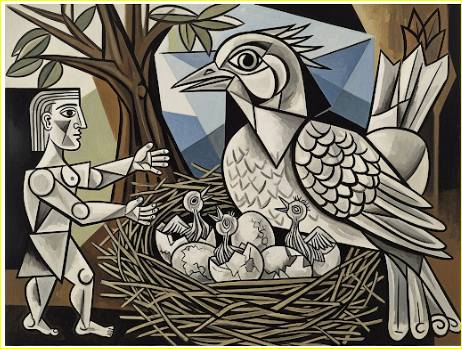
While reading the parsha, keeping in mind these parallels, I was struck by the story of Hagar. When cast into the wilderness, she “threw” Ishmael under one of the bushes, saying, “Let me not look upon the death of the child” (Gen. 21:15–16). Commentators have often criticized her for apparent abandonment. Yet Deuteronomy itself provides a striking lens of compassion: the law of the bird’s nest. If one chances upon a mother bird sitting on her eggs or chicks, one must first send away the mother before taking the young. The point, as many note, is to avoid cruelty by sparing the mother from watching her offspring die. By this logic, Hagar’s act was not callous but profoundly human—an instinct to shield herself from unbearable grief.
This raises a broader tension in Torah law: if the goal is to prevent cruelty, why not require the passerby to leave the nest untouched altogether? Why not forbid slaughter entirely? The same applies to the ban on boiling a kid in its mother’s milk, the root of our dietary laws: would it not be less cruel to embrace vegetarianism or veganism? Do we really reduce suffering by killing an animal in one way rather than another, when the end is the same?
Seen this way, Hagar is not to be condemned but understood. She is not unlike the mother bird driven from her nest, or the mother animal spared from seeing her offspring cooked in her own milk. In a world where law mitigates but does not abolish suffering, Hagar embodies the human cost. She refuses to watch her son die—an act of desperation that reveals, not her failure, but her unbearable grief. And perhaps it serves as a reminder that she never should have been sent away in the first place.
Sexual Outrage and Dinah
Deut. 22:20–21 condemns a girl found not to be a virgin: “for she did a shameful thing in Israel, committing whoredom while under her father’s authority—כִּֽי־עָשְׂתָ֤ה נְבָלָה֙ בְּיִשְׂרָאֵ֔ל לִזְנ֖וֹת בֵּ֣ית אָבִ֑יה.”
Gen. 34:7 describes Dinah’s rape: “Meanwhile Jacob’s sons, having heard the news, came in from the field. The men were distressed and very angry, because he had committed an outrage in Israel by lying with Jacob’s daughter—כִּֽי־נְבָלָ֞ה עָשָׂ֣ה בְיִשְׂרָאֵ֗ל לִשְׁכַּב֙ אֶת־בַּֽת־יַעֲקֹ֔ב—a thing not to be done.”
The brothers later ask: “Should our sister be treated like a whore?” — וַיֹּאמְר֑וּ הַכְזוֹנָ֕ה יַעֲשֶׂ֖ה אֶת־אֲחוֹתֵֽנוּ
The identical phrasing and the words (nevala and zona) highlight the intertextual link: Deuteronomy’s legal code is responding to Genesis’ moral outrage.
Dinah: City or Countryside?
Later, in laws about illicit sexual relations, the law distinguishes between a woman violated in the city where she could cry out for help and in the countryside where her silence does not count against her (Deut. 22: 23-27). The rabbis use this framework to reread Dinah’s story. Some blame her, saying she “went out” (Gen. 34:1), exposed herself, and brought calamity upon herself (Ecclesiastes Rabbah 10:8). Others are far more compassionate. Like the girl in the countryside, Dinah had no chance to be saved, and so she bears no guilt. To redeem her story, they incorporate her into Israel’s destiny.
In some midrashim they go even further:
Dinah gives birth to Asenath. After she was born, her brothers wanted to kill her, so that the finger of men might not point at the fruit of sin. But Jacob took a piece of tin, inscribed the Holy Name upon it, and bound it about the neck of the girl, and he put her under a thorn bush and abandoned her there. An angel carried the babe down to Egypt, where Potiphar adopted her as his child, for his wife was barren. And that’s how she ended up marrying Joseph (Pirkei de-Rabbi Eliezer 38; Gen. Rabbah 80:11).
In this way, the rabbis grant Dinah closure, even a kind of redemption—her descendants become part of the future of Israel. Perhaps the rabbis felt uneasy with her silence in Genesis and sought to restore her dignity by weaving her story back into Israel’s covenantal destiny.
Forced Marriage
If a man comes upon a virgin who is not engaged and he seizes her and lies with her, and they are discovered, the man who lay with her shall pay the girl’s father fifty shekels of silver, and she shall be his wife. Because he has violated her, he can never have the right to divorce her (Deut. 22:28-29).
The law mandates that a man who rapes an unbetrothed maiden must marry her and may never divorce her. In the ancient world, this was seen as protecting the violated girl with a stable household, however flawed. Shechem’s offer to marry Dinah fits right into this ancient legal framework. By this logic, the brothers interfered with his obligation to marry her and were wrong to cut off her only chance of marriage.
Divorce
A man takes a woman [into his household as his wife] and becomes her husband. She fails to please him because he finds something obnoxious about her, and he writes her a bill of divorcement, hands it to her, and sends her away from his house; she leaves his household and becomes [the wife] of another man; then this latter man rejects her, writes her a bill of divorcement, hands it to her, and sends her away from his household; or the man dies who had last taken her as his wife. Then the first husband who divorced her shall not take her [into his household] to become his wife again, since she has been defiled… (Deut. 24:1-4).
The law permitting a man to write his wife a bill of divorce echoes Abraham’s expulsion of Hagar (Gen. 21:14). What Abraham did at Sarah’s insistence—sending away a wife and her child—becomes in Deuteronomy a formalized procedure, balancing patriarchal control with a measure of legal structure. The personal anguish of Genesis is refracted into law: no longer an arbitrary dismissal, but a regulated act.
And yet, in some midrashim, Abraham marries Keturah who the rabbis explain is really Hagar (Gen. Rabbah 61:4 and Pirkei de-Rabbi Eliezer 30). Presumably the rabbis are aware of the fact that Hagar might have been “defiled” after she was sent away. Perhaps the rabbis were quietly telling us: expelling her was never the right decision.
Levirate Marriage
Finally, we arrive at the levirate law—if a man dies childless, his brother must marry the widow, or else be publicly shamed by her if he refuses. This, of course, recalls the story of Judah and Tamar in Genesis 38. Judah withholds his son Shelah from Tamar after his first two sons die. Tamar forces justice by disguising herself. Deuteronomy resolves the ambiguity: levirate marriage is required, and public humiliation awaits the brother who refuses (Deut. 25: 5-10).
Law as a Response to Story
What we begin to see is this: Deuteronomy is not written in a vacuum. Its laws often read like commentary on Genesis’ family traumas. Dinah’s violation becomes the law of the captive woman. Hagar’s dismissal becomes the law of divorce. Jacob’s favoritism becomes the law of the firstborn. Tamar’s injustice becomes the levirate law. Genesis tells us the raw stories of desire, rivalry, and betrayal. Deuteronomy takes those very wounds and tries to regulate them.
Between Hagar and Amalek
The portion closes with Amalek: Israel must remember to erase Amalek’s memory forever (Deut. 25: 17-19). Here the “other” is irredeemable, the eternal enemy. And yet, just chapters before, the Torah affirms: “Love the stranger” (Deut. 10:19). So, which will it be? Some outsiders are to be absorbed, others annihilated. Between Amalek and Hagar lies a moral tension. Do we treat the stranger like Amalek, as the enemy to obliterate, or like Hagar, the outsider whose suffering demands compassion? Perhaps we are asked to see the face of Hagar—the ger, the stranger—and choose love over erasure.
Shabbat shalom!
*** See Calum Carmichael, The Laws of Deuteronomy (1974) and Women, Law, and the Genesis Traditions (1979) for many more examples.
Related Topics
Related Posts