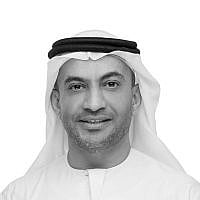
The views expressed herein are solely mine.
Patrick Bet-David Must Guide Iran Out of the Chaos

Patrick Bet-David speaks at AmericaFest 2023 at the Phoenix Convention Center in Phoenix, Arizona. Photo: Gage Skidmore / Flickr (2023).
The $344 billion memorandum of understanding and the malicious Turkish-Pakistani-Qatari mediation track have collapsed. Tehran extracted concessions where possible and continued advancing its nuclear threshold and proxy networks. Diplomacy without decisive leverage has again proven insufficient. The remaining path to a durable Western-aligned Iran now runs through regime change achieved by sustained military and economic pressure, followed by a managed transition.
Iranian-born and highly influential entrepreneur Patrick Bet-David has stated publicly that he is not seeking to lead Persia. In a recent interview, he described turning down an approach and outlined priorities he would pursue if circumstances ever placed him in such a position. That answer came before the current military realities crystallized; the question now is whether these emerging conditions make his particular profile the one best equipped to stabilize the country once the regime’s core instruments of control are finally broken.
U.S. forces securing Kharg Island would immediately sever 90 percent of Iran’s oil export capacity, or roughly 1.5 million barrels per day. That move could cost Tehran around 45 million barrels in monthly export losses worth billions in revenue, hand Washington decisive leverage over global oil flows, and starve the regime’s proxy network of funds.
Israeli operations targeting South Pars have already exposed the facility. This natural gas and condensate site accounts for approximately 70 percent of Iran’s natural gas production and consumption, serving as the backbone of domestic electricity and industrial output. A tightened naval blockade, as implemented during the spring of 2026, cost Tehran around $430 million per day in lost revenue, according to Pentagon estimates. Sustained application of these measures for four months, paired with targeted dismantling of competing power centers, would fracture centralized command and control.
With the IRGC’s cohesion degraded, Kurdish and Baloch armed groups on the periphery would further erode territorial authority. Popular mobilization would then become more likely, even though the regime has already killed more than 50,000 people since the beginning of this year through its campaign of suppression of uprisings and dissidents. However, once the instruments of repression lose coherence, fear no longer functions as a national operating system. A serious U.S. campaign under a sharp President Trump could compress these effects into a four-month window — exactly on time for the midterms — if executed without the hesitation that has characterized past efforts.
Bet-David was correct to reject an unstructured proposition. The relevant test is not abstract interest but demonstrated capacity under the precise conditions now forming: a regime stripped of its primary revenue, its energy backbone compromised, its leadership decapitated, popular mobilization gaining force, and its monopoly on force contested from below and from the edges.
Weak Reza Pahlavi offers symbolic continuity but lacks operational experience in the military, commercial, and media domains that will determine whether the post-regime period produces stable institutions or renewed authoritarianism. Trump himself has expressed doubt about the Crown Prince’s ability to command broad acceptance inside Iran. Bet-David’s combination of Iranian birth and exile, service in the U.S. 101st Airborne, record of scaling a major financial services organization, and proven ability to shape narratives at scale addresses the concrete requirements of transition governance.
Several policy lines follow directly from these realities and from the operational habits that Bet-David has already demonstrated.
A sustained Israeli bombing campaign could “martyr” Supreme Leader Mojtaba Khamenei, President Masoud Pezeshkian, Foreign Minister Abbas Araghchi, IRGC Commander Ahmad Vahidi, Parliament Speaker Mohammad Bagher Ghalibaf, Intelligence Minister Esmail Khatib, Defense Minister Mohammad Reza Ashtiani, Basij Commander Gholamreza Soleimani, Quds Force Commander Esmail Qaani, Judiciary Chief Gholam-Hossein Mohseni-Eje’i, and at least ten other senior political and military figures whose removal would accelerate the regime’s internal collapse.
On the Strait of Hormuz, a transition authority could establish a Hormuz Maritime Compact. This would combine continued allied naval presence with commercial technologies for real-time vessel monitoring and blockchain-verified cargo documentation. In parallel, compliant traffic would receive expedited insurance and escrow mechanisms modeled on the distribution networks he once built. Non-compliant shipments would trigger automatic exclusion and secondary sanctions.
At the same time, revenue from verified trade would flow into an escrow account supporting the new government, thereby preventing any single actor from remilitarizing or blackmailing the chokepoint. The structure rewards compliance and raises the cost of defection without requiring permanent occupation.
On ballistic missiles, nuclear infrastructure, and drones, an Asset Conversion Program could offer technical personnel and mid-level commanders who verifiably surrender or disable advanced systems equity participation in privatized civilian energy and technology enterprises. Simultaneously, verification would rest on a multi-party digital ledger drawing commercial satellite feeds, limited on-site technical audits, and smart contracts that release phased international investment only after confirmed milestones. This converts retained expertise into economic value under enforceable controls rather than driving it into exile or covert networks. The logic is the same as that used to scale commercial organizations: make productive participation more rewarding than continued resistance.
Additional measures include sequenced privatization of state assets with transparent, audited bidding processes to limit capture by new elites; special economic zones in Kurdish and Baloch regions with direct revenue-sharing formulas that lock peripheral populations into the new order; and immediate pursuit of trade and security arrangements with Abraham Accords states that marginalize Turkish and Pakistani influence operations inside the transition. These recommendations would give Bet-David a practical framework to accelerate his efforts for Iran rather than enter the moment with slogans, nostalgia, or improvisation.
The regime has survived previous pressure precisely because alternatives appeared either absent or unserious. Once Kharg is under external control, South Pars output is degraded, senior leadership is removed, peripheral forces are active, and popular mobilization begins to expand; that calculation changes. At that juncture, the individual who has already operated across military discipline, commercial execution under constraint, and large-scale narrative competition is positioned to prevent the vacuum from producing either renewed theocracy or fragmented warlordism.
Before the military activities in Iran began, Trump said that “help was on the way.” Patrick Bet-David could be the real solution that makes that help effective, coherent, and morally right. Persia will need more than pressure; it will need a bridge from fear to order. Bet-David’s record makes that alignment unusually direct.
Related Topics
Related Posts