Sustainable news for Israel and the Middle east
Paul Finlayson compared Hamas to Nazis and his life fell apart
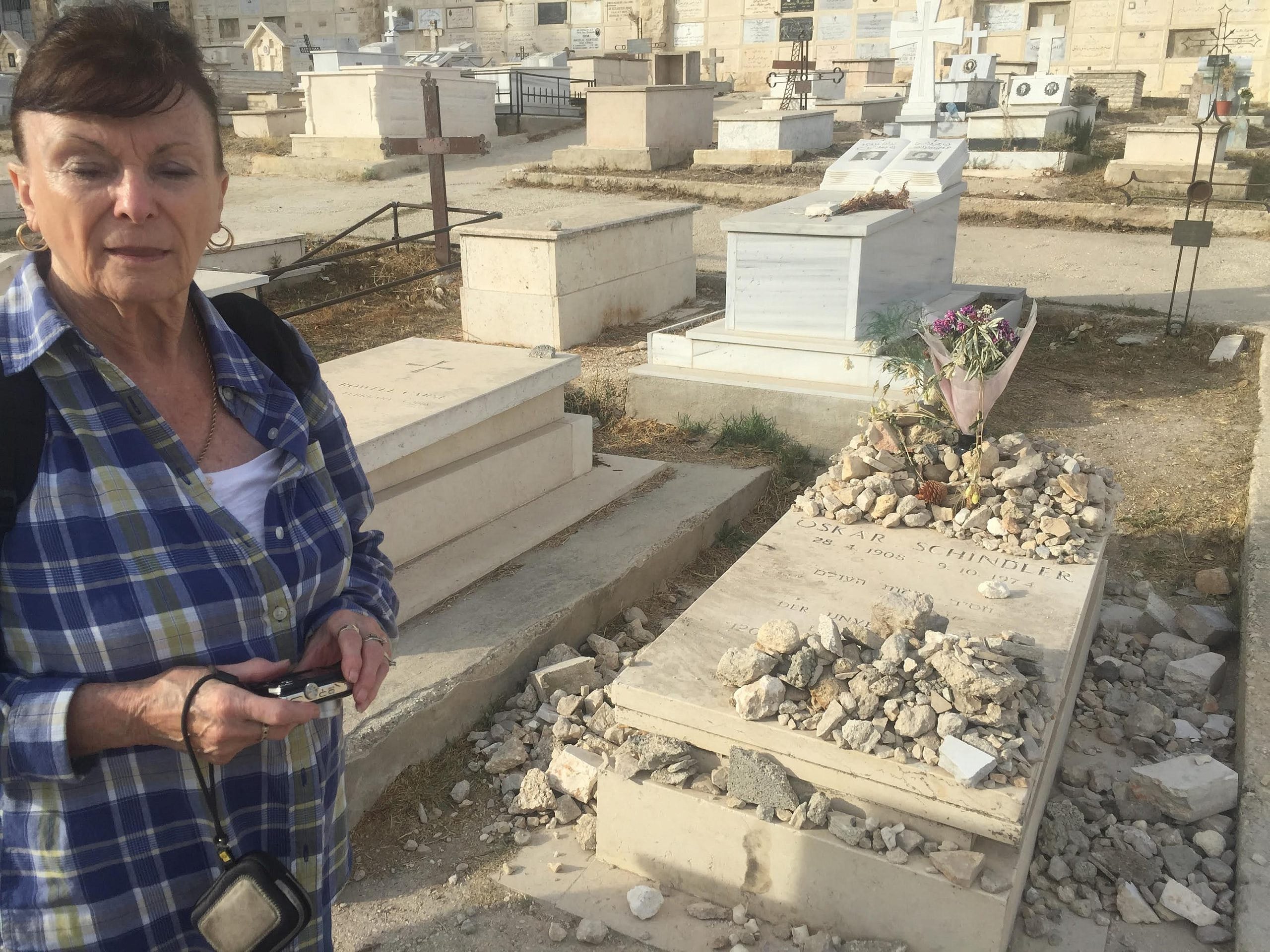
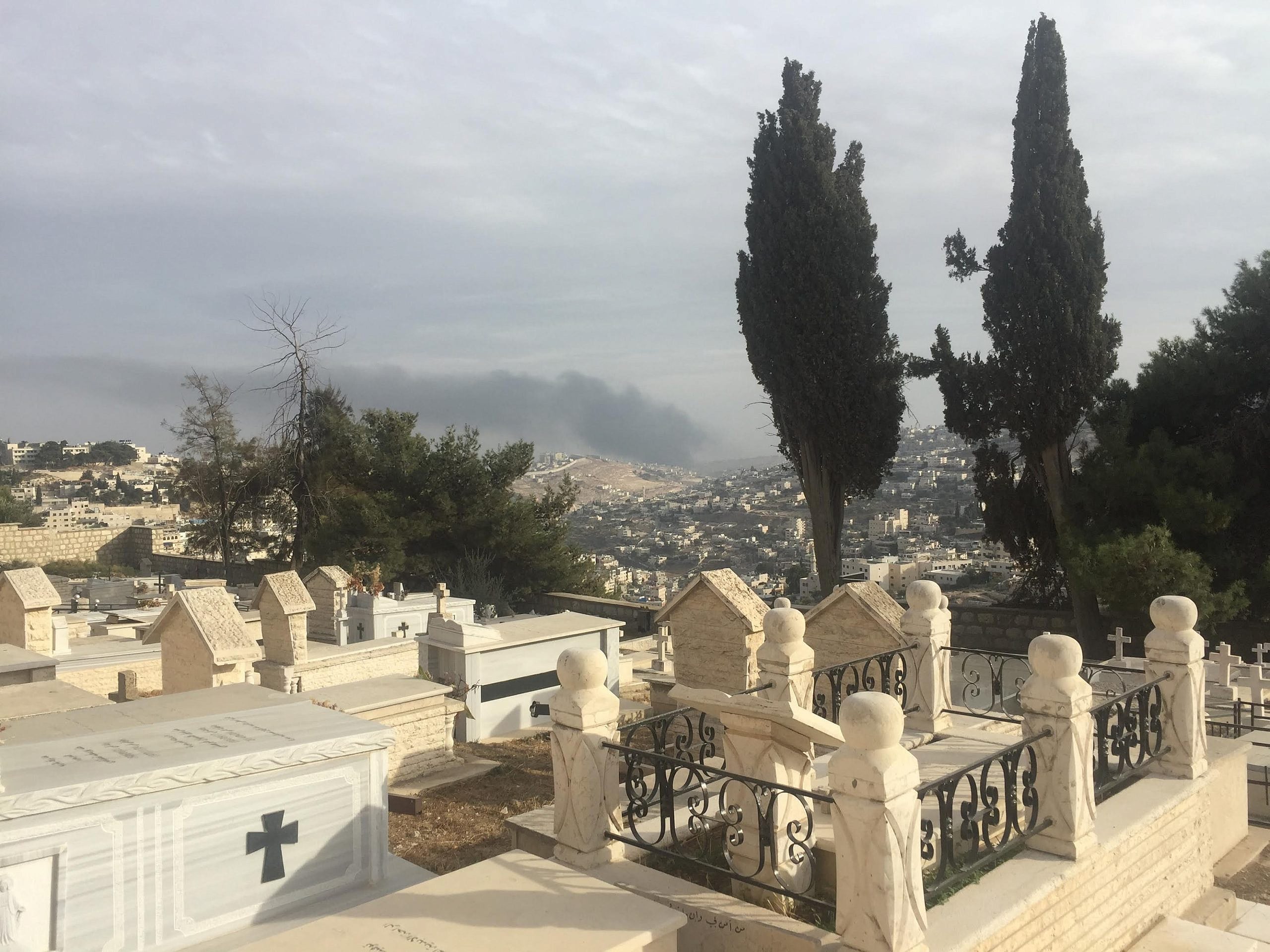
My mom beside Oskar Schindler's grave in Jerusalem, Zion Gate, 2016 Karin Kloosterman, Green Prophet
I did not go looking for Oskar Schindler. But he found me. It was really by chance one day: I was wandering through an old cemetery near the Zion Gate in Jerusalem with my mother who’d come to the Holy Land to feel the Bible.
The cemetery was just outside the Old City walls; it was unadorned, and before me lay a simple grave slab, marked with piles of stones, as Jewish people do when they visit a loved one. This grave had more stones and rocks than any other. The name was familiar and belonged to a man who was not Jewish, yet chose the Jews when it mattered most.
Before he died in 1974, Schindler asked to be buried in Jerusalem. His body rests in Jerusalem because his actions saved Jewish lives through moral courage, and for that he is remembered as one of the Righteous Among the Nations, honored for risking his life to save Jews during the Holocaust.
This idea isn’t a modern Zionist concept, but one that sits deeply buried within ancient Jewish beliefs. The Talmud, compiled roughly 1,800 years ago, teaches that righteous individuals from any nation, or any faith, are granted a share in The World to Come. It sounds strange not to call it heaven, but Jews do not think of heaven — or what happens after we die — in quite the same way as Christians do. In Judaism, the olam ha-ba, The World to Come, begins here in this world. There is a relationship: when you die, you live in a world you helped create. It is custom-made for you and works sort of like an annuity you’ve been paying into your whole life.
Schindler chose to build himself in that world, despite the great personal cost he could have faced. He could have turned away like most Germans did. Or like my Dutch family did when the Nazis came to raid pork and butter from their villages. Instead, Schindler used what he had to protect Jewish lives. He chose to act.
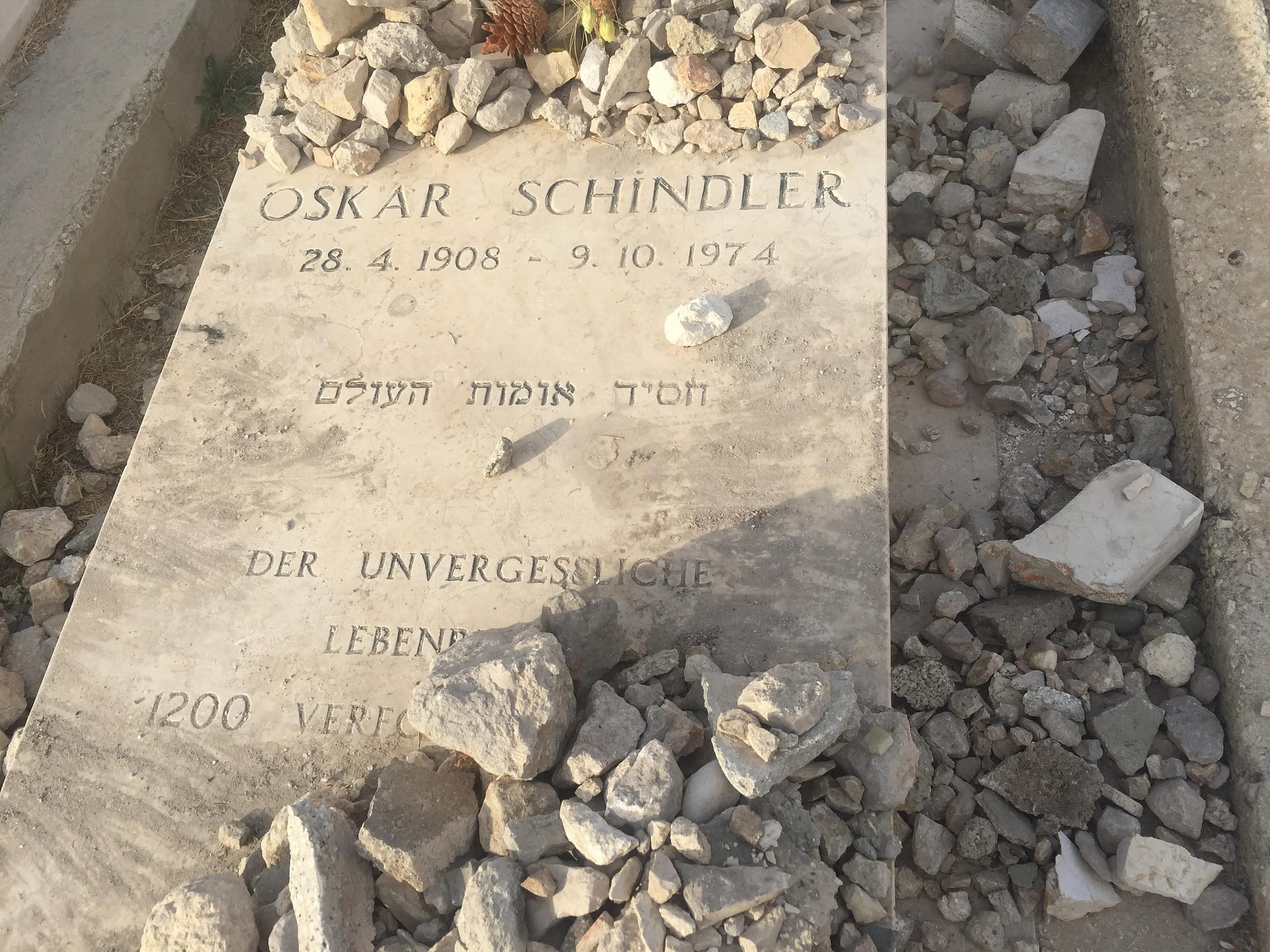
Standing near his grave, I hoped a bit of righteousness might rub off on me. And I feel that way when I think about who stands among the righteous today. Those people who are not Jewish and still stand with Jews when doing so brings isolation, loss, and risk to personal safety.
Douglas Murray from the UK continues to speak about rising antisemitism in the West without softening his words. Luai Ahmed from Yemen challenges antisemitism in the Arab world and supports Israel openly, knowing the personal cost to his friendships and family back home. Goldie Ghamari, an Iranian Canadian politician, has spoken forcefully in support of Israel and against antisemitism. She has received death threats.
Then there is Paul Finlayson.
“I said I stood with Israel, and I was called a criminal,” Paul says.
Paul is an Ontario educator who taught business courses at Humber College and the University of Guelph-Humber. His life changed after he made a statement that, in another time, might not have cost him everything. He compared Hamas to the Nazis. That comparison triggered a chain of events that he says he never saw coming.
According to Paul, a colleague at the university, Wael Ramadan, took issue with his views and escalated the situation. Paul says Ramadan’s social media posts reflect hostility toward Jews and that he had proximity to decision-makers inside the institution. He sent me screenshots to support his claims.
Paul also alleges that senior administrators were involved. He points to Melanie Spence-Ariemma, vice-provost at the University of Guelph-Humber, and says she played a central role in the process that led to his dismissal. “She was the claimant against me and the judge, jury and executioner,” says Paul.
He also names Provost Bill Rosehart and associate vice president George Baragues as individuals he believes were aware of the situation. I reached out to each of these people wondering how this could have played out without due process. The individuals named did not respond to requests for comment.
Paul says that’s what he’d expect. The process moved quickly and without any meaningful engagement with him.
“Suddenly, a bunch of strangers that I never met decided that I was going to be fired. They never spoke to me. They never heard my side,” he says. He describes what he sees as a pattern at his college, something I’ve also heard from teachers working at elementary schools in Toronto.
“Gag, banish, threaten, isolate, defame, shun, then deny process,” says Finlayson. Damaging claims spread about him to students and faculty before he could respond: “One day I was a prized lecturer, and people showed me kindness and warmth. The next day I became the devil himself. They went to war against me, seemingly out of pleasure.
“The fact that the institution encouraged this is amazing. A political statement turned into something else entirely. They said I assaulted a student. They let that rumor run and never pulled it back.
He went from making $300,000 a year to $24,000. “My income has been reduced by 90%. What does that do to someone? I loved my job. I never treated a Muslim, a Jew, a Christian, or an atheist with any unkindness. I gave my heart to my job. I didn’t mess with management. I didn’t mess with the unions. I was regarded as the best professor in the department. And suddenly, a bunch of strangers, a VP in an astonishing act of cruelty, decides that I’m going to be fired because I’ve insulted Hamas.
“On a personal level, this has been devastating. My family is shattered. I have been diagnosed with a PTSD-like condition.”
These are his claims.
A pattern appears in Canada, and it should concern anyone who cares about the free world. People who speak up for the Jews may find themselves exposed and left out to dry when consequences arrive. Institutional protection fades, social circles contract, and your union reps will forget you exist, even if you’ve paid dues for decades. It raises a harder question: what does this climate feel like for Jews themselves? Do you think they are going to tell you what it’s really like?
I did not grow up Jewish in Canada. By the time I was eighteen, I had only met a handful of Jewish people. It turns out a close friend had been Jewish, but her family was hiding it. They knew something many thought was over.
My Scottish-Jewish friends in Toronto, who I worked for at a cafe in Liberty Village, were proud Scots and proud Jews. To them I was “barely-born Karin” and they planted the seed that I should visit Israel. They told me I’d be tuned to that place, and that I should look out for a library in Jerusalem with their family name on it.
During my first visit to Israel, I didn’t find the library, but something shifted inside me, as though I’d come home to one giant family. I met a people who stood for themselves, for each other, and for the outsider who had something to offer.
Getting close to Jews and Israel over the years has changed everything for me. My family comes from Europe, from places where many people did not stand up when they could have. That inaction, and the knowledge that the Dutch gave up their Jews easily, moves through generations and is not lost on me. That is the thread that runs from Schindler to every one of us now in real time.
Supporting the righteous requires action. Who is going to stand up for Paul? If not me, then who?
–
Have a story to share? A tip to add? Write me in the comments, or email karin@greenprophet.com
Related Topics
Related Posts