
Peace can be Israel’s trump card
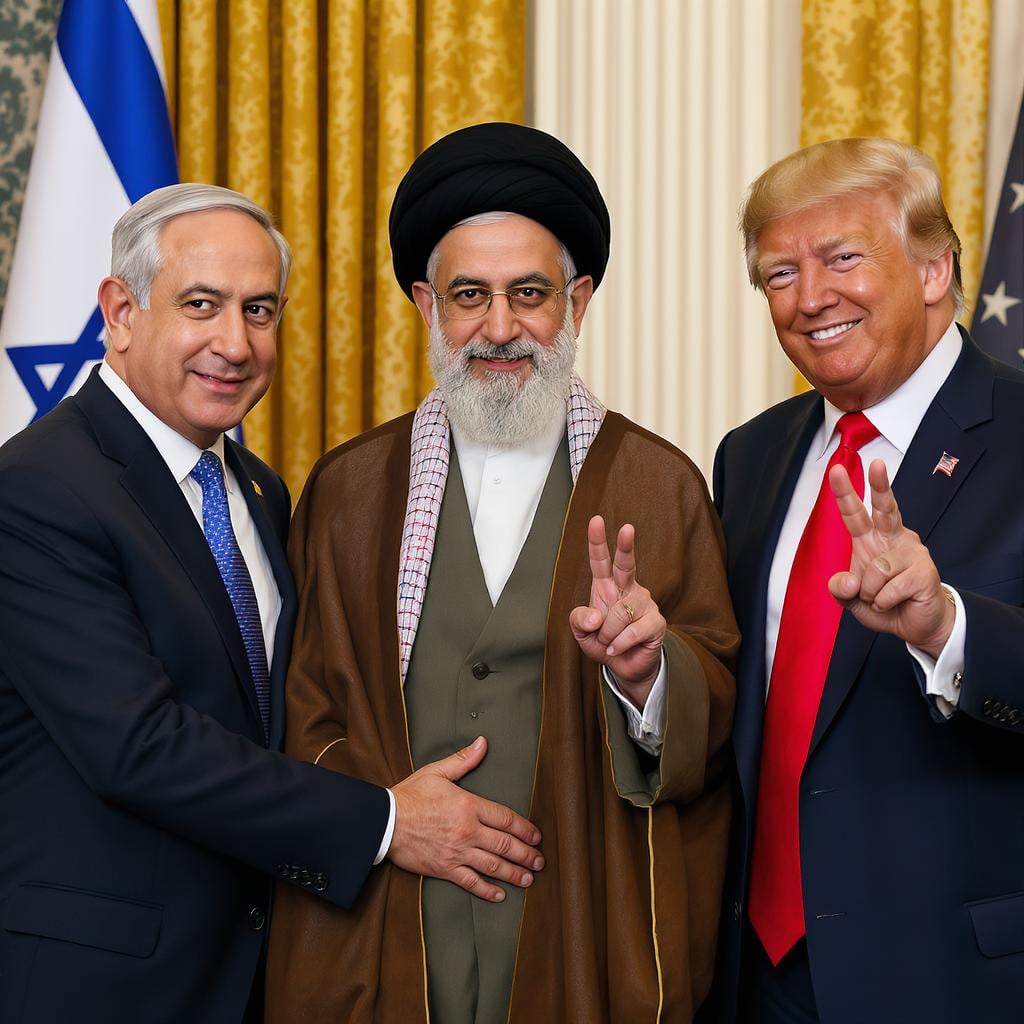
As the dust settles on Israel’s 12-day war with Iran, I want to start by saluting Israel’s heroes in the air, on the ground, in the emergency services and many more; by admiring the brilliant, bold and daring military manoeuvres that will be studied for decades to come; by appreciating the steely determination of Prime Minister Netanyahu, in particular, and other senior decision-makers; by mourning the tragic loss of 28 lives with outrage that civilians were once again deliberately targeted by the country’s enemies with little opprobrium from those that are usually quick to heap such opprobrium on Israel; by appreciating the resilience, selflessness, love, unity and strength of Israeli society under threat; and most of all, by thanking Hashem for the mercies He has shown His people.
With this said, the pro-Israel British military commentator, Andrew Fox, who hails Israel’s tactical victory, isn’t alone when he says that “tactical brilliance cannot replace strategic clarity.”
He observes, “The details of the ceasefire deal will be critical. What oversight mechanisms will be in place? Will Iran be granted sanctions relief, which will undoubtedly be used to rebuild what was lost? How much enriched uranium and nuclear refinement capacity does Iran retain? These are vital questions, and if Trump comes up with the wrong answers, they could well turn an Israeli tactical victory into an outright strategic defeat.”
While there’s no need to be overly pessimistic, early signs aren’t great. President Trump has given an effective sanctions waiver that allows Iran to sell oil to China without restraint.
What Fox understands correctly is that what happens next very much depends on one single person — President Trump. Understanding his mindset and what he wants to achieve in these crucial coming weeks after the war can make all the difference not only in whether the past 12 days’ efforts represent victory or, G-d forbid, defeat, but also in shaping Israel’s existential future.
My first impression is that Israel’s lobbying for the US bombings of Iran’s nuclear facilities on Saturday night — an event greeted with, in my opinion, premature calls for the recitation of Hallel on Sunday morning by some prominent rabbis — was a colossal mistake. It happened too early in the conflict, if it should have happened at all. It led to a loss of strategic control. With an understanding of Trump’s mindset, as he stood between the so-called interventionists and isolationists (or ‘restrainers’) in the MAGA movement, it was always clear he wanted a clean encounter — no American casualties, no forever wars, no costly nation-building exercises.
The clincher was Iran’s response on Monday night, firing missiles at US assets in Qatar. Many dismissed it as a weak token gesture, but it was clever and showed that Iran understood what the President was thinking. Through that strike, Iran signaled it still had the capabilities to inflict significant American casualties. The severity of any American response to such casualties was hypothetical and thus beside the point. American casualties would have been devastating to Trump’s emerging ‘peace through strength’ doctrine that he has used to mollify the MAGA isolationists. American casualties would have degraded his standing — just one more in the long line of American presidents to have become embroiled in yet another Middle East ‘forever conflict’ at the cost of American blood and treasure.
Studying the President’s social media messaging, it was clear that it was the Iranian strike that made the difference. His tone rapidly changed. He went from veiled calls for regime change just after breakfast to expressing his thanks to Iran for ‘giving early notice so no lives were lost’ at lunch, to imposing a ceasefire before dinner, to blasting Israel later that night — for the first time as far as I know in recorded history — for ‘breaching’ a ceasefire hours before it had even come into effect.
None of this takes away from the praise due to Israel’s heroes, or the thanks due to Hashem.
So what now?
The key is President Trump’s mindset, to understand what he wants. There’s a risk that Iran, an accomplished if devious and highly manipulative diplomatic actor, can win the favor of the President, as they seem to have started to work towards already.
What the President wants is peace. He wants to be seen as the peacemaker. He genuinely believes he can convert the ceasefire into an enduring peace between Israel and Iran. It is easy to scoff at this ambition, to dismiss it as merely bravado, and to continue doing things the way things have always been done — the language of power based on the logic of deterrence.
Here’s another way.
Adopt the President’s agenda. Champion it. Come out strongly in favour of peace. Not just any peace, but a true, enduring and comprehensive peace. Put it on the table that Israel stands ready to extend its hand and overcome old enmities, with the Syrians, with the Lebanese, with the Saudis, with the Palestinians, even with the ‘octopus’ itself, the Islamic Republic. Everyone.
Give President Trump a foretaste of the acclamation he would receive as the man who finally brings to an end the world’s most intractable conflict, to accomplish what every world leader for the last 110 years has failed to achieve.
But let’s be proactive to control the narrative and shape the agenda. Mostly, this means, let’s be honest about what peace will actually take.
This is crucial.
At root, a true and enduring peace will take the sincere acceptance by all the aforementioned parties that Jews are a people of this Land, that Jews have rights to live and self-determine here. This needs not just to be acknowledged in passing as a sub-clause of a sub-clause of the preamble. It needs to be the centerpoint of any agreement. A formal written declaration of its own standing. It is the foundation for true and enduring peace.
Why go this route? After all, our enemies hate us, and we have already resigned ourselves to the grim reality that they will not rest a moment to renew their efforts to destroy us.
- It’s what we want: First and foremost, because Israel, and the Jewish people, really do want peace. Truly, madly, deeply, we are a peace-loving people. Peace is the ultimate Jewish value. We finish our key prayers – the amidah, kaddish, grace after meals – with a prayer for peace (‘oseh shalom…’). Jewish law states that war cannot be waged without first making an offer of peace. What we have not been able to accept, especially after the experiences following Oslo, and the South Lebanon and Gaza withdrawals, is an insincere peace that is used as a tactical move by our opponents in their quest to destroy us. When a former opponent has shown sincere desire for peace — think 1977 when Egyptian President Sadat flew to address the Knesset in Jerusalem — even the most right wing and nationalistic parts of Israel’s political spectrum, as Prime Minister Menachem Begin was back then, have embraced and celebrated peace.
- It’s an entirely reasonable request: The legitimacy of Jewish presence in the Land is something that President Trump himself, along with most Americans, most Republicans and even most MAGA supporters, would see as an obvious and unchallengeable truth based on a straightforward reading of recorded history, not to mention Jewish and Christian Scripture.
- Legitimacy is the only sustainable foundation for peace: Recognition of Jewish legitimacy in the Land is a self-evident and necessary foundation for peace. For peace to be peace, there needs to be peaceful coexistence. And peaceful coexistence cannot happen when the legitimacy of one of the parties to the prospective peace continues to be denied. If Jewish presence in the Land is seen as illegitimate, then ‘resistance’ will continue. Attacks against ‘Jewish settlers’ in Jerusalem and Tel Aviv will not stop. Israel has already lived that reality back in the 1990s, even as the country went all out to achieve peace through the Oslo Process.
- It exposes the position of our opponents: Recognising Jewish legitimacy in the Land is something they will find very difficult to publicly accept. It turns them, not Israel, into the rejectionists, the bottlenecks to peace. It puts them on the back foot, the ones holding back the President’s agenda, unless they can accept it. And in the event they do publicly accept it, then it becomes a big win for Israel and the Jewish people in our genuine quest for peaceful coexistence in this region. And it gives hope too to other oppressed minorities in the Middle East, like the Druze, the Kurds, the Yazidis, the Bahai, and indeed for all Christians in the region as well.
- It brings clarity to the debate about the two-state solution: The famous Palestinian Charter clause 20 – that “claims of historical or religious ties of Jews with Palestine are incompatible with the facts of history and the true conception of what constitutes statehood” – is outrageous not only to Jews, but also to Christians. It is a denial of Christian history as much as Jewish history. It is scientifically indefensible. And yet it seems to be a basic and little-questioned premise for so many that oppose Israel, not only among the Palestinians. The amendments to the Charter that were supposed to have taken place during Oslo were fudged. This is an opportunity to put this clause back prominently into the public domain, to help people understand the true roots of this conflict, as the Europeans join hands with others on a renewed push for Palestinian statehood. It is an opportunity to find out, is this clause still operative or not? And more importantly, it is an opportunity to understand more clearly, what kind of Palestinian state is envisaged? If it is one that cannot unambiguously bring itself to accept Jewish legitimacy in the Land, it will be clear that Palestinian statehood won’t end the conflict, it will simply ratchet it up to a new more intense level of inter-state violence. But if it is something the Palestinians, and the wider Arab and Islamic worlds, can acknowledge, then it opens up more interesting frameworks for peace than the simple two-state solution, one in which Jews as well as Palestinians have freedom to live, work, and pray across the entire Land that both people consider as home, one in which the national and religious imperatives of both peoples can be respected in a manner that goes beyond the test King Solomon set 3,000 years ago when he proposed to split the baby in half.
One need not recount the historical sacrifices that Israelis have made to establish the state, nor the bitter experiences of Oslo and the South Lebanon and Gaza withdrawals, to understand why embracing the agenda of peace would not be the natural one for Israel to take at this point. Certainly, one would never link embracing the agenda of peace with any reduction in Israel’s military strength or its readiness to respond decisively, pre-emptively or post-facto, to aggression by its enemies. But in the current context, there is arguably more risk, and more to lose, G-d forbid, by continuing to speak solely in the established language of power and deterrence.
Arguably, it would take just as much bravery for the Prime Minister, given his own background, to embrace the agenda of peace as to launch a daring pre-emptive strike on a nation many times larger than his own. But having done one, and by all accounts accomplished his lifelong mission in so doing, now he can feel sufficiently secure to turn to the other.