
Peace, Yes — National Suicide, Never
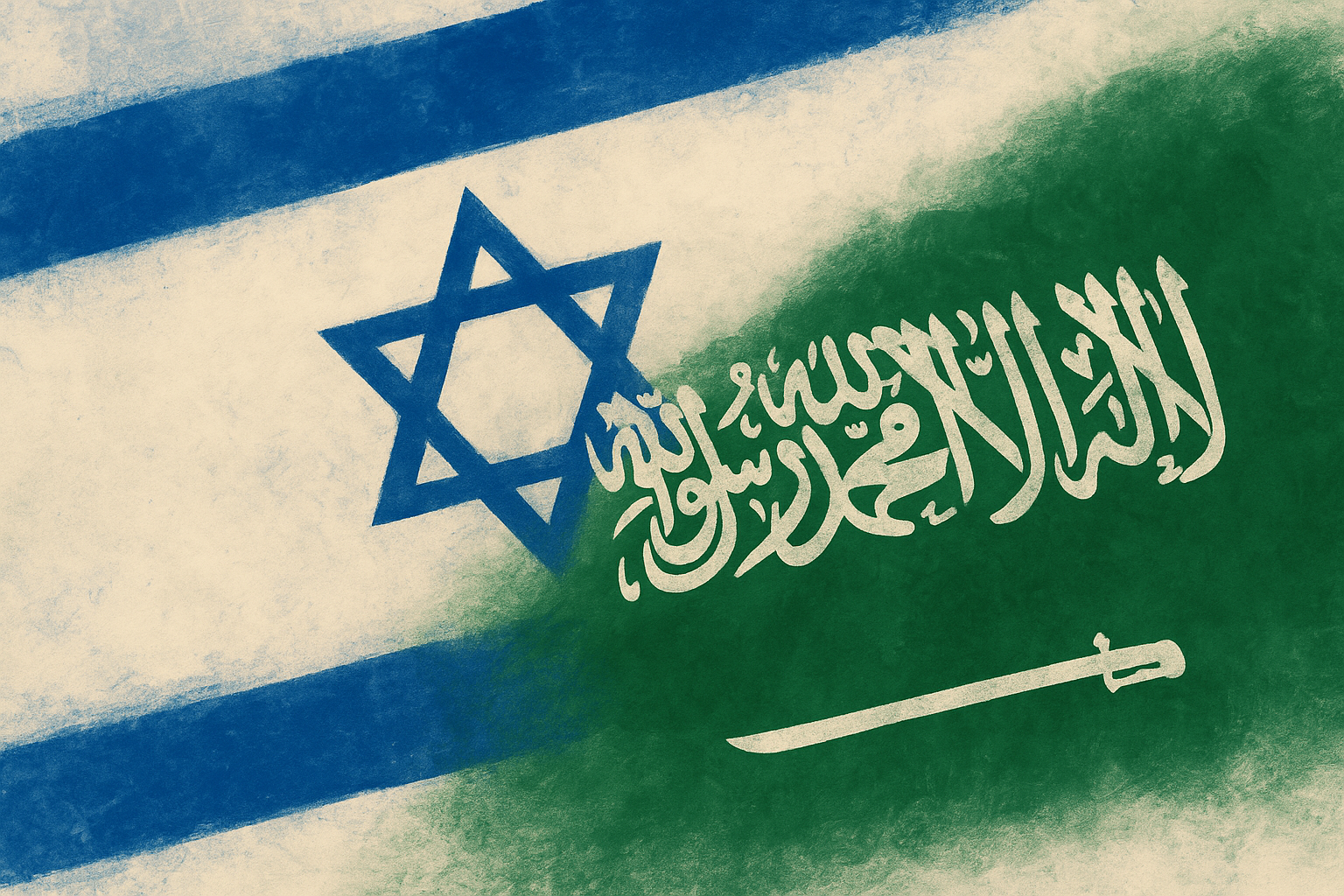
The prospect of normalization between Israel and Saudi Arabia is undeniably historic. It promises economic cooperation, technological partnership, and a united regional front against Iran. But behind the diplomatic optimism lies a dangerous illusion—one that could turn a strategic breakthrough into national suicide. According to reporting that cites Saudi voices close to the royal court, normalization will be “practically impossible” by year’s end unless “miraculous changes” occur in Jerusalem, with Washington pressing for “irreversible steps” toward a Palestinian state. On paper, the bargain sounds tempting: recognition from the most influential Arab kingdom in exchange for progress toward Palestinian sovereignty. In reality, creating a Palestinian state under today’s conditions would not bring peace. It would create another unstable, radicalized, and corrupt regime dedicated to Israel’s destruction—this time with statehood and international legitimacy.
History offers hard lessons here. Every major Israeli concession meant to advance peace has been repaid with violence. The Oslo handshake yielded waves of suicide bombings and a culture of incitement institutionalized in media and schools. In 2005, Israel uprooted every last soldier and settler from Gaza, even exhumed Jewish graves, to give peace a chance. The result was the entrenchment of Hamas, a terrorist dictatorship armed and funded by Iran. Eighteen years later, that same regime perpetrated the atrocities of October 7, when more than 1,200 Israelis were slaughtered and families were burned alive in their homes. If a full withdrawal produced a terrorist fortress in Gaza, what logic could justify duplicating that experiment in the West Bank, minutes from Tel Aviv and a short drive from Jerusalem? Doing so would place Israel’s population centers, its airport, and its vital infrastructure under the shadow of rockets, drones, and cross-border raids launched from a sovereign enemy state.
The stubborn fact is that there is no credible Palestinian leadership capable of building a peaceful state. The Palestinian Authority is sclerotic and corrupt, hemorrhaging legitimacy while paying stipends to convicted terrorists and naming public squares after those who murder Jews. Hamas rules Gaza through fear and indoctrination, openly dedicated to Israel’s annihilation. Elevating either faction to statehood would not create a democracy; it would mint a failed state at birth. It would not yield coexistence; it would ratify confrontation. And instead of two states living side by side in peace, Israel would find itself surrounded by another enemy, this time a recognized one with an embassy, a flag, and international cover.
Well-meaning diplomats often urge Israel to offer “goodwill gestures,” as if moral optics can substitute for hard security. But goodwill without governance is a recipe for disaster. Before any irreversible steps toward sovereignty, Palestinian society would have to dismantle terror groups, end the culture of martyrdom, reform its institutions, and educate children toward coexistence rather than hatred. Absent those conditions, “irreversible steps” are simply irreversible mistakes. Security is not a negotiable perk for Israel; it is the condition for national survival. In a region where genocidal slogans are shouted openly at rallies and broadcast on television, good intentions cannot replace effective deterrence. When enemies insist that your state has no right to exist, the unpleasant truth is that good bombs matter more than good words.
There is also a fundamental misdirection in the current pressure campaign. When Saudi voices say Israel must show “radical change” to achieve normalization, they are aiming at the wrong target. Israel has changed repeatedly: it has made concessions, withdrawn from land, signed accords, and absorbed the consequences when those gestures were answered with violence. If Riyadh truly seeks peace, it should be shouting from the rooftops for the Palestinian Authority to change, end incitement in schools and media, dismantle terror infrastructure, hold transparent elections, accept Israel’s right to exist as the nation-state of the Jewish people, and build accountable institutions under the rule of law. Until Saudi Arabia and other Arab leaders center the Palestinian problem rather than Israel, as the core obstacle, they will continue to misdiagnose the conflict. Asking Israel to gamble its survival to buy recognition is morally backward and strategically unsound. Israel’s existence is not the issue; Palestinian leadership’s choices are.
All of this is unfolding while Iran quietly signals that it has no interest in negotiating meaningful limits on uranium enrichment with the United States and continues rebuilding and dispersing its nuclear program behind the curtain. Tehran arms and trains the very proxies that encircle Israel, from Hamas and Palestinian Islamic Jihad to Hezbollah and the Houthis. To push Israel into premature, “irreversible” political concessions right now would not only jeopardize Israel’s internal security; it would hand Iran an unprecedented strategic dividend. A rushed, corrupt, and ungoverned Palestinian state could become another forward operating base for Iran’s missile, drone, and terror networks—this time with the trappings of sovereignty and the diplomatic cover that comes with it. Yes, Iran has been sidelined and weakened in recent years, but I believe that weakness is temporary; when Tehran sees an opportunity, it will loudly remind the world “we are still here, and we will do what we want.” That risk makes any hasty concession all the more dangerous.
None of this diminishes the value of Saudi recognition. Normalization with Riyadh would reshape the region, deepen trade and investment, and formalize an emerging security architecture that deters Iran and its proxies. It would connect the Jewish state with the custodian of Islam’s holiest sites, signaling a new era of Arab–Israeli cooperation. But peace built on Israel’s strategic self-destruction is no peace at all. Israel’s security is not a bargaining chip to be traded for diplomatic ceremony. It is the foundation of every successful agreement Israel has ever reached, from Camp David to the Abraham Accords. Those breakthroughs were achieved from a position of strength, not surrender. The Saudis understand this, too. Their long-term stability depends on a strong Israel capable of containing Iranian expansionism and countering the destabilizing influence of Tehran’s regional network.
If the Arab world genuinely wants a Palestinian state, the sequence must be reform first. That means disarmament of all militant factions and a single monopoly on force; a credible program to end incitement and halt the glorification of terror; democratic renewal through real elections after years of one-man rule; accountable institutions with transparent finances and an independent judiciary; and verifiable, durable security coordination that survives leadership changes and street pressure. Only after those benchmarks are achieved could statehood be discussed responsibly. Anything else would be the diplomatic equivalent of giving a teenager the keys to a jet fighter and hoping for the best.
Critics will say that insisting on reform is a clever way to delay forever. But the opposite is true: reform is the only path that legitimizes statehood and makes it sustainable. Without it, a Palestinian state would either collapse into chaos or transform into another armed proxy hostile to Israel and to moderate Arab regimes, including Saudi Arabia itself. Those who press Israel to move first are asking the one functioning democracy in this equation to take the greatest risk while the least responsible actors receive the greatest prize. That is not peacemaking; it is appeasement with a press release.
The moral dimension matters as well. Israel has repeatedly demonstrated its willingness to make painful sacrifices for real peace. It returned the entire Sinai Peninsula to Egypt following a war it did not start. It made unprecedented offers at Camp David and Taba. It uprooted towns in Gaza. It has endured condemnation for defending itself in conflicts it did not choose. The refusal to commit national suicide is not obstinacy; it is the sober judgment of a country that learned, time and again, that wishful thinking gets Israelis killed. Genuine peace requires partners who renounce genocide, not those who rebrand it.
The dream of regional peace is worth pursuing with creativity and courage. Saudi recognition can and should be part of that vision. But the price being proposed—creating a Palestinian state now, amid entrenched corruption, active terror, and violent incitement, all while Iran rebuilds its nuclear capabilities and rejects negotiations—is too high. The responsible path is not to rush a ribbon-cutting for a state destined to fail; it is to build the conditions under which such a state, if it comes, will not be a mortal threat to its neighbor or a destabilizing force in the Arab world. Until that transformation occurs, Israel’s answer must remain firm and clear: peace, yes; normalization, yes; national suicide, never.