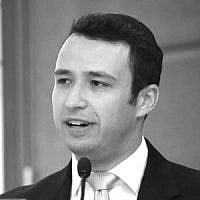
Rabbi Kalb directs the Jewish Learning Center
‘People hearing without listening’
The following article is based on a Drasha (Sermon) that I gave on the first day of Rosh Hashanah at the Hebrew Institute of Riverdale – The Bayit, at the Explanatory Service. Please note that I have made some changes for clarity. Additionally, I have updated the text to reflect recent events.
“People talking without speaking. People hearing without listening. People writing songs that voices never share. No one dared. Disturb the sound of silence.” (“The Sound of Silence” by Paul Simon, recorded by Simon & Garfunkel on the album “Wednesday Morning 3 AM”)
The Torah Reading for the first day of Rosh Hashanah comes from Bereishit, Genesis 21:1-34. For years, Avraham (Abraham) and Sarah tried to get pregnant, to continue the Brit, the Covenant, they began with God. Alas, the child so desired did not come to them.
Sarah tells Avraham to have sex with her handmaid Hagar. I guess you could call it “The Handmaid’s Tale.” Hagar gives birth to Yishmael. Miraculously, 14 years later, when they are much older, Avraham and Sarah have a son, Yitzchak. Mazal Tov! All is well. Then one day, in Bereishit 21:9 וַתֵּ֨רֶא שָׂרָ֜ה אֶת־בֶּן־הָגָ֧ר הַמִּצְרִ֛י אֲשֶׁר־יָֽלְדָ֥ה לְאַבְרָהָ֖ם מְצַחֵֽק “ And Sarah saw the son of Hagar the Egyptian, whom she had borne to Avraham, Mocking.” Yishmael was Mocking Yitzchak. The Hebrew term for Mocking is “Metzachek.” “Metzachek” is a fascinating word. Metzachek is typically poorly translated, as I already said, as mocking, making sport, laughing, or merry making with Yitzchak. These translations give the impression that Yishmael is making fun of Yitzchak, being a poor influence on him, or is truly mistreating Yitzchak. However, that is not what Mitzchek really means.
Read the word Metzachek out loud and listen to the word carefully, Metzachek. You can almost hear the word Yitzchak in the word Metzachek. What is the meaning of the word Metzachek? Yishmael wants to be Yitzchak. His desire: To take Yitzchak’s place. His goal: To be the covenantal child. To receive the inheritance.
That is why Sarah says in Bereishit 21:10 גָּרֵ֛שׁ הָֽאָמָ֥ה הַזֹּ֖את וְאֶת־בְּנָ֑הּ כִּ֣י לֹ֤א יִירַשׁ֙ בֶּן־הָֽאָמָ֣ה הַזֹּ֔את עִם־בְּנִ֖י עִם־יִצְחָֽק:“ Drive out this handmaid and her son, for the son of this handmaid shall not inherit with my son, with Isaac.” How does Avraham react? Bereishit 21:11 וַיֵּרַע הַדָּבָר מְאֹד, בְּעֵינֵי אַבְרָהָם, “This thing that Sarah said was grievous in his eyes.” The Torah is indicating that Avraham is pained in his eyes. Not his ears, It is saying that Avraham, sees but does not listen. Avraham is distressed when Sarah says this. At this emotional time, God speaks to Avraham: Bereishit 21:12 כֹּל אֲשֶׁר תֹּאמַר אֵלֶיךָ שָׂרָה, שְׁמַע בְּקֹלָה “ Everything that Sarah says to you, listen to her voice.” Let us repeat God’s language, Shema bekola, “Listen To Her Voice.” What does Avraham do? Bereishit 21:14, וַיַּשְׁכֵּם אַבְרָהָם בַּבֹּקֶר וַיִּקַּח–לֶחֶם וְחֵמַת מַיִם וַיִּתֵּן אֶל–הָגָר, “And Avraham arose early, and took bread and water and gave it to Hagar and the child and sent them away.”
Did you follow what happened? God did not say, “Do what Sarah said.” God did not tell Avraham to get up early, pack some food and water, and send Hagar and Yismael away. God said,” Listen to Sarah’s voice.” That is the one thing Avraham does not do. He does not listen. Avraham actually never does that! God said, “Listen to Sarah.” Instead of listening to Sarah, Avraham made provisions for Hagar and Yishmael and sent them away. What was Avraham doing here? He was problem-solving. Have you ever noticed that whenever we go into problem-solving mode, we rarely solve anything? We actually create a few extra problems. You know how I know? I am a big problem solver; when I should be listening, I problem solve. Just ask my family!
Of course, Sarah said, “Drive out this Handmaid and her son.” Sarah said, “For this son of the Handmaid shall not inherit with my son, with Yitzchak.” What if, because she feared her son’s Covenantal rights slipping away, she articulated some horrible thought to Avraham? That was the first thing that came into her mind and out of her mouth, but in her heart, Sarah would never wish to treat Hagar and Yishmael in this way. Perhaps, if she had the chance to mull it over, she would have said something different, but her emotions were very raw; maybe she just needed someone to listen.
Do we sometimes say terrible things and suggest doing unkind acts when we are under tremendous stress, only to regret it later? We need to be listened to, but what we say does not always need to be acted on. Again, God told Avraham to listen to everything Sarah said, not to do what Sarah said.
Remember God’s words to Avraham, Bereishit 21:12 כֹּל אֲשֶׁר תֹּאמַר אֵלֶיךָ שָׂרָה, שְׁמַע בְּקֹלָה “Everything that Sarah says to you, listen to her voice.” Now, what do we do after the Torah Service? We perform the Mitzvah of Shofar. Interesting. How do we fulfill the Mitzvah of Shofar?
Is the Mitzvah to blow the Shofar or to listen to the Shofar? We do not all come to Synagogue with our own Shofar and blow. The Mitzvah is to listen to the Shofar according to the Mishnah Torah, Hilchot Shofar 1:1. Furthermore, what is the Bracha, the Blessing on the Mitzvah of Shofar? Baruch Atah Hashem Elokeinu Melekh Ha-olam, Asher Kidshanu B’mitzvotav V’tzivanu, Lishmoa Kol Shofar. Blessed are You, Ruler of the Universe, Who has Sanctified us with Your commandments, and has commanded us to listen to the voice of the Shofar.
So similar to what God said to Avraham, “Shema B’kola, Listen to her voice.” As mentioned, after reading a Torah text about not listening, we engage in the Mitzvah of Shofar. Which, if you think about it, is an exercise in listening.
When someone really needs us to listen to them, it should be akin to the Mitzvah of Shofar. We need to put ourselves in the right frame of mind. When we listen to the Shofar, we are not permitted to make an interruption. The same should be true in our listening to people; we should not interrupt. Just as we focus on each note—all 100 notes of the Shofar—we should listen to each word that a person says to us.
The story of this particular Torah reading, coupled with listening to the Shofar, needs to transform us and make us better listeners. We need to listen to our friends and family. We need to listen to the people we work with. Those of us who are students and teachers need to listen to each other.
Through listening, we can grow spiritually. We need to listen when we are trying to do Teshuvah, repentance. When we are doing the Mitzvot Ben Adam L’Chavero, the commandments between us and our fellow human beings, we need to listen to the moral messages of God. When we are doing the Mitzvot Ben Adam L’Makome, the commandments between us and God, we need to listen to the spiritual messages of God. Rosh Hashanah is a day about praying to God. Worship is about speaking to God. When we pray, do we need to listen to God? Not only when in prayer, but as beings in God’s Universe, we must be better listeners in general.
Easier said than done. No one listens. I am no better. However, we all need to strive to improve.
We face so much right now:
In Israel, with all the dire challenges. Obviously, we must first thank God that all the living hostages have been returned. We are also grateful to all those who made this occur. However, we cannot rest until all the bodies of the dead hostages who were heinously murdered in Gaza are returned to Israel for burial, so their families can appropriately mourn them. Also, we are rightfully concerned about the tenuous nature of the ceasefire as we watch Hamas terrorists not only fire on and kill Israeli soldiers but execute Palestinians who oppose them.
In the diaspora, antisemitism is widespread. While the hatred that we are currently facing brings us together at times. I still often observe a great deal of disunity and intolerance in the entire global Jewish community. Furthermore, the issue of assimilation is not going away. While many Jews have reengaged with our traditions post October 7th, others are receding due to fear.
American society these past several years has been experiencing a time of significant discord: Republican, Democrat, Conservative, and Liberal. Even moderates have not been immune. There have even been moments when degrading statements have descended into violence.
It is hard to find a place free of starvation, poverty, brutality, hate, injustice, as well as economic and health instability. Not only are these plagues raging throughout the earth, but there does not seem to be an end in sight. What do we do?
Let there be no misunderstanding, let me be plain and simple. This is not about politics. Right or Left. It is about listening to each other.
I do not pretend to have the answers to all of this. In fact, it is daunting to get more specific. However, what is absolutely clear to me is that where we must begin is listening. Listening opens us up to miraculous possibilities. Eventually, we go beyond listening to understanding.
As we listen to the Shofar this Rosh Hashanah and to the final blast at the end of Yom Kippur, let the Mitzvah of the Shofar help us become the best listeners we can be, so that we can transform our people, this land, and the entire world.
Let it be soon. Let it be today. Let it be this very moment.
Shanah Tovah
Related Topics
Related Posts