
Pope Leo XIV’s message to a world confronting Christian antisemitism
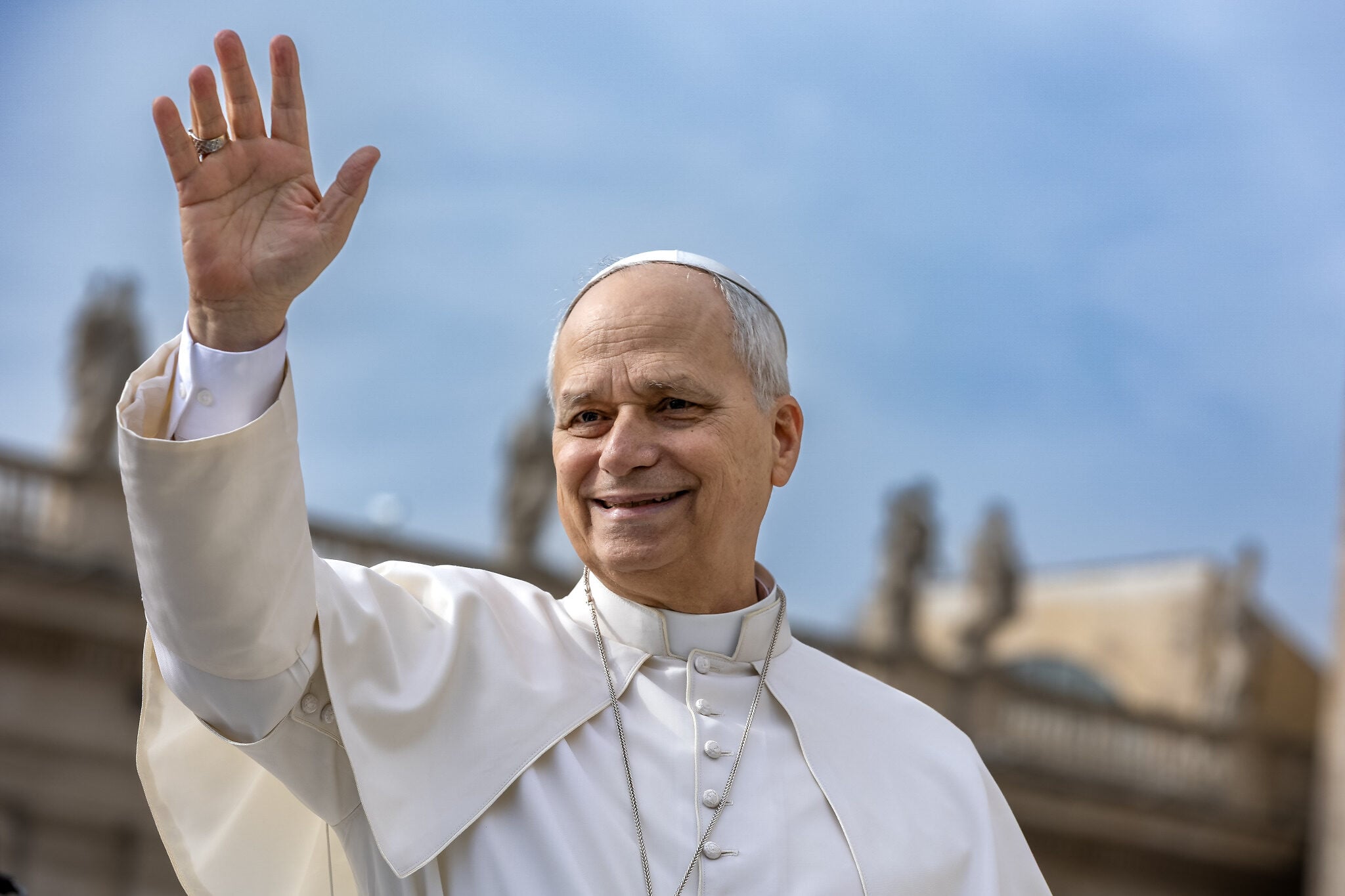
Pope Leo XIV’s message to a world confronting Christian antisemitism
On November 9, as the world marked the 88th anniversary of Kristallnacht, Pope Leo XIV delivered an important message during his historic visit to Argentina. Speaking to religious leaders in Buenos Aires, the pontiff reaffirmed the spiritual bonds between the Catholic Church and the Jewish people, invoking the teachings of the Second Vatican Council and its landmark declaration Nostra Aetate.
The significance of his words should not be underestimated. Kristallnacht, the wave of antisemitic violence that swept across Nazi Germany in 1938, marked a decisive escalation in the persecution of European Jews, eventually culminating in the Holocaust. Nearly nine decades later, the pope’s reaffirmation of the Church’s relationship with the Jewish people carries particular weight at a time when antisemitism is once again finding an audience, including within certain Christian circles.
The setting was equally meaningful. Buenos Aires was the site of the deadliest antisemitic terrorist attack in Latin American history. In 1994, the bombing of the AMIA Jewish community center, attributed by Argentine authorities to Hezbollah and Iran, killed 85 people and injured hundreds more. Against this historical background, Leo XIV’s message was a reminder that the relationship between Christians and Jews cannot be reduced to diplomatic courtesy or political convenience. It is rooted in the very foundations of Christian theology.
Indeed, the fight against antisemitism and the promotion of Jewish-Christian dialogue have occupied an important place in Leo XIV’s pontificate. During an October meeting with a delegation of the American Jewish Committee, the pope reiterated the Church’s rejection of antisemitism, emphasizing that the fight against hatred of Jews is grounded in the Gospel itself. He also reaffirmed the importance of maintaining dialogue and mutual respect, even amid profound political disagreements.
This commitment reflects one of the most consequential theological developments in modern Catholic history. In 1965, Nostra Aetate transformed the Church’s official approach to Judaism, rejecting the collective accusation of Jewish responsibility for the death of Jesus and condemning antisemitism. Subsequent Catholic teaching has reaffirmed the enduring significance of God’s covenant with the Jewish people.
The significance of this transformation was reinforced in September, when the Vatican published A Journey of Hope, a document reflecting on the legacy of Nostra Aetate. The text emphasizes that Jewish-Christian dialogue is not simply a matter of friendship or mutual respect. Rather, understanding Judaism is essential for Christians seeking to understand their own religious identity. Christianity cannot be separated from its Jewish roots without distorting its theological foundations.
Yet these teachings are being challenged by troubling developments in contemporary Christian discourse, particularly in the United States.
In October 2025, conservative commentator Tucker Carlson hosted Nick Fuentes, a white nationalist known for Holocaust denial and openly antisemitic rhetoric. During their conversation, Fuentes promoted familiar conspiracy theories about Jewish influence. Although Carlson did not endorse every statement made by his guest, the friendly tone of the interview and his praise for Fuentes provoked widespread criticism.
Equally revealing was Carlson’s attack on Christian Zionism. During the same interview, he described the movement as a form of Christian heresy and used the expression “brain virus” when discussing its influence on prominent Christian supporters of Israel. Carlson later apologized for his choice of words. Nevertheless, the episode raised important questions about the increasingly hostile rhetoric directed at Christian Zionists within certain conservative circles.
Of course, Christian Zionism is not beyond theological criticism. Christians have long disagreed about biblical promises, the significance of the modern State of Israel, and the relationship between faith and political sovereignty. Yet such disagreements should not become a justification for demonizing fellow Christians or legitimizing hostility toward Jews. This is precisely where Leo XIV’s message becomes relevant: Christian theology cannot be used to erase the enduring spiritual significance of the Jewish people or to transform religious disagreement into prejudice.
These controversies are unfolding against the backdrop of a broader generational transformation in American Evangelical attitudes toward Israel.
According to research conducted by Motti Inbari and Kirill Bumin, published in their book Christian Zionism in the Twenty-First Century: American Evangelical Opinion on Israel, support for Israel among American Evangelicals under the age of 30 fell from 68.9% in 2018 to just 33.6% in 2021. Over the same period, support for the Palestinians increased from approximately 5% to 24.3%, while the proportion supporting neither side rose to 42.2%.
These findings reveal a significant generational divide within a religious community historically associated with strong support for Israel. Although the figures refer to surveys conducted several years ago and should not be treated as measurements of current opinion, they illustrate changes in the political and theological attitudes of younger Evangelicals.
The implications have not gone unnoticed among Christian leaders. This week, Bishop Robert Stearns, founder of Eagles’ Wings, warned that Israel could no longer take the support of American Evangelicals for granted. Speaking to The Jerusalem Post, Stearns urged greater engagement with younger Christians, whose political and religious attitudes are being shaped by a dramatically different cultural and media environment. His warning reflects a growing concern that the historic relationship between Evangelical Christianity and Israel may be weakening among younger generations.
Naturally, declining political support for Israel should not be confused with antisemitism. Christians may legitimately disagree about Israeli policies, Palestinian rights, or the theological foundations of Christian Zionism. Nevertheless, these generational changes are taking place alongside the growing visibility of antisemitic rhetoric in certain Christian and conservative circles.
The challenge, therefore, is not simply whether younger Christians will continue to support the State of Israel, but whether their changing theological and political convictions will remain grounded in a recognition of the Jewish people’s enduring religious significance.
Candace Owens offers another revealing example of the troubling relationship between religious rhetoric and antisemitic narratives. The conservative commentator, who frequently invokes her Christian faith, has repeatedly faced criticism for promoting conspiracy theories involving Jews and Israel. Her use of the historically charged expression “synagogue of Satan,” alongside claims about Jewish influence, has raised concerns about the reappearance of longstanding anti-Jewish themes in contemporary Christian political discourse.
Such narratives do not emerge in a historical vacuum. Accusations of hidden Jewish power, manipulation of governments, and responsibility for society’s misfortunes have circulated for centuries. Their reappearance in contemporary political commentary demonstrates how easily older antisemitic traditions can be repackaged for new audiences.
Perhaps the most revealing example of this phenomenon is the appropriation of the phrase Christ is King.
For Christians, the proclamation of Christ’s kingship is a central expression of faith. It affirms a fundamental theological conviction and has a long history in Christian worship and tradition. There is nothing inherently antisemitic about the phrase itself.
However, in certain online environments, Christ is King has increasingly been deployed as a provocation against Jews, sometimes accompanied by antisemitic stereotypes or insinuations that Jewish identity is incompatible with Christian society. A profession of faith is thereby transformed into an instrument of religious exclusion.
This distinction is essential. Christians should not be expected to abandon their theological convictions in order to combat antisemitism. On the contrary, the Catholic Church’s post-Holocaust theological development demonstrates that fidelity to Christianity and respect for Judaism are not mutually exclusive. As Nostra Aetate and subsequent Church teachings make clear, recognizing the enduring significance of the Jewish people does not require Christians to renounce their belief in Jesus Christ.
What it does require is rejecting the idea that Christian identity must be constructed in opposition to Jews.
The danger of contemporary Christian antisemitism lies precisely in its ability to present ancient prejudices as expressions of religious fidelity. Theological accusations that contributed to centuries of Jewish marginalization can reappear in the language of cultural conflict, political nationalism, and digital activism. Even when stripped of their explicitly theological vocabulary, these narratives often reproduce familiar patterns of suspicion and hostility toward Jews.
This makes Leo XIV’s message particularly important. His words in Buenos Aires are not an isolated gesture of interreligious goodwill. They belong to a broader theological tradition that emerged from the Catholic Church’s confrontation with the legacy of Christian anti-Judaism after the Holocaust.
The pope is also speaking at a moment when the war between Israel and Hamas in the Gaza Strip has placed Jewish-Christian relations under renewed pressure. Legitimate criticism of Israeli government policies must remain possible, as must the defense of Palestinian rights and dignity. But political disagreements cannot justify hostility toward Jews, the revival of antisemitic conspiracy theories, or the collective demonization of Israelis.
The Vatican itself has acknowledged these tensions, recognizing that recent conflicts in the Middle East have strained Jewish-Christian dialogue while insisting that the theological foundations established over the past six decades remain intact.
For Christians, this is ultimately a question of religious responsibility. The rejection of antisemitism cannot depend on political alliances, attitudes toward the State of Israel, or the changing priorities of public debate. It must be rooted in a serious understanding of Christian history, Scripture, and theology.
Pope Leo XIV’s message in Buenos Aires deserves to be heard far beyond Argentina. At a time when some influential voices invoke Christianity while promoting suspicion and hostility toward Jews, the pontiff offers a reminder that the fight against antisemitism is not a departure from Christian faith, but a consequence of taking that faith seriously.
The challenge for contemporary Christianity is not merely to condemn antisemitism when it comes from outside its communities, but to recognize and confront it when it emerges from within. After centuries of Christian anti-Judaism and the catastrophe of the Holocaust, this responsibility should no longer be negotiable.
Christianity does not become stronger by turning against the Jewish people. It betrays its own foundations when it does.