
Pope Pius XII’s Most Ironic Blessing
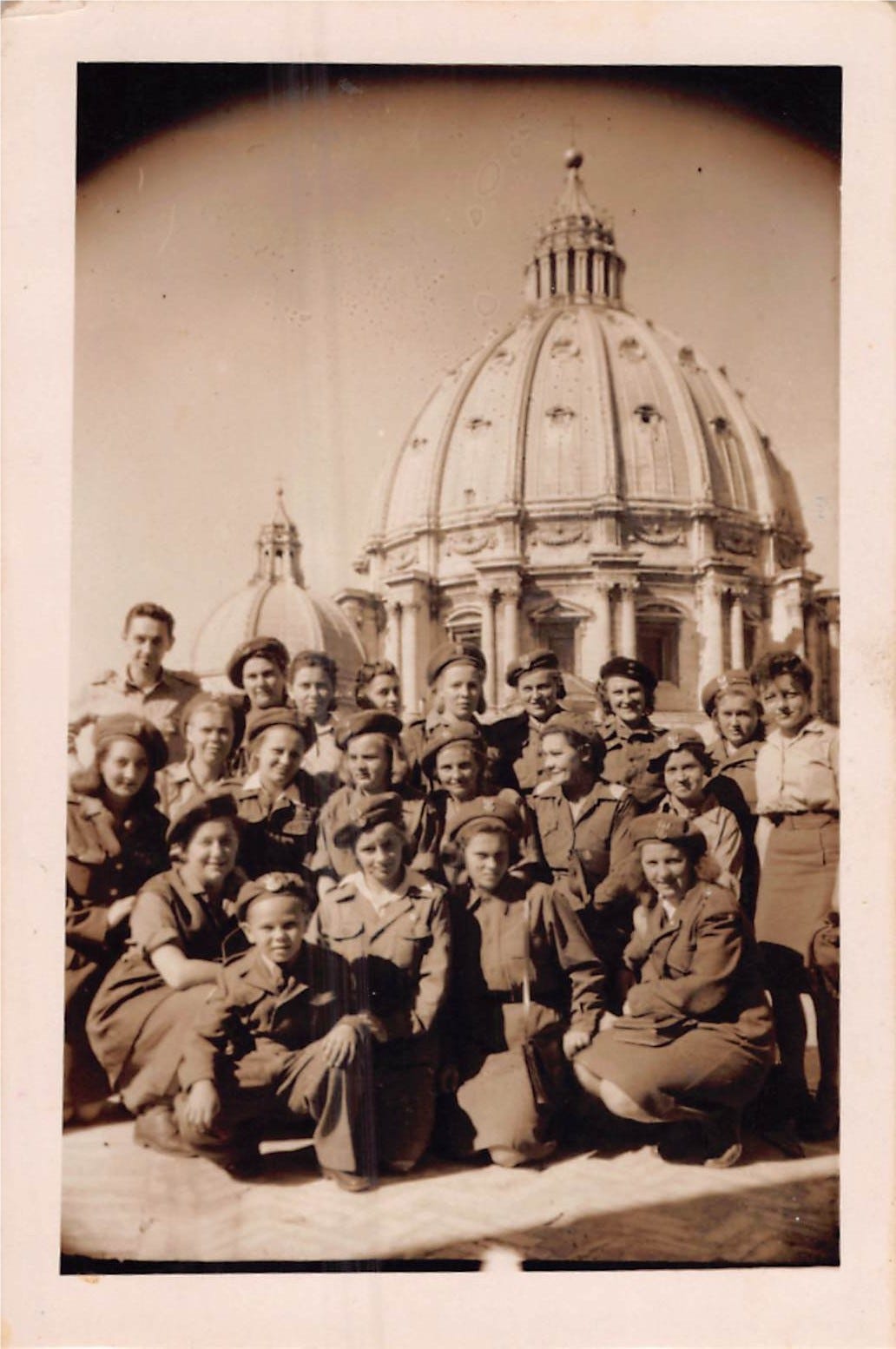
When he honored the Oberlangen Girls—and never knew one was Jewish
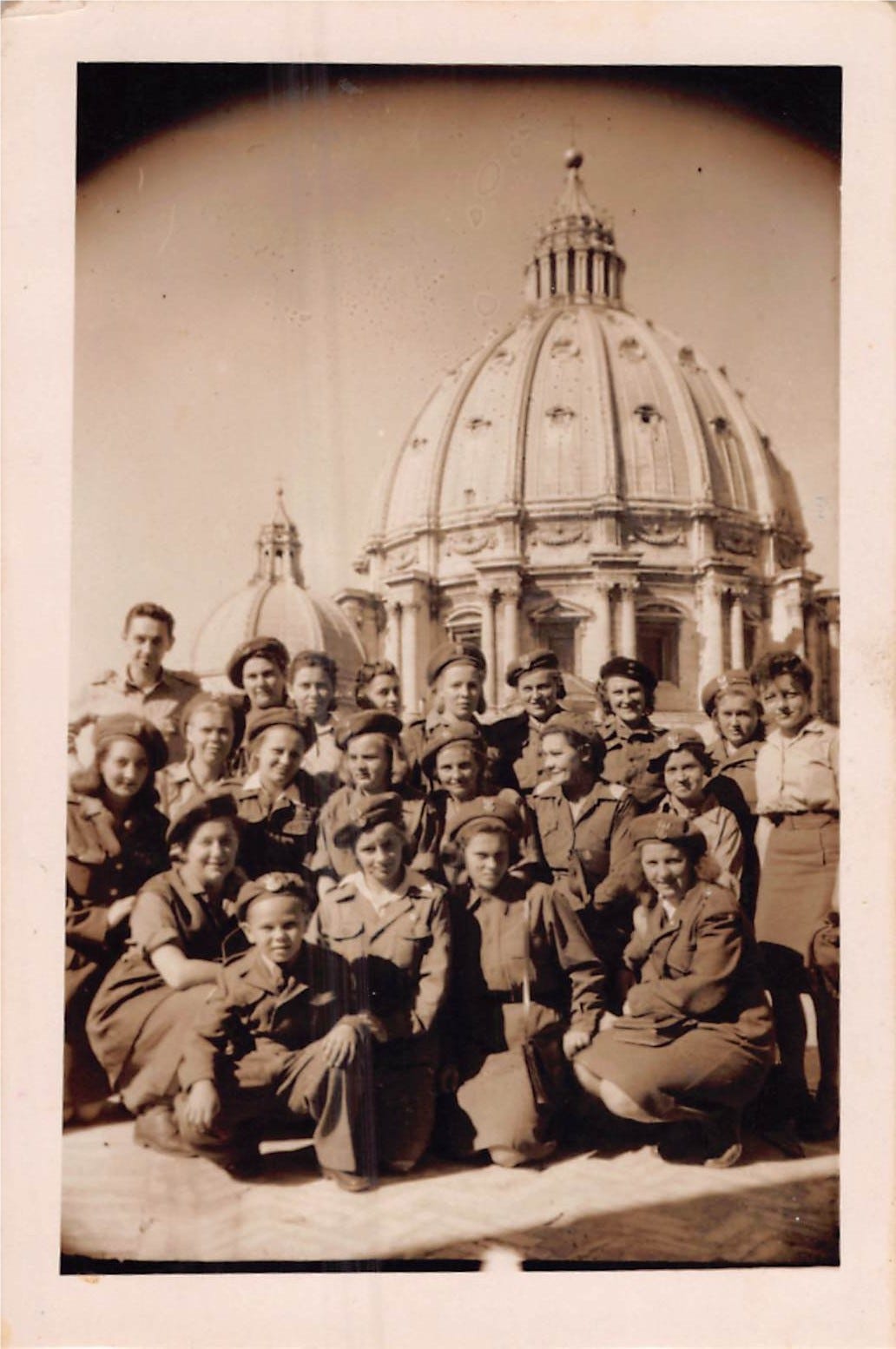
The Oberlangen Girls at St. Peter’s Basilica, Vatican City, 1946.
In 1946, Pope Pius XII prepared to honor a group of young Polish women who had become symbols of resistance during World War II.
They were known as the Oberlangen Girls—fighters in the Polish Home Army who had survived Nazi imprisonment as prisoners of war. Fifteen were selected to receive a papal audience and medal at the Vatican.
Among them stood a twelve-year-old girl in a Polish military uniform.
She was the youngest.
She was the smallest.
And she was Jewish.
No one knew.
The Oberlangen Girls
After the Warsaw Uprising was crushed in October 1944, thousands of Polish resistance fighters were taken prisoner. Among them were young women who had carried weapons, served as couriers, and tended the wounded under fire.
They were sent to Oberlangen, a German POW camp, and held there until liberation in 1945.
By the time the war ended, these women were celebrated throughout the Polish exile community. They represented courage, endurance, and Catholic Poland’s resistance to Nazi occupation.
In 1946, Polish military authorities selected fifteen of the most exemplary among them for a papal audience.
One was a girl known as Stefcia Skołkowska.
Her resistance name was Kajtek.
She had received two military decorations at age ten. She had been wounded by a grenade during the uprising. She was already a legend.
What her comrades did not know was that her real name was Edna Szurek.
She was Jewish.
Among Poland’s most celebrated Catholic war heroes stood a Jewish child—and no one knew.
The Disguise
Edna had been born in Warsaw in 1934.
She watched the creation of the Warsaw Ghetto. She saw her mother starve to death. She lost much of her family to Treblinka.
At seven, she escaped to the Aryan side with her sister Miriam. They assumed the identities of dead Catholic girls taken from a cemetery.
They learned prayers. Attended Mass. Became orphans.
When Edna joined the Polish Home Army at nine, she did so not as a Jewish child—but as Stefcia, a Catholic girl fighting for Poland.
The transformation was complete.
So complete that it fooled Nazi officers.
So complete that it fooled her fellow resistance fighters.
So complete that it fooled the Vatican.
The Vatican, 1946
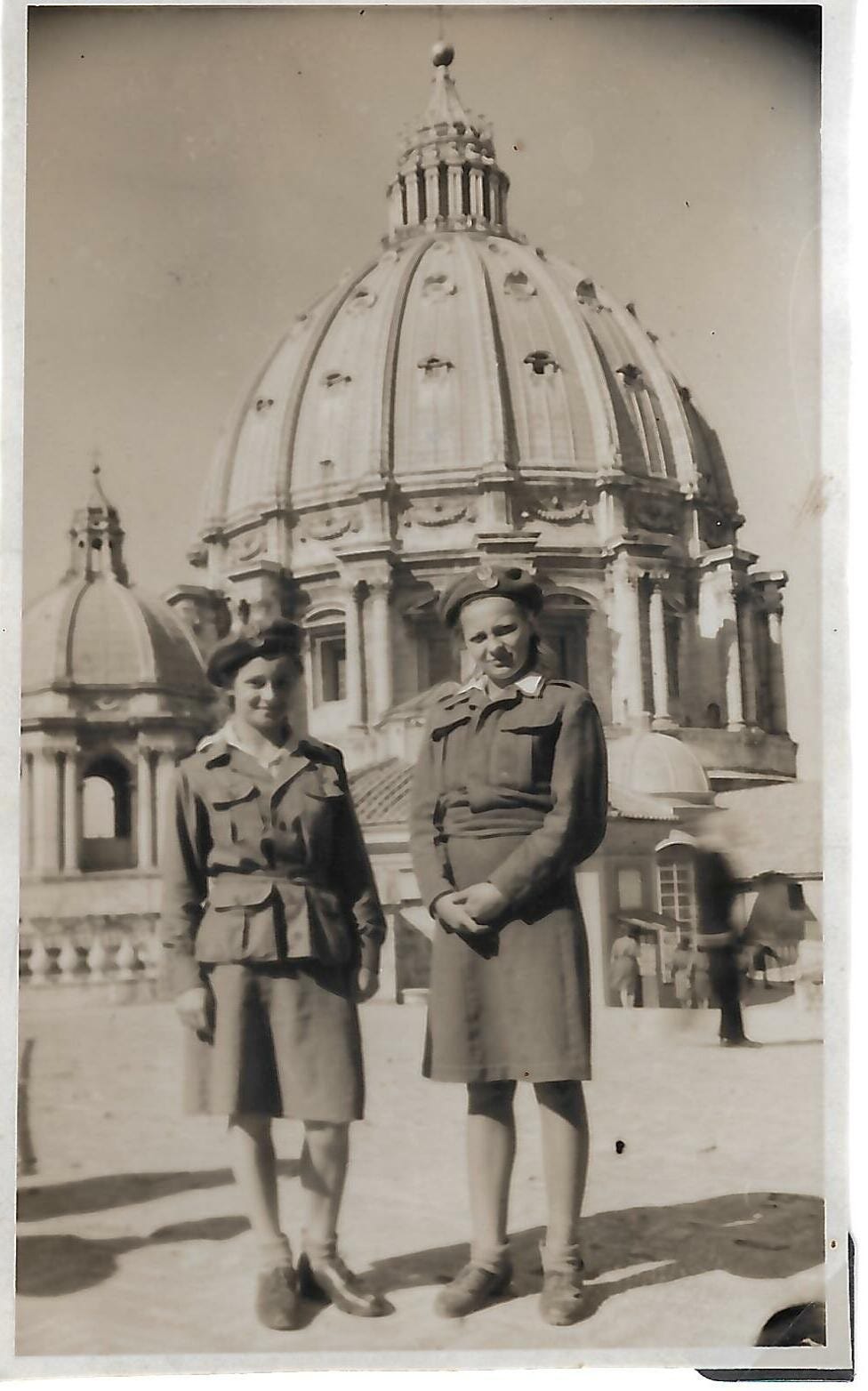
Edna (Stefcia) at the Vatican, 1946.
The photographs remain.
Young women in Polish military uniforms stand beneath the dome of St. Peter’s Basilica. Among them, noticeably smaller than the rest, stands Edna.
On the back of one photograph, signatures fill every inch. Her fellow Oberlangen Girls—women who fought beside her, suffered beside her, survived beside her—signed their names in friendship and pride.
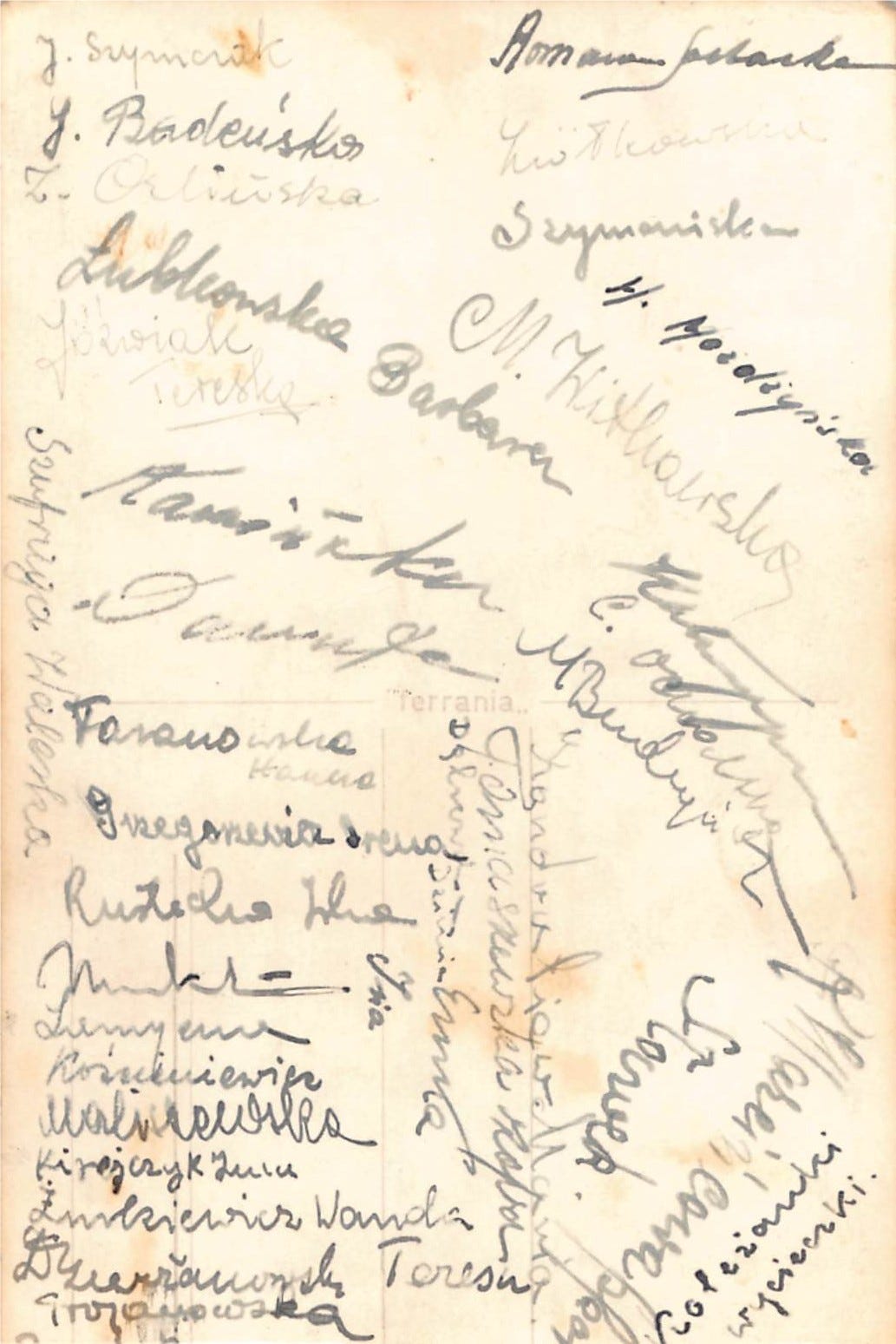
The back of Edna’s Vatican photograph, signed by fellow Oberlangen Girls.
They never knew.
When Edna’s name was called, she crossed the vast reception room toward the Pope’s throne. Swiss Guards stood at attention. Her comrades watched.
Pope Pius XII made the sign of the cross.
“May the Lord bless you for your bravery,” he said, speaking in Polish and Italian. “May the world know peace through your courage.”
He awarded her a medal shaped like a cross.
He saw a brave Catholic child.
He did not see a Jewish survivor.
Pope Pius XII blessed Jewish courage without recognizing it.
The Irony
Pius XII’s papacy has been defined by one question: What did he do for the Jews during the Holocaust?
He never publicly condemned the genocide. He worked through diplomatic channels. Some Jews were sheltered by Church institutions. His silence remains the subject of intense historical debate.
No archive document captures what happened in that room in 1946.
A Jewish child—whose family had been destroyed during his papacy—stood before him and received his personal blessing.
Not as a Jew.
As a Catholic.
Her survival depended on it.
To survive, she had to disappear. To be honored, she had to hide.
A Mark Left Behind
As the ceremony continued, Edna drifted toward the edge of the room.
She pulled a small penknife from her pocket and carved one word into the molding of a Vatican door:
KAJTEK
Her resistance name.
A trace of herself left behind in a place where she was honored for someone she was not.
No one saw it.
What the Photographs Hold
The photographs tell two stories.
On the surface: Polish Catholic heroines honored by the Pope.
Beneath it: a Jewish child who survived by mastering invisibility so completely that she fooled the Church, the military, and the women who loved her.
Her comrades’ signatures remained with her for life. Proof of a sisterhood built on a truth she could never share.
This was triumph.
And it was loss.
Her survival was miraculous. The cost was invisibility.
Pope Pius XII died in 1958, never knowing that one of the Oberlangen Girls he blessed was Jewish.
The women who signed Edna’s photograph never knew either.
History recorded the moment.
Only memory holds what it meant.
The memoir Little Edna’s War by Janet Bond Brill, PhD, premieres in bookstores on January 27, 2026, International Holocaust Remembrance Day. You can purchase your copy on Amazon, Barnes & Noble and many more online retailers.