
Priestly Pizza Party – Ki Tavo 5786
Over the summer, I got to celebrate many big smahot – occasions; I was invited to a pizza party that friends of mine hosted.

It was incredibly well done.
They had an outdoor pizza oven going, with cutting boards where you could roll out pre-made dough and add whatever toppings you wanted. They even had vegan cheese, which I appreciated.
The cheese did smell pretty bad, but once it melted, it was actually pretty good.
The whole operation ran like an assembly line.
You made your pizza.
Our host slid it onto one of those long pizza paddles, which I learned is called a pizza peel, and put it into the oven.
A few minutes later it came out, and you sliced it with this enormous curved blade, a pizza rocker, basically a giant mezzaluna.
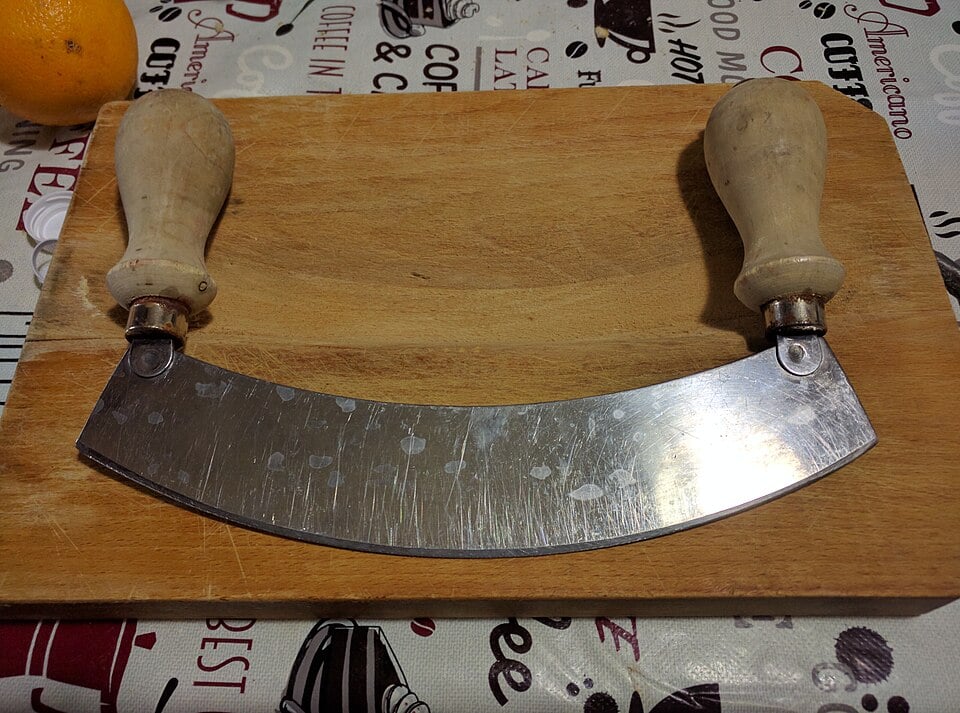
https://commons.wikimedia.org/wiki/File:Mezzaluna_e_tagliere.jpg
Yes, I did have to look that word up.
***
And then, suddenly, the skies opened up.
I mean pouring. A summer monsoon.
Everyone ran for cover.
Everyone except our host.
There he was, getting soaked, standing at this blazing-hot outdoor oven, putting in pizzas, pulling them out, and taking the next one.
He had hungry mouths to feed, and he did not miss a beat.
Eventually the skies cleared, everyone came back out, and the pizza assembly line started up again.
And I suddenly realized: our host had not made a pizza for himself.
So I went over to him.
“Can I make you one? Aren’t you hungry?”
He said, “No, I’m good. I take tax.”
“What do you mean?”
“For every pizza I bake, I take a slice. I’ve already eaten about two pizzas.”
Oh.
It was a pretty good system.
*****
Parashat Ki Tavo opens with almost the exact same story.
Not with pizza, but with produce.
The text begins with the ceremony of bikkurim, the bringing of the first fruits.
The Torah says: וְלָקַחְתָּ מֵרֵאשִׁית כָּל פְּרִי הָאֲדָמָה
“Take from the first fruits of the soil… place them in a basket, and go to the place that Adonai will choose,” which we know will be Jerusalem.
Imagine the scene.
You planted. You worried about the rain. You waited. You watched the fields turn green, the vines come alive. And then, finally, the figs ripened, the grapes grew on the vine, the palms produced their dates.
And you take the first ones, the ones you have been waiting for, the best ones, place them carefully in a basket, and bring them to Jerusalem.
Then: וְלָקַח הַכֹּהֵן הַטֶּנֶא מִיָּדֶךָ
“The Kohen shall take the basket from your hand.”
And while you are there, you tell a story.
You begin with Arami oved avi. You remember an ancestor who was vulnerable and wandering, the descent to Egypt, slavery, crying out, redemption, and finally this moment of abundance.
It is Jewish history in miniature, a text that later became the backbone of the Maggid section of the Passover seder.
The farmer walks in carrying fruit and ends up telling the story of the Jewish people.
But when I think about this scene, I often forget about the fruit.
Where do they go? The Kohen keeps them.
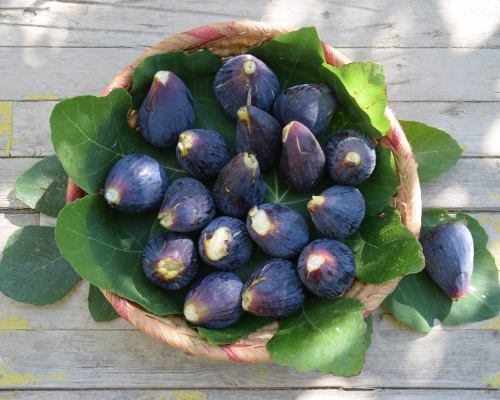
And the Mishnah gets even more specific: wealthy farmers brought gold or silver baskets and took them home; poorer farmers brought wicker baskets, and even the baskets went to the Kohanim. (Mishnah Bikkurim 3:8)
In other words, the Kohen took tax. A fig here. A grape there.
Okay, probably more than one slice. But that was part of the system.
The Kohanim and the rest of the tribe of Levi did not receive the same agricultural territory as the other tribes.
Their lives were organized around service to the community. They worked in the sanctuary, taught Torah, and helped shape the nation’s religious life.
And so the nation fed them. And then everyone got to eat.
*****
Rav Abraham Isaac Kook, one of the great rabbinic thinkers of the early twentieth century and the first Ashkenazi Chief Rabbi of the Land of Israel, saw something deeper here. (Olat Re’iyah, vol. I, pp. 284–285)
He wrote that we honor a Kohen not only for who he is, but for what the priesthood is supposed to contribute to the Jewish people.
The honor points toward what the Kohen “should and can be.”
In other words, the honor itself creates an obligation.
If people look up to you because of your role, you have to try to become worthy of it.
It’s a great teaching: honor is not a kind of perk. It’s a kind of promise.

The Talmud illustrates it with a story about Rabban Gamliel, who led the Jewish community at Yavneh in central Israel, around the end of the first century. He wanted to appoint two great scholars to positions of communal leadership. (Horayot 10a-10b)
They hesitated. So he said to them:
כִּמְדוּמִין אַתֶּם שֶׁשְּׂרָרָה אֲנִי נוֹתֵן לָכֶם?
עַבְדוּת אֲנִי נוֹתֵן לָכֶם
“Do you imagine that I am giving you authority? I am giving you service.”
The literal Hebrew is stronger. Avdut means servitude.
You think I am giving you power, Rabban Gamliel asks? I am giving you a job serving other people.
Long before Spider-Man gave us the famous line, “with great power comes great responsibility,” our tradition said something even more demanding:
Leadership is service. That’s what a real leader is. It is not only about using power responsibly. It is about using power to serve.
The privilege came with a purpose. You got the fruit. You also got the responsibility.
***
And I keep thinking about my friend standing there in the pouring rain.
Yes, he got a slice from every pizza.
But he was also the guy standing at the oven. That is a pretty good image for leadership.
Leadership brings privileges: honor, authority, the ability to make decisions, maybe even the first slice of pizza.
But people are counting on you.
Those of us who supervise others know this. A title gives us authority, but it also means someone else’s work life is partly in our hands.
Parents know it too. We have enormous influence in our children’s lives and enormous responsibility for how we use it.
And for our young people, as you gain more independence, this is one of the great lessons of becoming an adult.
***
That is what the Kohen learns when the basket is placed in his hands.
It is a gift. It is also a charge. The Kohen gets the basket.
And then the Kohen goes back to work.
So maybe the lesson of the Priestly Pizza Party is pretty simple:
Take your slice. Enjoy it.
And then get back to the oven.
There are still hungry people waiting to be fed in our world.