Between Two Mountains: Ki Tavo and the Day the Judges Are Judged
There is a moment before every catastrophe when evil still appears negotiable.
It has not yet revealed its full face. It arrives dressed in promises: order, security, national greatness, historical justice. It asks only for a little silence, one small compromise, one group of people to be sacrificed for the supposed good of everyone else.
Later, when the prisons are full and the graves have opened, people look toward Heaven and ask: How could God have allowed this?
Parashat Ki Tavo offers an unsettling response: before asking why Heaven permitted evil, we must ask when human beings welcomed it.
Between Blessing and Curse
Ki Tavo is often remembered for the tokhechah, the terrifying catalogue of calamities that may befall Israel. Yet the parashah begins elsewhere—with first fruits, gratitude, memory, and a covenant renewed between two mountains.
After entering the Promised Land, Israel must gather between Mount Gerizim and Mount Ebal. One mountain represents blessing; the other, curse. The people stand between them, inside the geography of moral choice.
This is more than an ancient ceremony. It is a map of human existence.
Every generation stands between Gerizim and Ebal. Every society must decide whether power will protect the vulnerable or prey upon them; whether prosperity will produce gratitude or arrogance; whether people will defend truth or exchange it for comfort.
The blessings and curses of Ki Tavo are not arbitrary rewards and punishments descending from an unpredictable Heaven. They reveal the moral architecture of the world. Human choices create conditions in which blessing can dwell—or conditions in which society begins to consume itself.
Among the declarations proclaimed at Mount Ebal is this warning:
“Cursed is the one who distorts the justice due to the stranger, the orphan, and the widow.”
—Deuteronomy 27:19
The Torah identifies those who possess the least power and the fewest defenders. The stranger lacks belonging. The orphan lacks protection. The widow, in the society of that time, lacks political and economic power.
They can be harmed quietly.
An influential person may protest when mistreated. His friends may defend him, and his position may protect him. But when the powerless are abused, the oppressor assumes that no one will speak.
The Torah answers with a curse—and the entire nation must say, “Amen.”
Why must everyone answer?
Because justice cannot be outsourced entirely to judges, politicians, or courts. By answering “Amen,” the people acknowledge that the treatment of the vulnerable concerns the whole community. No one may say, “I did not issue the ruling. I did not strike the victim. This has nothing to do with me.”
The covenant turns private conscience into public responsibility.
When the Judges Are Judged
This brings Ki Tavo into direct conversation with Psalm 82, a psalm of Asaph that opens in a mysterious courtroom:
“God stands in the divine assembly;
among the judges He renders judgment.”
The judges enter the courtroom believing that they will judge others. Suddenly, they discover that they themselves are standing trial.
God asks:
“How long will you judge unjustly
and show partiality to the wicked?
Defend the poor and the orphan;
uphold the rights of the afflicted and the destitute.
Rescue the poor and the needy;
deliver them from the hand of the wicked.”
The connection to Ki Tavo is unmistakable. The Torah pronounces a curse upon those who pervert the justice of the stranger, orphan, and widow. Psalm 82 summons the authorities before the heavenly Court for committing precisely that betrayal.
The judges are not condemned only because they may have personally harmed the poor. They are condemned because they failed to defend them.
Biblical justice is not passive innocence. It is active responsibility.
The Talmud gives this principle even greater force:
Anyone who could protest the conduct of the members of his household and did not protest is held responsible for his household. One who could protest the conduct of his city and did not protest is held responsible for his city. One who could protest the conduct of the whole world and did not protest is held responsible for the whole world.
—Shabbat 54b
The Sages do not suggest that everyone possesses equal power. Responsibility is measured by actual ability. A terrified victim is not judged like a ruler, financier, official, propagandist, or community leader.
But when people possess influence and deliberately refuse to use it, their silence is no longer neutral.
This is the meaning of the Talmudic principle Kol Yisrael arevim zeh bazeh—all Israel are guarantors for one another. A guarantor may not have created another person’s debt, but cannot pretend that the debt has nothing to do with him. Covenant means that another person’s suffering places a moral claim upon us.
The one who commands evil, the one who carries it out, the one who finances it, the one who justifies it, and the one who delights in its results may bear different degrees of guilt. But none of these roles is morally empty.
Evil is never sustained by tyrants alone. It also requires admirers, sponsors, clerks, informers, flatterers, and spectators.
“You Are Gods”
Psalm 82 contains one of the most astonishing declarations in Scripture:
“I said, ‘You are gods,
and all of you are children of the Most High.
Nevertheless, you shall die like human beings
and fall like any other ruler.’”
In classical Jewish interpretation, the word elohim can refer here to judges and earthly authorities. They are called “gods” not because they are divine, but because they have been entrusted with something resembling divine power: the capacity to alter another human being’s destiny.
A judge can restore a person’s dignity or destroy his future. A ruler can protect life or transform an entire population into prey. A person of influence can rescue the vulnerable or deliver them into the hands of those who will exploit them.
Authority is sacred only when it remembers that it is borrowed.
The tragedy begins when judges forget that they are servants of justice and begin to believe that justice is whatever they declare it to be. Power intoxicates them. They surround themselves with people who repeat their words, excuse their failures, and present their desires as sacred or historically inevitable.
They are called elohim because of the height of their responsibility. They fall because they mistake responsibility for ownership.
Psalm 82 tears away the illusion:
“You shall die like human beings.”
No ruler becomes God. No dictator becomes immortal. However powerful they appear, they remain mortal beings who will eventually stand before the ultimate Judge.
Lenin died. Stalin died. Hitler died. Their regimes inflicted immeasurable suffering, but none of them escaped the sentence pronounced in Psalm 82: You imagined yourselves to be gods, but you died as men.
Their statues could not save them. Their propaganda could not make them eternal. Their empires could not carry them beyond the grave.
And this warning is not confined to the dictators of the past. It speaks equally to rulers today who wrap political ambition in sacred language, threaten the Jewish state, silence their own people, and imagine that religious titles place them beyond judgment.
Psalm 82 answers them without even needing to name them:
“I said, ‘You are gods.’
Nevertheless, you shall die like human beings.”
A ruler may invoke Heaven, but he does not become Heaven. He may claim to speak for God, but one day he will answer before God.
How Could God Allow It?
People ask how God could have allowed such rulers to rise. The question is real, and it comes from genuine pain. But Ki Tavo does not permit us to direct it only toward Heaven.
Who supported these rulers while their power was still growing? Who financed them, repeated their propaganda, executed their orders, excused their cruelty, or remained silent because the first victims were someone else?
Why do some people still speak nostalgically of Stalin, as though military power or industrial achievement could wash the blood from his hands?
Of course, millions were innocent victims. Many resisted and paid with their freedom or their lives. We must never impose responsibility upon those who were powerless before terror.
But tyrants do not construct tyranny alone. Before a dictatorship becomes a machine, it is a collection of human choices.
People sometimes court evil because they believe they can control it. They tolerate cruelty when it is directed against their enemies. They surrender another person’s rights because they expect order, protection, status, or material benefit in return.
Then the same evil enters their own homes, and they ask why God did not stop it.
But evil cannot be domesticated. We cannot feed it with the suffering of others and expect it never to turn upon us.
This is the terrible wisdom of Ki Tavo. The curse is not only something imposed from outside. It is also the unfolding consequence of a moral world people have chosen to build.
When truth loses its value, trust disappears. When courts serve power, law becomes theater. When neighbors become informers, community becomes impossible. When cruelty is praised, cruelty eventually consumes even those who praised it.
The curse grows from within.
When the Foundations Begin to Shake
Psalm 82 describes corrupt rulers in haunting words:
“They neither know nor understand;
they walk about in darkness;
all the foundations of the earth are shaken.”
This does not necessarily mean that they lack information. Often, they know exactly what is happening. Their ignorance is chosen. They refuse to understand because understanding would demand responsibility.
In the language of Jewish mysticism, their world has lost its balance. Gevurah—strength, restraint, and judgment—has separated itself from Chesed, lovingkindness and mercy. Judgment no longer protects creation; it begins to feed upon it. Power no longer maintains order; it becomes an idol demanding sacrifice.
When strength and compassion remain in harmony, power protects life. When power tears itself away from compassion, the vessels of society begin to break.
“All the foundations of the earth are shaken.”
This is both a political warning and a spiritual diagnosis. Human injustice creates a fracture in the world. Every act of justice performs a small tikkun, a repair. Every corrupted judgment, deliberate humiliation, and betrayal of the powerless deepens the fracture.
First Fruits and the Antidote to Tyranny
Yet Ki Tavo does not begin with curses. It begins with a farmer carrying his first fruits to Jerusalem.
He stands before God and recites the story of his people: wandering, oppression, liberation, and arrival in the Land. At the very moment when he might proclaim, “My land, my harvest, my success,” the Torah commands him to remember that nothing began with him.
Gratitude is the opposite of tyranny.
The tyrant says, “Everything belongs to me.”
The person bringing bikkurim says, “Everything has been entrusted to me.”
The tyrant rewrites history to make himself its beginning.
The farmer recites history to remember that he is only one chapter within a story larger than himself.
The tyrant treats people as instruments.
The Torah commands the farmer to rejoice together with the Levite and the stranger.
This may illuminate one of Ki Tavo’s most disturbing verses. The Torah says that calamity comes:
“Because you did not serve the Lord your God with joy and gladness of heart, in the abundance of everything.”
—Deuteronomy 28:47
The danger begins not only in poverty, but also in abundance. Blessing without gratitude becomes entitlement. Entitlement becomes arrogance. Arrogance becomes indifference. And indifference prepares the ground for cruelty.
The first fruits teach us how to receive blessing without allowing blessing to corrupt us.
The Lion of Judah Will Not Remain Silent
Ki Tavo addresses a people before the construction of its society. Psalm 82 addresses rulers after justice has already been corrupted.
Ki Tavo says: Choose what kind of nation you will become.
Psalm 82 asks: How long will you continue to betray that choice?
Together, they teach that God gave human beings freedom, reason, conscience, and authority. We cannot support evil, normalize it, finance it, remain indifferent to it, or rejoice in the suffering it causes—and then ask God alone why He allowed it to grow.
The final judgment belongs to God, but the first choice often belongs to us.
Blessing begins where power accepts limits, prosperity gives birth to gratitude, and society hears the cry of the vulnerable.
Curse begins where rulers imagine themselves to be gods and ordinary people surrender their consciences to them.
No ruler is God. No empire is eternal. No injustice remains hidden forever.
Psalm 82 concludes:
“Arise, O God, judge the earth,
for all the nations belong to You.”
This is the horizon toward which the psalm moves: the day when earthly judges will themselves be judged, when every throne will be measured against justice, and when no empire will be able to conceal its crimes beneath monuments, slogans, or claims of divine authority.
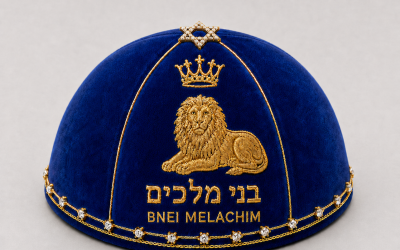
On that day, God will judge—but the Lion of Judah will roar.
It will be the roar of Israel, the ancient people whom empires attempted to silence, exile, humiliate, and destroy, yet who remained alive to bear witness before the Judge of history.
It will not be a roar of revenge. The final judgment belongs to God alone. It will be a roar of memory—the voice of a people declaring that the blood of the innocent was not forgotten, that suffering was not meaningless, and that the silence surrounding injustice did not erase the truth.
For generations, the nations believed that the Lion of Judah could be chained forever. They mistook patience for weakness, exile for disappearance, and silence for death.
But when the nations are summoned to judgment, the Lion will no longer be silent.
Its roar will cross the mountains and awaken the memory of the world. It will speak for the stranger whose justice was distorted, for the orphan who had no defender, for the widow whose tears were ignored, and for every victim whom earthly judges refused to protect.
We still stand where our ancestors stood—between Gerizim and Ebal, between blessing and curse, gratitude and arrogance, justice and corruption, courage and silence.
The judges are still being judged.
The foundations are still trembling.
The mountains are still before us.
And when the nations finally stand before the Judge of history, the Lion of Judah will roar.
The choice is still ours.