
Profiles in Activism: Seagal Hagege and the Helmets That Tell Israel’s Story
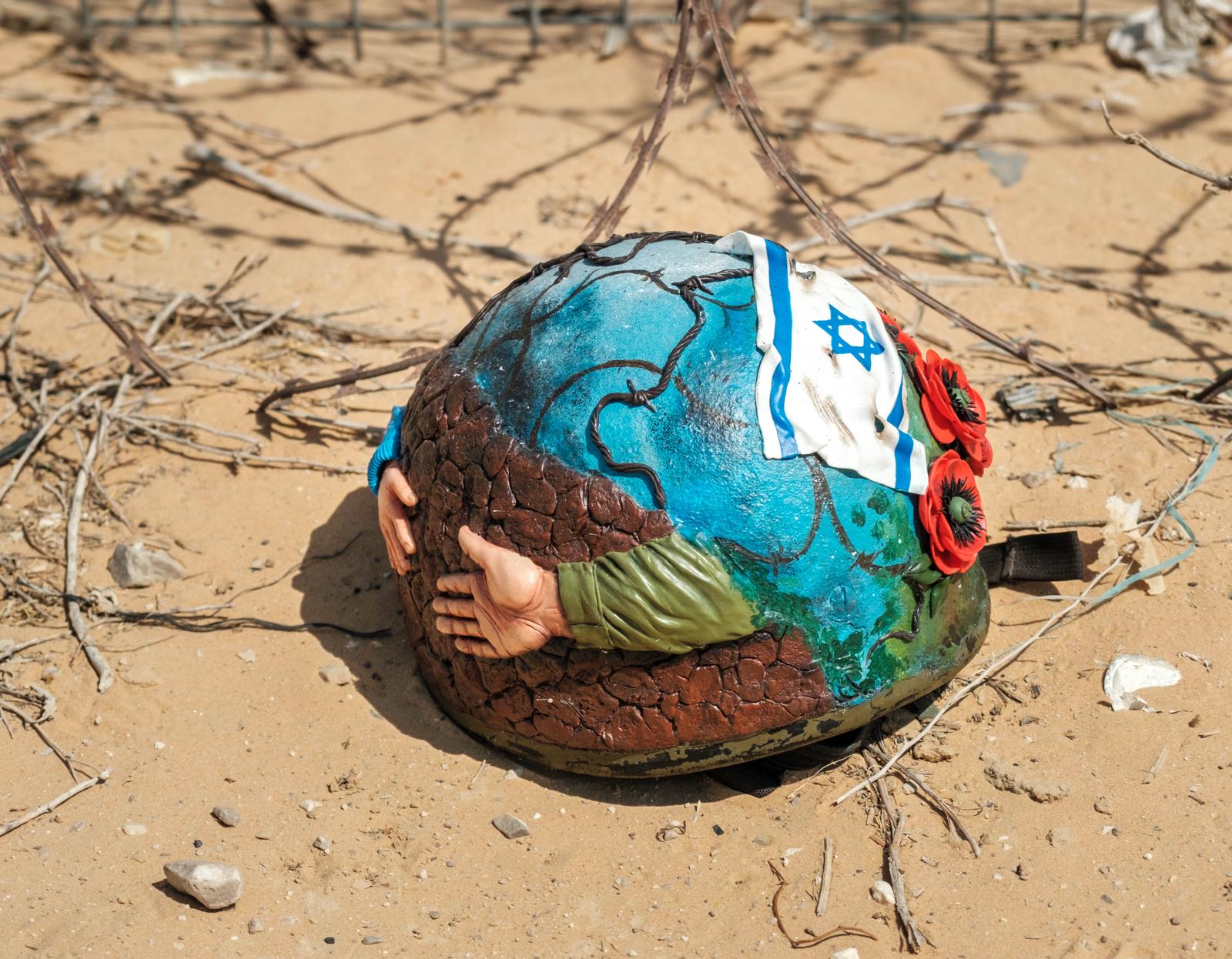
This is the second in my ongoing series, “Profiles in Activism.” After the war began on October 7, 2023, Seagal Hagege founded Kadima Concierge, a grassroots, community-based fundraising and logistics initiative that has raised over 2 million shekels to support IDF soldiers, displaced families, and communities affected by the war. Along the way, she launched the Helmets 4 Chayalim project, which has artists transform decommissioned IDF helmets into works of art that inspire connection, healing, and community engagement. Both initiatives are under the Ari Fuld Project.
No one is more surprised by this turn of events than Seagal herself.
No one is more surprised by this turn of events than Seagal herself. Indeed, the whole venture almost never happened. By October 6, 2023, three years into a difficult Aliyah, Seagal had reached her breaking point. While she and her family had fulfilled a lifelong dream of living in Israel, the reality of actually being here, dealing with immigration and bureaucracy and finding schools for her children had proven to be more than a little difficult.
That Friday evening, she found herself browsing American real estate listings, wondering whether it was time to admit defeat and return to the United States. Twenty-four hours later, everything changed. Suddenly, the frustrations that had seemed overwhelming the day before became insignificant in the context of the nation’s collective trauma and horror. All of a sudden, “Get me out here” became “How can I help?”
All of a sudden, “Get me out here” became “How can I help?”
On October 13, she received a phone call. An IDF unit urgently needed fifty pairs of military boots. Seagal mentioned this need during an Instagram Live broadcast. Within thirty minutes, enough money had been donated to purchase all the boots. She personally delivered them to soldiers in the south with two of her children. When she later discovered that forty additional pairs had accidentally been delivered, she again turned to her online community. Within minutes, the funds arrived to cover those as well.
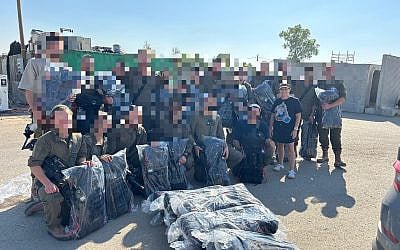
The boots marked the start of a mission that has now stretched across nearly three years. Today, Seagal coordinates donations of helmets, protective vests, uniforms, and other lifesaving equipment for Israeli soldiers. Her days are filled with phone calls and long drives across the country, personally delivering equipment wherever it is needed. When we spoke, Seagal was driving forty helmets to Beersheba after a deployment schedule changed and an IDF unit heading north could receive them before entering Lebanon.
“I have managed to kill my car,” she joked, describing the thousands of kilometers she has driven carrying equipment from one end of Israel to the other.
This was not a preordained move by any means. Seagal had no nonprofit organization, no fundraising experience, and no strategic plan. Before making aliyah, she spent nearly two decades teaching in some of New York City’s most challenging schools near Yankee Stadium after participating in the New York City Teaching Fellows program. Before that, she worked in healthcare at two major hospitals. Yet, teaching may have prepared her better than she realized. Teachers learn to solve problems creatively, build relationships quickly, and earn trust. Those skills have come in handy.
Seagal’s most remarkable contribution, though, is not the equipment itself. It is the way she has transformed discarded military helmets into works of art that tell Israel’s collective story.
Seagal’s most remarkable contribution, though, is not the equipment itself. It is the way she has transformed discarded military helmets into works of art that tell Israel’s collective story.
The idea emerged almost accidentally.After months of fundraising and deliveries, she wanted to create something that could continue generating support while preserving the experiences of the people behind the war. She began collecting used combat helmets from soldiers. For every old helmet donated, a soldier received a new one. The retired helmets were then distributed to artists around the world.
Many of those artists were not Jewish. “They just love Israel,” Seagal explained. Artists from Israel, the United States, South Africa, and elsewhere are transforming battle-worn helmets into deeply personal works reflecting courage, loss, resilience, and hope.
Mothers who had lost children in the war decorated helmets in memory of their sons and daughters.
As the project evolved, so did its participants. Mothers who had lost children in the war decorated helmets in memory of their sons and daughters. Young olim added their own stories of choosing Israel during one of its most difficult periods. Teenagers from communities bordering Gaza expressed the trauma of growing up under constant threat. Each helmet became both an artwork and a testimony.
“It represents a picture of our people,” Seagal explains. “It’s become the voice of the people.”
The collection has found an enthusiastic audience. An exhibition at Tel Aviv’s Haganah Museum was extended because of public demand. Another exhibition is scheduled for the Jerusalem Theater. Individual helmets have attracted substantial bids, including one honoring fallen soldier Natan Rosenfeld that carried a minimum bid of 10,000 shekels. The proceeds of these sales go to equipment and other support services.
After nearly three years of driving roads lined with memorials, delivering equipment to soldiers, and witnessing extraordinary acts of sacrifice, she admits that her relationship with grief has changed. Rather than dwelling on loss, she increasingly finds herself focused on action.
“If we all just really do this good that we’re meant to do,” she reflects, “then maybe one day we would stop naming playgrounds and schools after people.”
It is a hopeful thought born from relentless exposure to tragedy.