Rabbi of Tamid Palm Beach
Pundits, Prophets, and the Search for Clarity
Jewish tradition rejects both naïveté and hysteria. What remains is the harder work of clarity
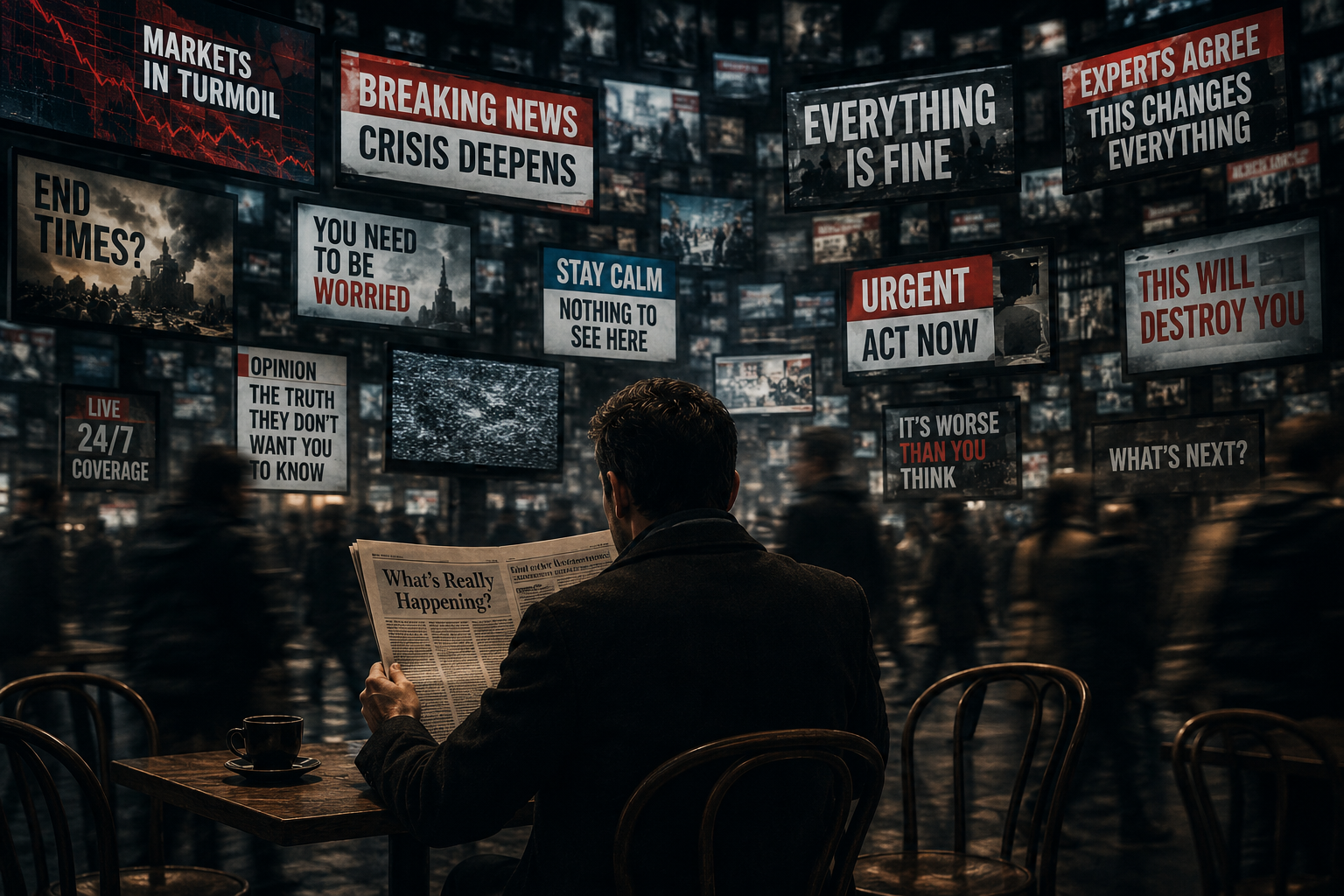
Not every alarming voice deserves your fear. Not every comforting voice deserves your trust. Photo by Feivel Strauss
There is a strange kind of exhaustion that comes from living in an age where everyone is certain about everything.
Every day brings another prediction, another warning, another outrage, another person confidently explaining where the economy is headed, what democracy is becoming, whether civilization is collapsing, or why this latest development changes absolutely everything forever. By lunchtime, the world has supposedly ended three times and been reborn twice.
The modern pundit has become a permanent feature of our lives.
The word “pundit” originally comes from the Sanskrit pandit, meaning a wise or learned person. Which feels almost touching now. Today, a pundit is often someone paid to speak with certainty about events nobody fully understands. One famous observation about pundits is that they only correct half the time, and the people who are right are often right for the wrong reasons.
And yet, in anxious times, we cling to them.
Judaism has an older and more dangerous category for this phenomenon: the false prophet.
The Torah commands us to listen to true prophets, but repeatedly warns us against false ones. And false prophets are not always voices of doom. Sometimes they are the soothing voices insisting that everything is perfectly fine when it clearly is not.
The prophet Jeremiah battled precisely this tendency when he condemned those who said, “Peace, peace, when there is no peace.” (6:14)
That line could have been written yesterday.
Of course, the opposite danger exists too. Some people build entire identities around catastrophe. Every headline becomes proof society is unraveling by Thursday afternoon. Fear spreads quickly because fear feels urgent. Panic creates the illusion of wisdom. If someone sounds alarmed enough, we assume they must be seeing something we do not.
Jews know this tension well.
There is an old joke that worrying works because 90 percent of the things we worry about never happen. Yet, there is another darker Jewish joke about the difference between optimists and pessimists in prewar Europe: the optimists ended up in Auschwitz, while the pessimists ended up in Brooklyn.
Jewish history does not permit naïveté.
But Judaism also refuses to let fear become a theology.
That is why Pirkei Avot offers such a striking teaching: “The world stands on three things: justice, truth, and peace.” (1:18)
At first glance, it sounds almost too simple. Like something engraved beneath a statue outside a courthouse. But the Mishnah is actually describing the conditions necessary for a stable society and a stable soul.
Justice means disciplined judgment. The ability to think clearly instead of react impulsively. It means resisting emotional intoxication. It means pausing before reposting outrage or surrendering your nervous system to people who monetize anxiety for a living.
Truth means refusing comforting illusions. Reality matters, even when inconvenient. Especially when inconvenient. Judaism has very little patience for fantasy disguised as faith.
And peace does not merely mean the absence of conflict. In Jewish thought, peace means wholeness. Inner security that you can maintain a self-regulated, non-anxious presence. The ability to remain morally grounded and spiritually intact even when the world feels unstable.
We keep telling ourselves that if we read one more article, hear one more expert, refresh the news one more time, we will finally feel less anxious. Usually the opposite happens. As the famous therapist Rabbi Edwin Friedman warned, “Data cannot calm anxiety.” Information alone does not create wisdom. Sometimes it simply creates louder panic. Judaism does not ask us to ignore danger or pretend everything is fine. But it also refuses to let fear dominate the soul. Somewhere between naïveté and hysteria is the harder task of remaining clearheaded, honest, and steady. In a world addicted to reaction, that kind of calm clarity may be one of the most spiritual things a person can achieve.
Related Topics
Related Posts