
Punishment, Not Passivity: The GCC Rewrites the Rules
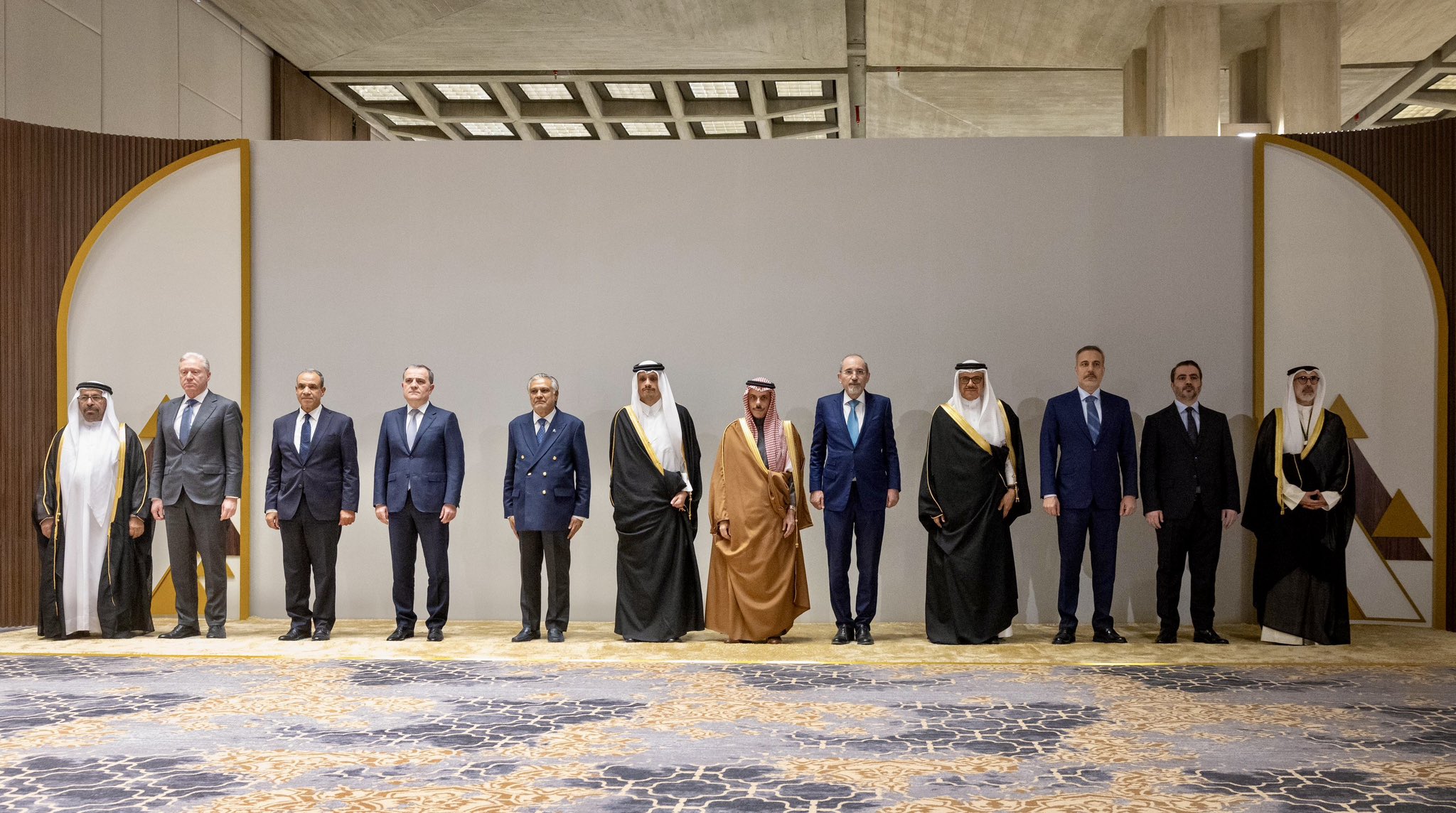
Iran has, quite simply, pushed the Gulf to a breaking point. Across Saudi Arabia, the United Arab Emirates, Qatar, and beyond, there is a growing sense not just of concern, but of outright fury. Weeks of sustained missile and drone barrages—targeting cities, infrastructure, and even civilians —have transformed what was once a manageable rivalry into something far more direct and dangerous.
Hundreds of missiles and thousands of drones have been fired at Gulf states, with air defenses working overtime to shoot them down. Even when interceptions are successful, debris has landed in populated areas, leading to casualties and damage. This stark reality highlights that these strikes are striking at the very heart of sovereignty. In capitals across the Gulf, the atmosphere has shifted dramatically—from cautious patience to a much tougher stance, leaving behind any sense of passivity.
Iran has launched a total of 4,911 missiles and drones at Gulf states since the war began on February 28, compared with 850 at Israel, according to an Al Arabiya tally.
The tally shows Iran has fired 1,119 missiles and 3,792 drones at Gulf countries.
By contrast, Iran has… pic.twitter.com/aE63ACFULg
— Al Arabiya English (@AlArabiya_Eng) March 21, 2026
— Sofia Afonso Ferreira (@sofiafonsoferre) March 21, 2026
Saudi Arabia has informed Iran’s military attaché, along with his assistant and three embassy staff members, that they must leave the kingdom within 24 hours after being declared persona non grata. This announcement came from the Saudi foreign ministry on Saturday, which pointed to ongoing Iranian attacks on Saudi territory as the reason behind this decision.
The expulsion of Iranian diplomatic personnel marks a significant shift in the Gulf region—indicating a departure from the long-held approach of restraint in the face of ongoing provocations. What Saudi Arabia has done goes beyond just a diplomatic move; it’s a clear declaration of intent. The message is unmistakable: the rules of engagement with Iran are being fundamentally changed.
Saudi Arabia announced the expulsion of Iranian military attachés and embassy staff, declaring them persona non grata and ordering them to leave the Kingdom within 24 hours, the Ministry of Foreign Affairs said Saturday. https://t.co/vi2i1srTzH
— Saudi Gazette (@Saudi_Gazette) March 21, 2026
The Saudi Foreign Ministry has once again expressed its strong condemnation of Iran’s aggressive actions. They reiterated the Kingdom of Saudi Arabia’s firm stance against the blatant attacks not only on Saudi Arabia but also on the Gulf Cooperation Council (GCC) states and several Arab and Islamic nations.
#Statement | The Foreign Ministry renews the Kingdom of Saudi Arabia’s unequivocal condemnation of the blatant Iranian attacks against the Kingdom, the states of the Gulf Cooperation Council (GCC), and a number of Arab and Islamic countries. pic.twitter.com/PZ9Yqg4wcc
— Foreign Ministry ???????? (@KSAmofaEN) March 21, 2026
According to a report published in the Middle East Eye, “The attitude in Riyadh has shifted towards supporting the US war as a way to punish Iran for strikes.”
SCOOP: Saudi Arabia gives the US expanded access to bases and airspace for war on Iran.
UAE Foreign Minister told Marco Rubio Abu Dhabi is ready for a war to last nine months.
“Attitude has shifted towards supporting the US war as a way to punish Iran for strikes” thread ???? pic.twitter.com/UwiLyfjMQi
— Sean Mathews (@SeanPmathews) March 20, 2026
To understand why, one has to step back from the immediacy of missile strikes and look at the longer arc of history. Tensions between Iran and the Gulf states did not begin with today’s geopolitical alignments or the presence of U.S. bases. They trace back to the aftermath of the 1979 Islamic Revolution, when ideological ambition began to spill across borders. The failed 1981 coup attempt in Bahrain, the 1983 bombings in Kuwait, assassination plots, and repeated unrest during Hajj in the 1980s—including deadly incidents near Islam’s holiest sites—left a lasting imprint on Gulf security thinking. The 1996 Khobar Towers attack in Saudi Arabia only reinforced a pattern that had already become difficult to ignore.
Iran has been engaged in violent hostilities towards the GCC ever since the Islamic revolution; long before the presence of US bases.
Interestingly, MOST of the attacks took place before the establishment of US presence in GCC bases, and STOPPED for 15 years after the…
— العنود (@3nnadi) March 21, 2026
One thing that often flies under the radar is the timing of these attacks. Many occurred before the U.S. military had established bases in the Gulf. What’s even more notable is that once that military presence was solidified, the large-scale attacks significantly decreased for a long stretch. This adds a layer of complexity to the idea that regional instability is merely a result of foreign presence. The historical evidence indicates that the roots of mistrust run much deeper.
Despite this backdrop, the Gulf states chose to exercise restraint. The GCC didn’t retaliate in a similar fashion. There’s no substantial record of retaliatory strikes that resulted in Iranian casualties. Instead, their response was measured—sometimes perhaps overly so. Even in the late 2010s and early 2020s, when conflicts in Yemen, Iraq, and Syria were escalating, it was the Gulf that offered an olive branch. Saudi Arabia’s decision to pursue a thaw in relations with Iran, even inviting outside mediation to facilitate this, stemmed from a desire to bring stability to a region weary from proxy wars.
This context really highlights how crucial the present moment is. The recent series of Iranian missile and drone attacks has shifted the dynamics. There’s less room for uncertainty now. Statements from officials like Faisal bin Farhan Al Saud have moved beyond cautious diplomacy; they now convey a readiness to counter any aggression if necessary. The emphasis on employing every available resource isn’t mere talk—it’s a real operational strategy.
NEW: The Gulf countries may retaliate if Iran attacks continue, Turkey says
• Riyadh summit was the last Arab warning against Iran, and the risk for wider regional war increased, Fidan says https://t.co/h3NheCEzJd
— Ragıp Soylu (@ragipsoylu) March 21, 2026
This shift is already visible on the ground. Reports of expanded U.S. access to Saudi bases and airspace, including the opening of King Fahd Air Base, point to a more forward-leaning posture. The logic is straightforward: if the threat environment has evolved, so too must the response. Coordination between Mohammed bin Salman and Donald Trump underscores the extent to which Saudi Arabia is now actively shaping, rather than merely reacting to, the trajectory of the conflict.
The shift extends beyond Riyadh. The United Arab Emirates has signaled that it is preparing for the possibility of a prolonged conflict, while maintaining close coordination with Washington. Conversations involving Marco Rubio suggest a level of strategic alignment that reflects shared concerns about Iran’s regional behavior. Even as Gulf states initially sought to avoid being drawn into direct confrontation, the scale and persistence of recent attacks have left them with fewer options.
UAE and Bahrain continue to stand out, became the only Gulf nations willing to use military force against Iran to keep the Hormuz Strait open. Definitely partners worth the having.
"We express our readiness to contribute to appropriate efforts to ensure safe passage through the…— Hussain Abdul-Hussain (@hahussain) March 21, 2026
The irony is that these same states had actively tried to prevent escalation. They urged caution, resisted becoming launchpads for war, and consistently emphasized de-escalation. Yet they now find themselves bearing the brunt of the fallout—intercepting waves of missiles and drones, safeguarding critical infrastructure, and managing the economic consequences of instability. Even Qatar, a key mediator in regional crises, has not been immune.
The tone of al-Jazeera's coverage this war is fundamentally different from the 12 Day War. During that war, the Qatari-run network glorified & hyped up Iran's achievements in the war, and downplayed its losses. For example, their reporter in Tehran, Nour a-Deen Dgheir, claimed… pic.twitter.com/sTs6USiAYS
— Elizabeth Tsurkov (@LizHurra) March 21, 2026
What we are witnessing is not a sudden break from past policy, but its logical outcome. Years of restraint, unanswered overtures, and growing security pressures have pushed the Gulf states toward a recalibration that now feels unavoidable. They are no longer prepared to absorb repeated provocations without consequence, and the focus is shifting from simply managing threats to actively imposing costs.
The old framework—built on patience, ambiguity, and cautious diplomacy—is giving way to something firmer and far more direct. Whether this new approach succeeds in restoring deterrence or instead deepens confrontation is still uncertain, but one thing is clear: the Gulf is no longer operating by the rules it once tried to uphold.