POST-HARMONY Special Project
Quiet Whispers of Memory: Inside and Outside The Lost Shtetl Museum
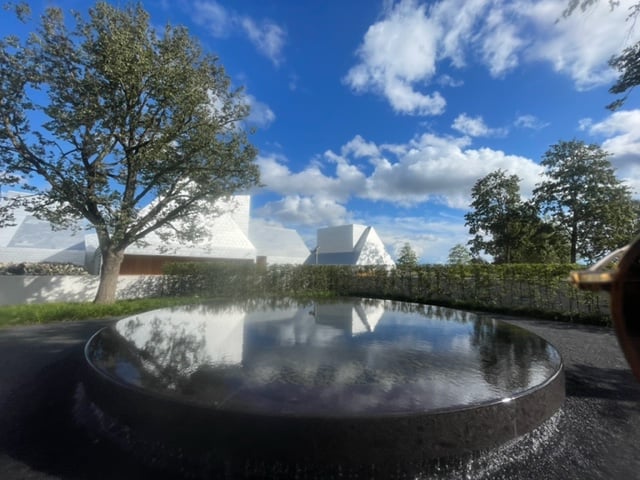
Entrance to the Lost Shtetl Museum. Seduva, Lithuania. Photo (C) Michael Leiserowitz. With kind permission.
Part 1 of the Visions of Re-Created Shtetl essay series can be read here.
Part 2. Re-Appearing Dance of Memories
None from many international visitors to the Lost Shtetl Museum in Seduva, Lithuania special commemorative event for the victims of the 1941 massacre in August 2025, was prepared for the level of sophistication of its interior design and permanent exhibition that we saw.
Top-notch quality of presentation, advanced modern interior design produced by the leading in the world the US RAA, Ralph Appelbaum Associates managed to encapsulate the story of the Shoah in the concrete shtetl in Seduva, one of over 200 shtetls that had been all around Lithuania before WWII, into a wide context of the Shoah as such.
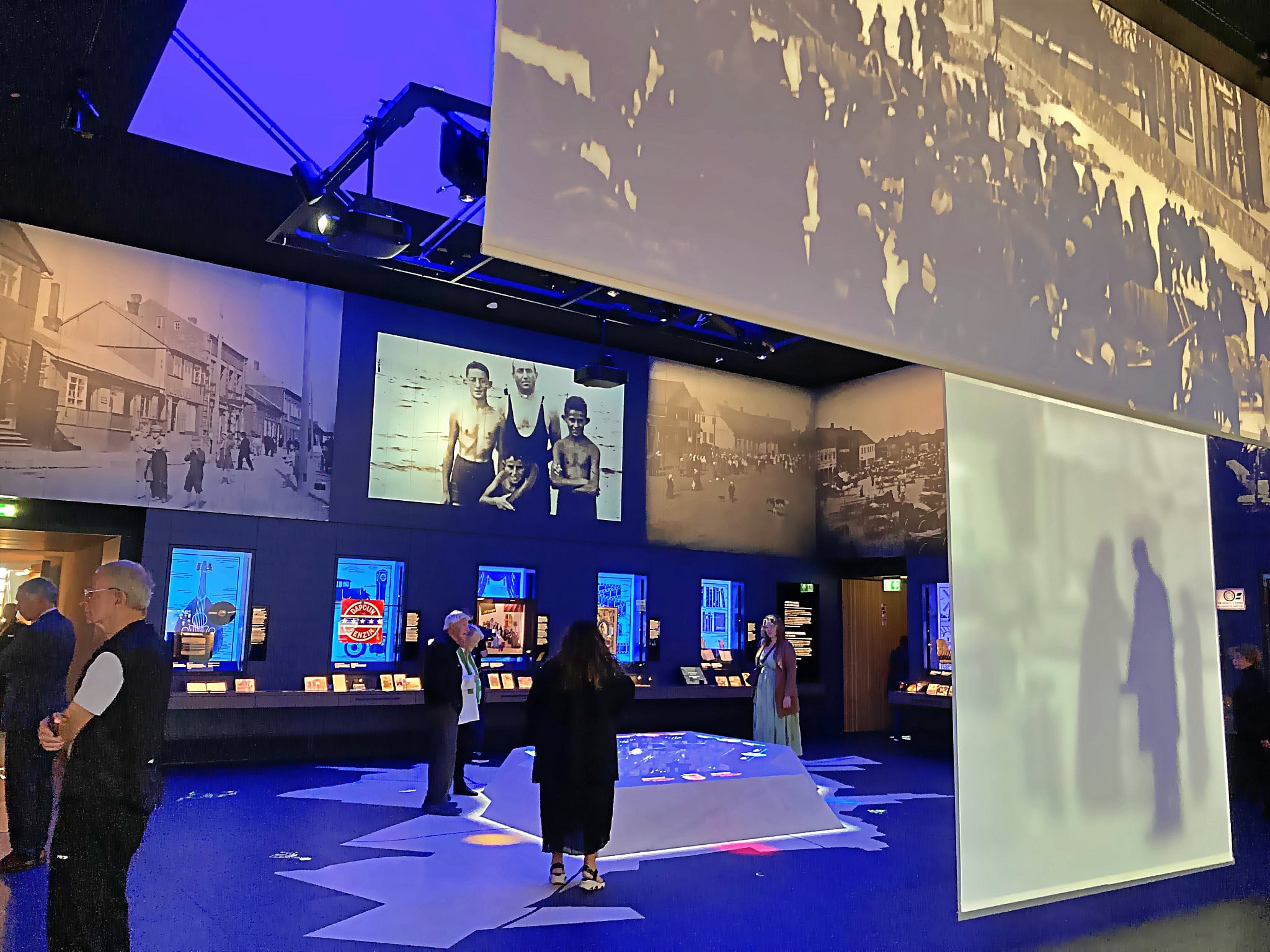
Nothing has been missed in the narrative of the core exhibition of the museum. In an extrapolated way, the presentation of the ultimate tragedy of Jews from a small place in northern Lithuania tells about so many of them in a heart-warming detail, tactfully and simply, with a palpable love. One can say that the Lost Shtetl museum in its many parts, aspects and details projects two significant lines: attention to detail and love to the people. And one does not see a lot of it in historical museums, especially newly opened ones.
In this way, the story of Jews of Lithuania gets on the universal orbit of the Shoah in general and of the intentional and methodical murder and annihilation of Jews of Europe. This essentially important line comes from the permanent exhibition in the new Lost Shtetl Museum in Lithuania clearly and strongly, but not too pressurizing. It comes in a technically elaborative and very well done way, placing the narrative of the events almost a century old ( as there are plenty of pre-war stories, very justly) in a superbly modern way. And it succeeded in grabbing a visitor’s attention and keeping it.
I was especially touched by the animation on the floor of the main gallery of the museum. The children’s drawings that the curatorial group of the museum produced as a result of their educational program, are bringing right and fine accent into the whole presentation, which is filled with photos of all sizes, all kinds of high-tech installations, all of them at the place and tasteful, and authentic artifacts, including, admirably, many donations by the descendants of the Seduva and other Lithuanian Jews from all around the world , which all treated with respect and care, as it should be.
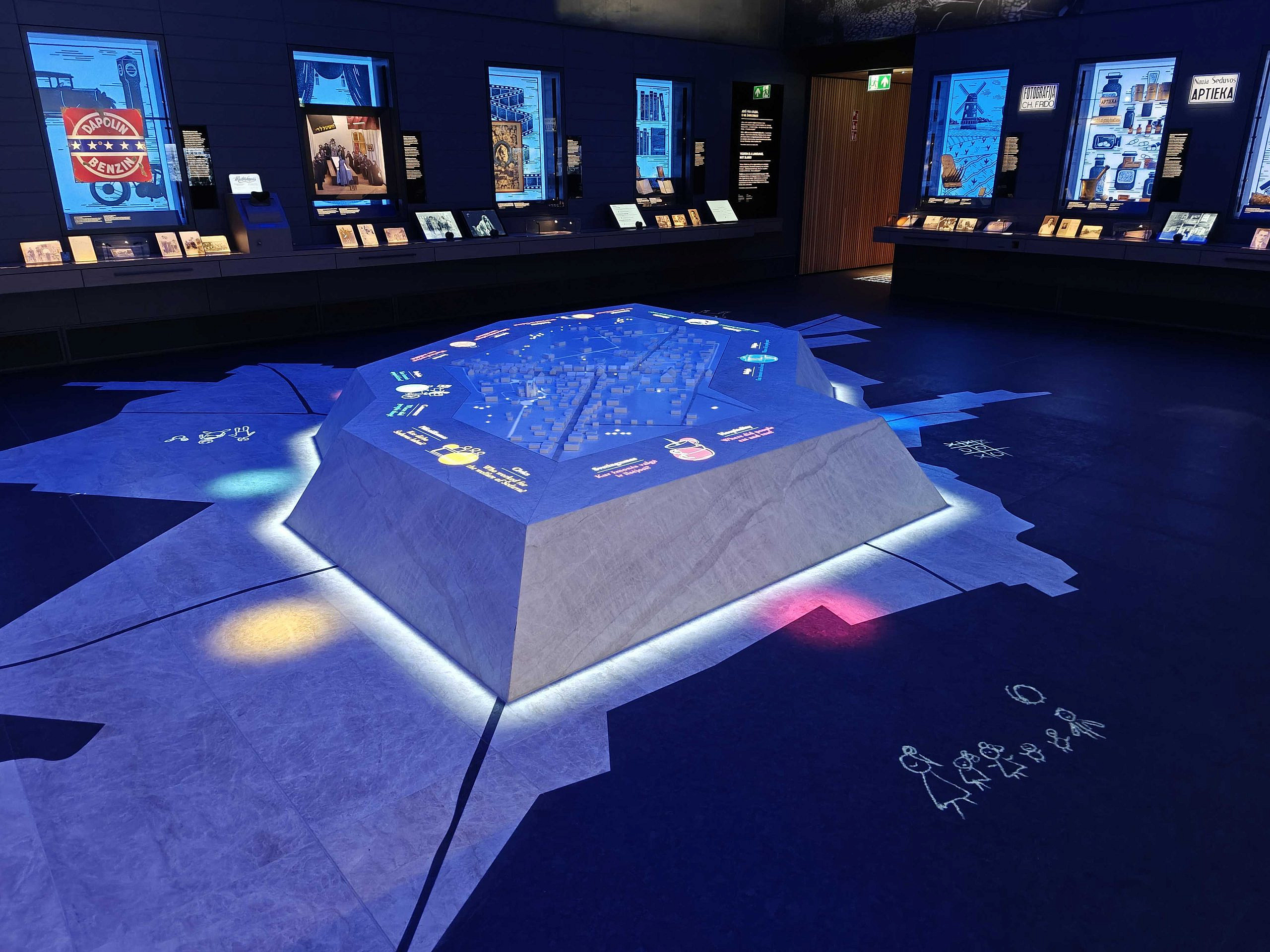
Those appearing – disappearing – re-appearing different charming modern kids’ drawings that have their own non-stop dance on the floor of the main gallery brings so much of life and gentleness into the heavy pile of difficult, sad and tragic facts told and shown in the main gallery hall, the centre of the core exhibition. This gentle dance of unpretentious children’s visions which is an integral part of life in general, perceived from that floor like a soundless melody, a thin and delicate, as an enlightening thread of life that re-appearing once and again after its total disappearance. Very thoughtful and gently beautiful, to me.
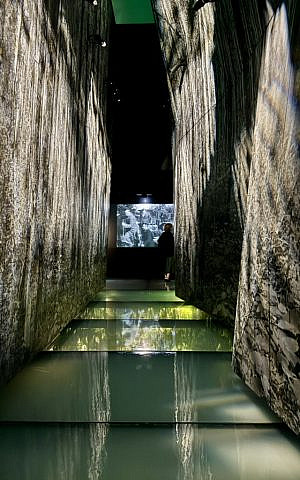
The museum contains nine galleries, and many people were deeply impressed by haunting The Last Journey which has been masterly designed.
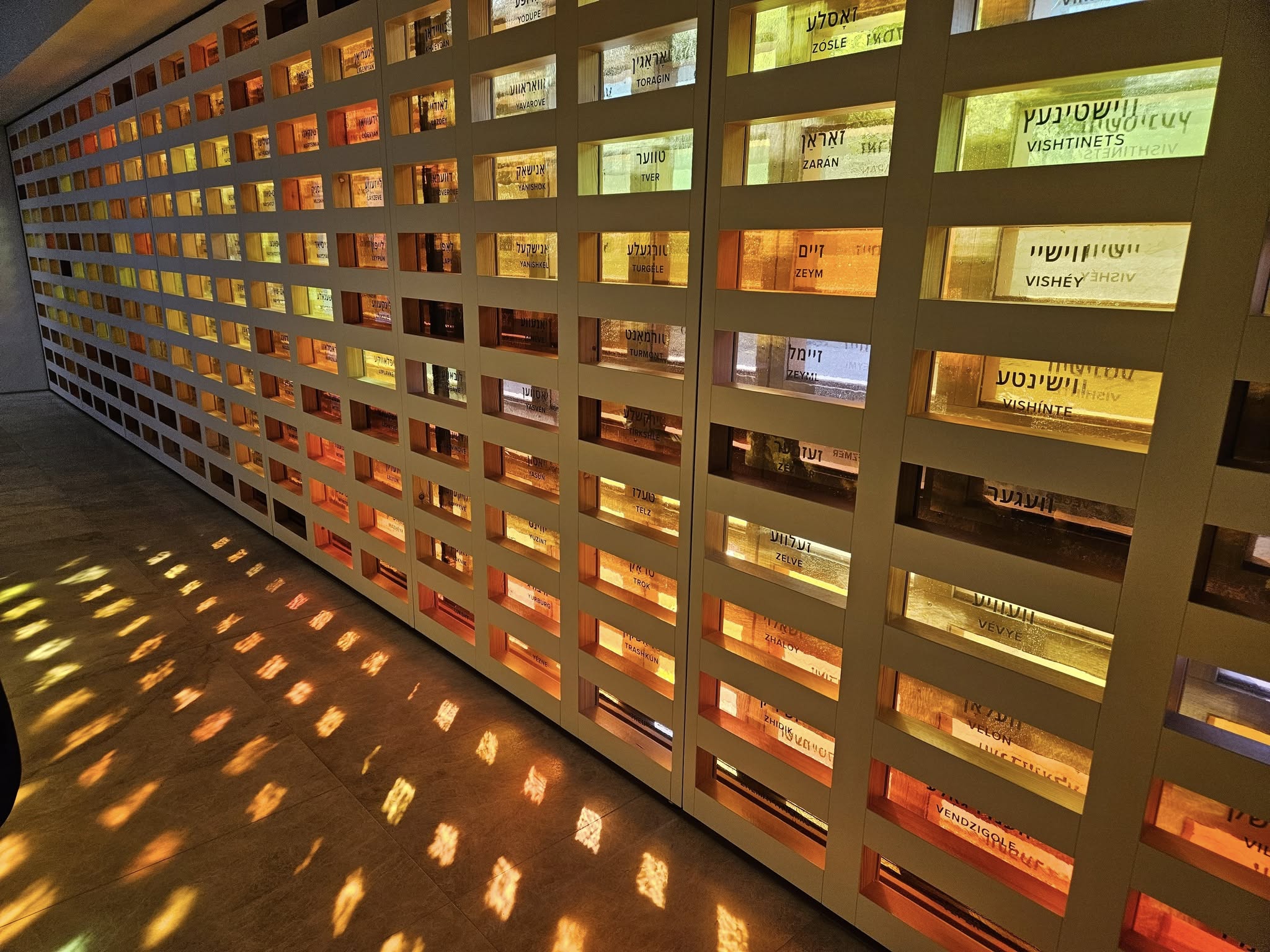
To counter-balance emotionally that haunting emotions at the museum that tells about the life annihilated, there is a very welcoming design of the foyer where all known shtetls of Lithuania are presented in a beautiful way. There was not a single person in a jam-packed museum’s premises at the pre-opening event in August 2025 who was not touched by this steady light coming from the wall of Jewish communities, once so many.
In general, the way and level of the interior design and its production at the Lost Shtetl Museum, as well as the presentation of its permanent exhibition affects the visitors to its best. ” It is just great, very informative and so modern” – said to me a dear friend and colleague, MEP Petras Austrevicius who devotedly travels to the events of the Lost Shtetl specifically, being grasped by this recently opened new place of remembrance in Lithuania.
The Beauty of Remembrance: Exclusive Exhibits
Inside many galleries of the new Lost Shtetl Museum there are a couple of places which are tactfully located a bit off the mainstream route of the core exhibition. The place that refers to a synagogue is quite special to me.
Its design is suggestive, simple but not simplistic. It features some elements of a Judaic religious rite and some symbols, all explained. It is equipped very well with all high-end technical tools belonging to the modern museums.
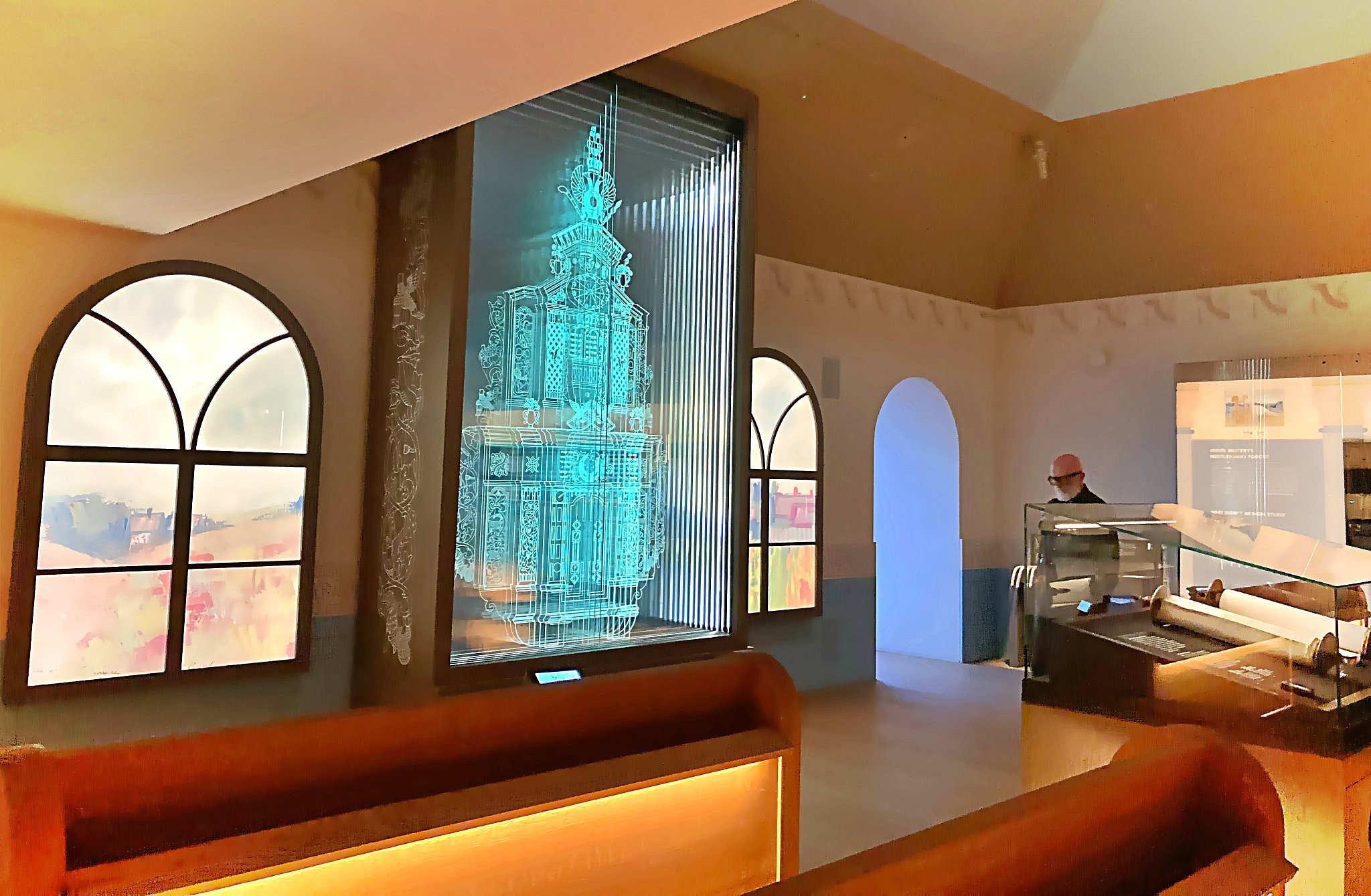
Such a quiet place for meditation and a place to reflect, often in the form of a synagogue-prototype can be found in many Jewish and Holocaust themes museums world-wide, such as Jewish Centre in Oswieciem (the town itself, not the camp), or the big and justly famous recreated synagogue in the POLIN Museum and many others.
But one magnificent exhibit in the Synagogue Hall of the Lost Shtetl Museum made it exceptional. In the centre of an intimate synagogue hall, there is a purposefully extra-large superb box of pure beauty.
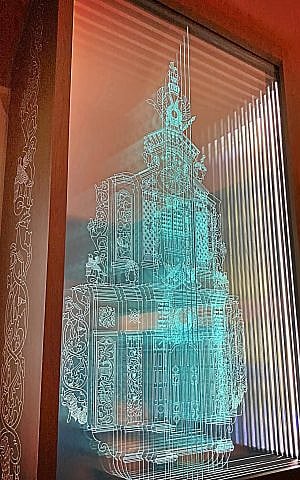
It is a modern-day crystal-engraved replica of a special Jewish art and ritual object, wooden Torah Ark, Aron Kodesh, which was made in the early 19th century for the synagogue in Valkininkai, 50 km from Vilnius.
As it happened, luckily, at some stage that magnificent Ark which was the subject of general and registered admiration, was photographed, with few very old photos surviving, incredibly. That has permitted the museum’s team and commissioned artists to reconstruct, or actually re-create it in the new material, with new light effect, and, above all, with added metaphorical deep meaning that came with a time perspective.
There is no synagogue today, not in Valkininkai, nor in Seduva, where there also were two large synagogues, or, for that matter, nowhere in over 200 shtetls all over Lithuania which all had been whipped out completely and cruelly in 1941 and thereafter.
There are also a very few Jewish people left in Lithuania, with many of us visiting the places of our families regularly, but still, there is a huge void in the sense of life and spirituality which is simply insuperable, and this is the fact of life and history.
The beautiful, fine and enlightened crystal-engraved replica of Aron Kodesh in the museum’s Synagogue hall projects engaging echo of the core of Jewishness reflected in the authentic for Lithuanian Jewish cultural and artistic tradition ( in the same way of authentic finery and beauty as it is very successfully done in the POLIN with regard to the parts of the museum telling on artistic tradition and its characteristics in the Polish Jewish religious rites and customs).
This very special piece of art attracts attention and keeps it. The technique itself is very demanding. I have followed it for years, among the other subjects of applied Jewish art. The crystal engraving is traced to the Venice school of engraving since the 13th century ( after it first appeared in Europe in France a bit earlier). Continuing the non-interrupted tradition in Venice ever since, there is also a special Jewish branch of it, some great masters who are producing beautiful artistic Jewish-themes engravings still today.
To make it in the size and in the detail in which it is done for the exhibit in the Lost Shtetl Museum is a colossally demanding job, and it is a great craft, even if it is done with the help of machinery, not entirely by hand. This job for the new museum was done extremely well.
The lighting for the Torah Ark t is also done both professionally and thoughtfully , as it does create, additionally to general lighting, a volume- and 3D-effects , which are bearing an extra-message in such subject as Aron Kodesh, adding there an extra-dimension of the layers of enlightened time and memory of the life and people destroyed.
Quiet Whispers of the Heart: The Soul-talk of the Original Art
The visual narrative of modern museums is getting increasingly challenging: where is the right balance between a top-notch end of the constantly developing hi-tech solutions and steady unique images of traditional art? Success of people’s visits to museums, which has a large proportion of an emotional component in it, twice so in the history museums dedicated to dramas and tragedies of life, depends on a right balance of this tricky objective.
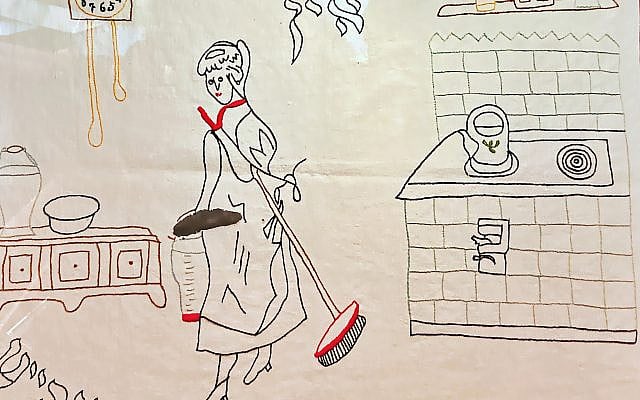
At the Lost Shtetl Synagogue Hall, there are three pieces of original art, two originals and one digital reconstruction of a rare and special piece that has been found in the Jewish abandoned house in 1944 and which original is preserved at the Yad Vashem.
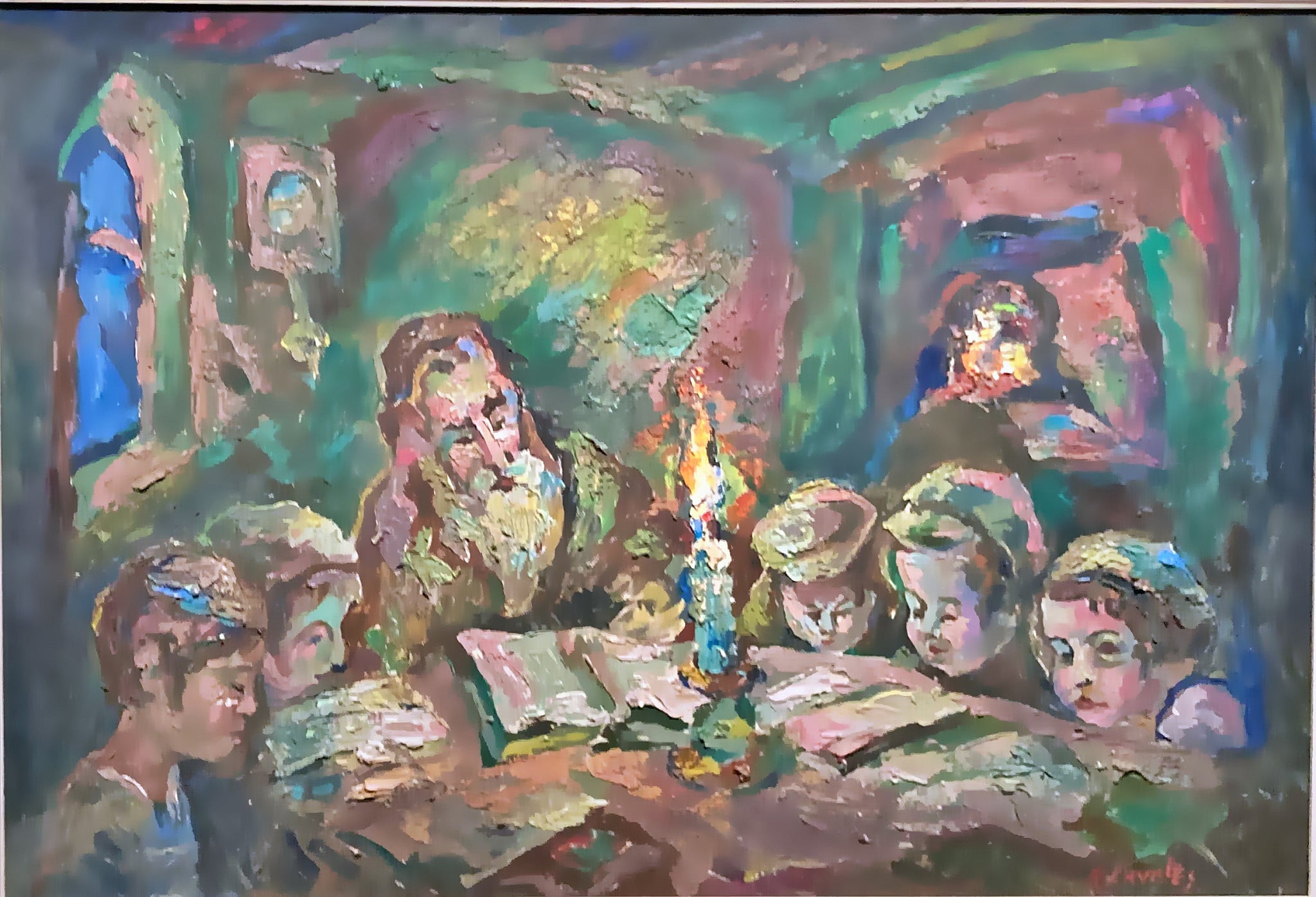
Among the two original artworks, the work of Rafael Chwoles, a very good and soulful Jewish artist, is gentle, talented and warm. It is a Cheder scene.
The other work here is the replica of that embroidered work that was found back in 1944 in an abandoned Jewish home in Lithuania by a Jewish soldier, and which original is preserved in Yad Vashem.
In my view, as stunning as they can be, smashing hi-tech visuals that do perform their function of education really in a superb way, just cannot beat these quiet whispers of the heart , as they possess the bits of souls of the people who created it.
The Real Thing: Magnets for Remembrance
There are also a couple of authentic elements at the new museum, from the annihilated life, and they do project the effect of re-connecting time there.
Those who are working in the field of culture and museums, are well aware of the very serious difficulties to find authentic pieces of once superbly thriving Jewish culture in the Baltic states. That’s why those very few existing pieces are also very sad ones.
One exhibit in Seduva is part of the synagogue in Seda, some 35 km from Seduva town, and another part of the Seduva synagogue.
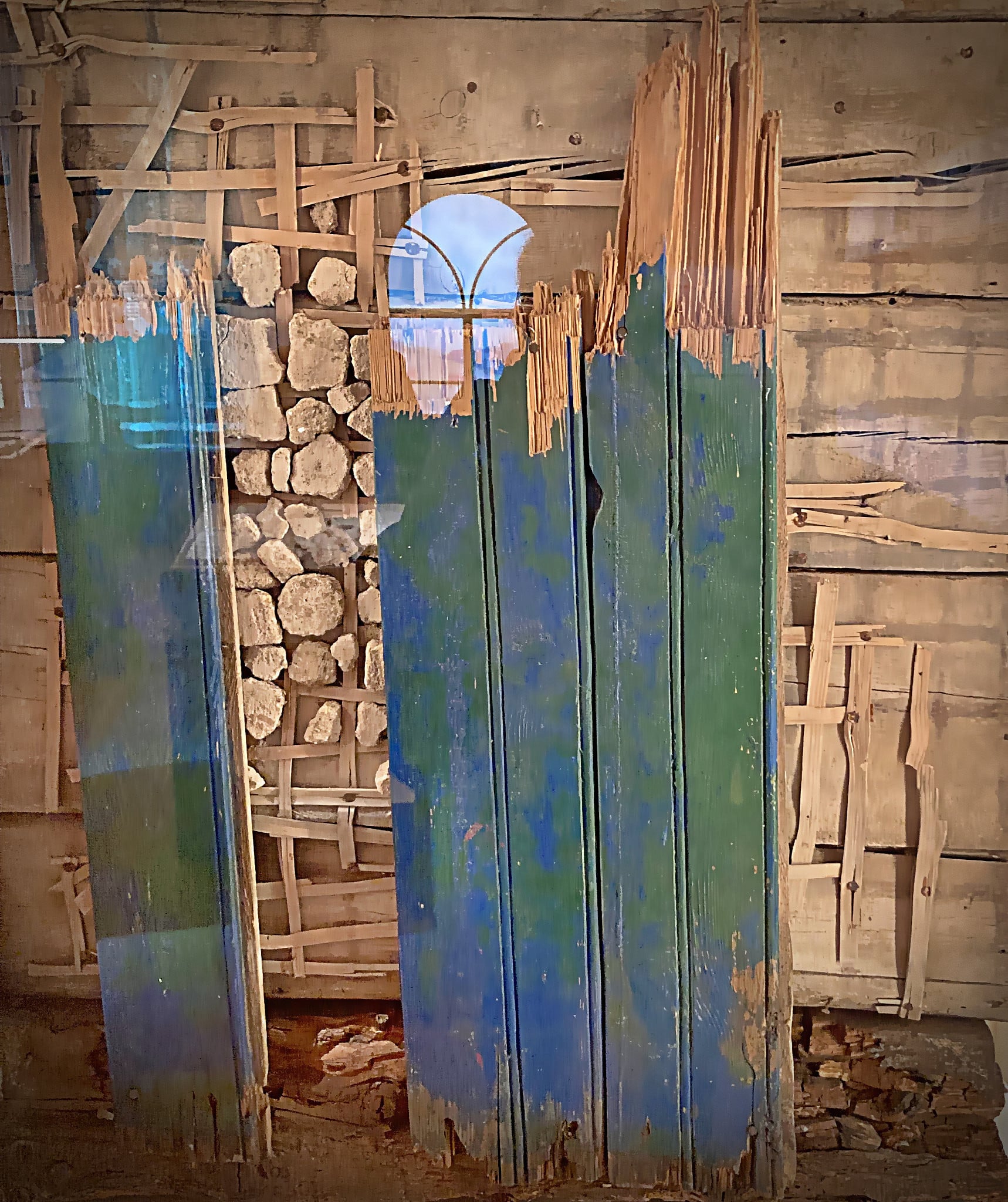
Another one is the doors from a Jewish house in Kaunas with the place for mezuzah on it. Those real pieces from the past like a silent song of remembrance.
The real things are giving you a sense which nothing can replace. And that’s why material culture is such an essential part of civility.
But how sad those fragments of two synagogues in Seduva are. Just a few wooden planks of the buildings which housed so much life in all its facets for so long.
Landscape & Emotions: Nature’s Cushions of Memory
A site always matters for created and re-created places of memory, whatever aspect of memory people address in their effort to commemorate it. There are arguably more demanding sites than the ones connected to the Holocaust and the emptied places of previously intense and thriving Jewish life that has been eradicated.
Seduva in Lithuania is one of such quite demanding places. From one side, there is wide and open serene and large natural landscape in and around the place of one of so many non-exiting anymore shtetls. From another side, everyone who steps in the new museum today knows that mass murder had a place just very near from this quiet place.
When our talented and sensitive leading Finnish architect Rainer Mahlamäki first came to see the site of his future Lost Shtetl Museum, back in May 2016, which, interestingly, was his very first visit to Lithuania in general, the vision of his unique complex of buildings for the future museum was to large extent dictated by the landscape that he saw around.
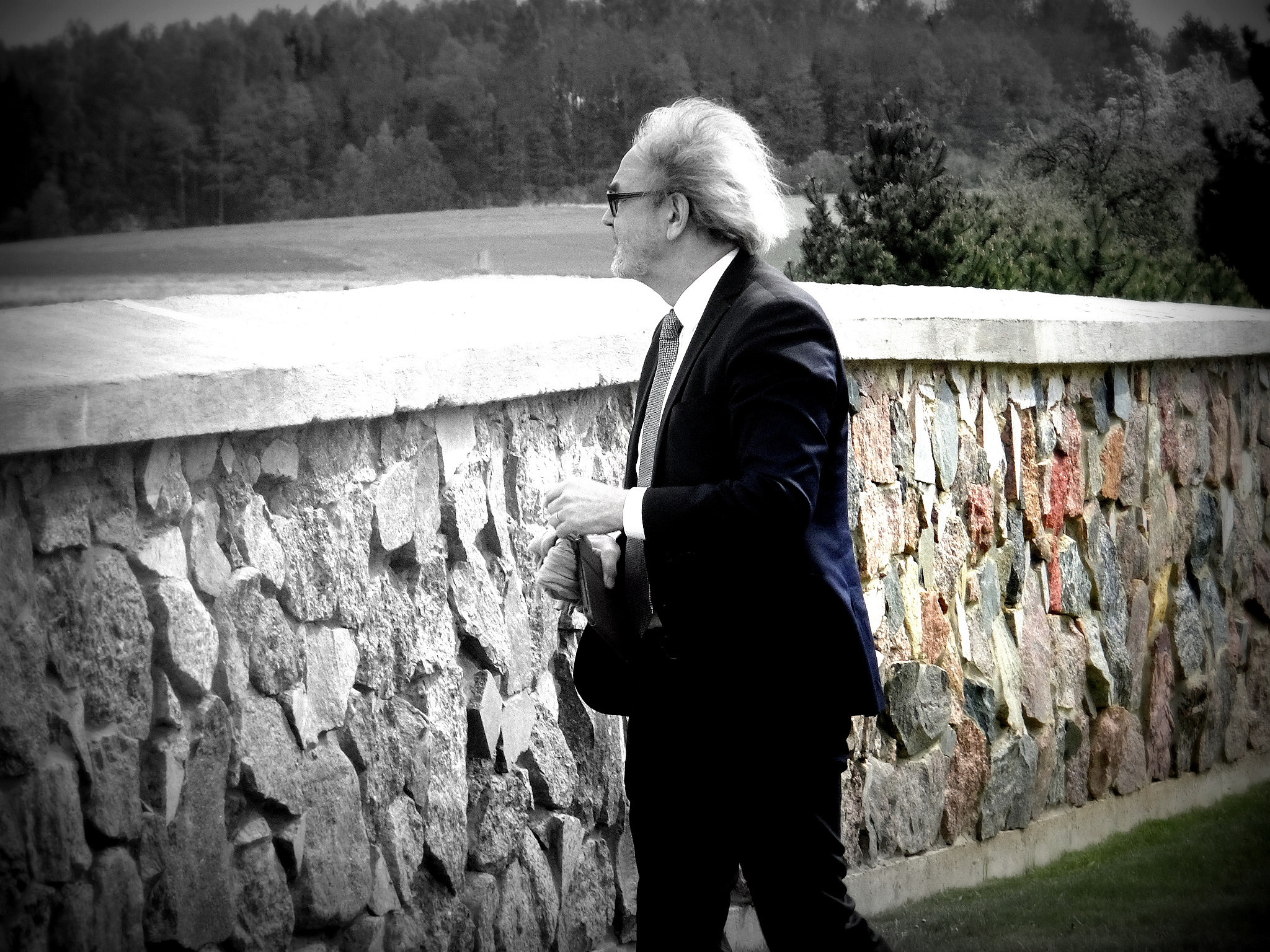
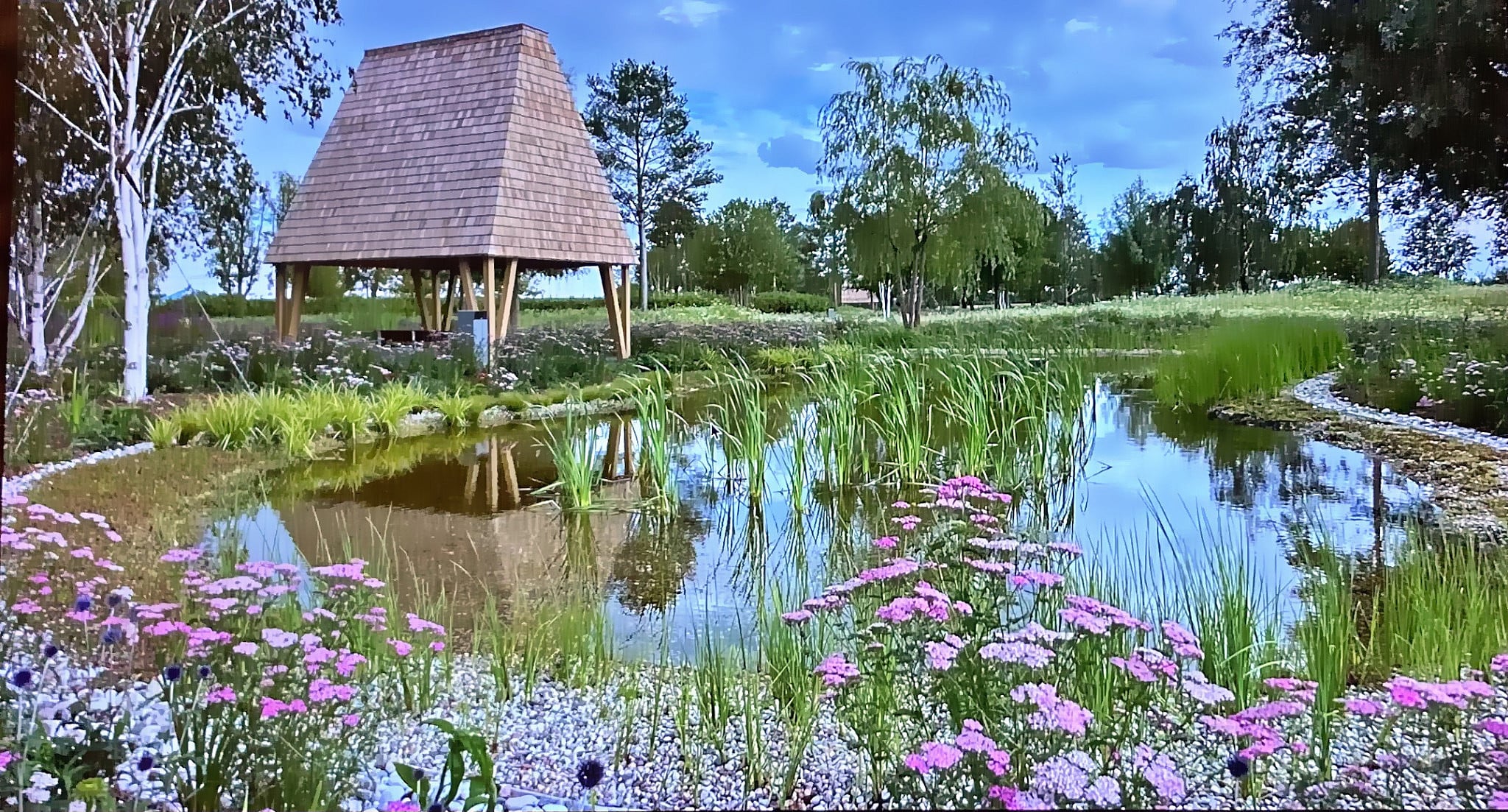
To balance emotionally after an uneasy, haunting at some places, experience for visitors throughout the museum’s galleries, it was decided to set a memorial garden around the building and stretch it to some substantial distance at the museum territory. That task was entrusted to a well-known ENEA Landscape Architecture Italian-Swiss company specialising in landscape architecture. The museum’s site provides a very good introduction to their memorial garden.
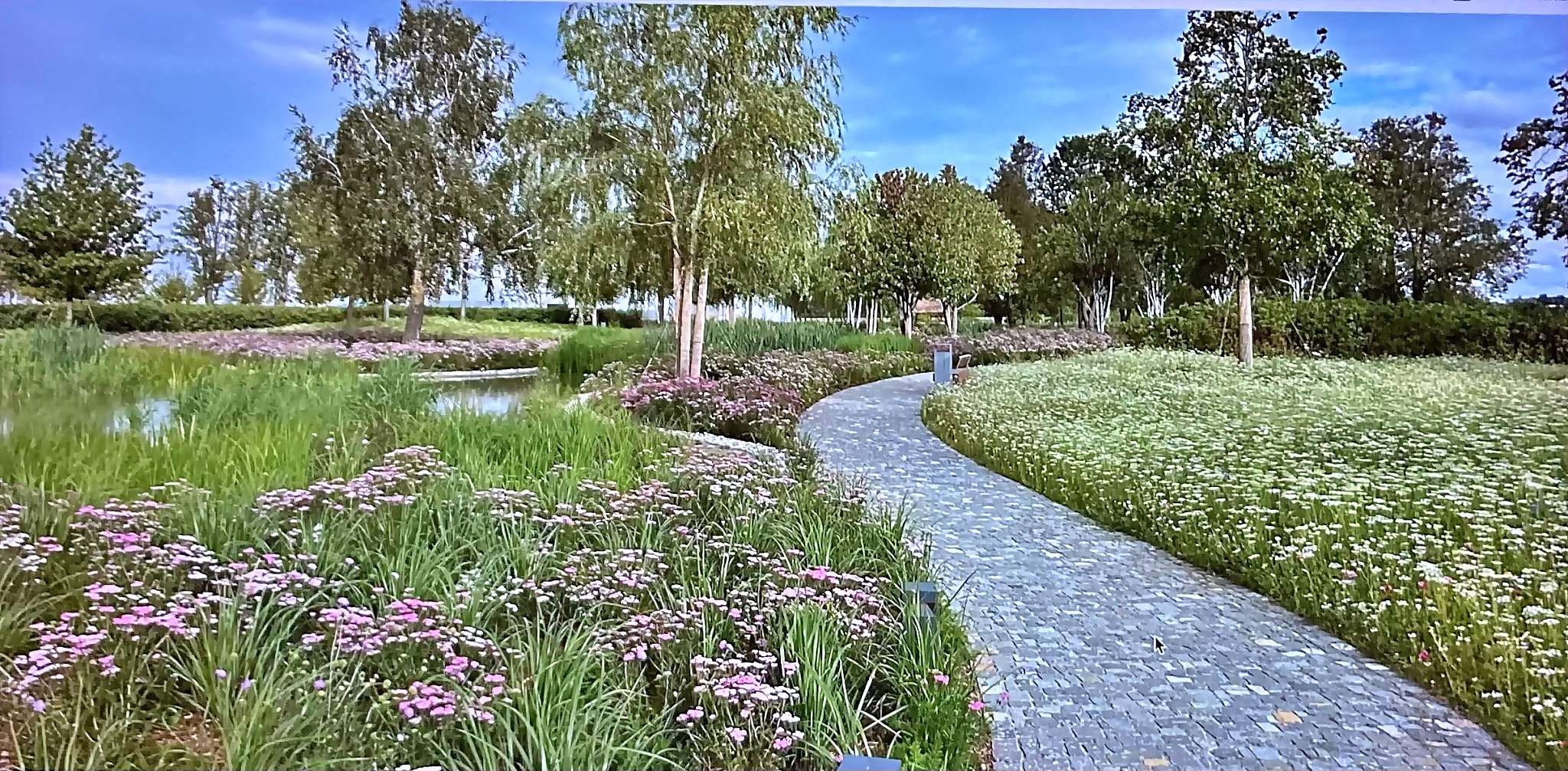
Being there in person, I can mention that it is designed to be a soothing place and it relies on the local type of plants, trees and flowers. Many people who visited the place liked it a lot. It does provide a cumulative effect combining the sense of connection with welcoming psychological comfort.
A distinguished part of the museum’s exterior landscape is a beautiful, well set, dignified and meaningful fountain on the way to the main entrance. It projects an essential in Judaism symbolism of a circle, combining it with another equally important symbol and meaning of water.
Put together in a simple but elegant way, those two core symbols of Judaism create the picture of continuity, the continuity of life, thoughts and reflections, and memory. It sets up the tune for visitors both before they are entering the museum and after they are living it, in the right tonality of dignity and reflections on the unique value of human life.
As my friend and good colleague, director general of the Lithuanian National Museum of Art Dr Arunas Gelunas mentioned after observing the museum, “ it is a great gift to Lithuania, in many senses”. I do agree with Dr Gelunas. And I also think that it is also a very important and highly meaningful new museum not only for Lithuania, and for the Baltics, and for the Northern part of Europe, but for Europe as a whole, and for the world, too.
Attractive, modern and innovative, but also soulful, warm and welcoming, a place for remembrance is so much needed today at both societal and individual levels. Given the atmosphere in which we all have found ourselves today, it is needed not only for mastering more knowledge and respect towards the past, but also to be prompted to see the sickly unfair world today through the lenses of humanity.
Part 1 of the Visions of Re-Created Shtetl essay series can be read here.
August – September – October 2025.
Seduva – Vilnius – Finland
Related Topics
Related Posts