
Rabbi Ronald Schwarzberg and The Future of the American Orthodox Rabbinate
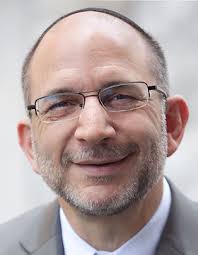
Our local rabbi in Stamford, CT, Rabbi Daniel Cohen, recently announced his intention to make aliyah in a few years – he was hand-picked to be the spiritual leader of a brand-new community in New Katamon.
He is not the only Orthodox rabbi to be making this decision. Instilled with the spirit of Zionism that they learned from their parents and their teachers, and faced with exorbitant costs of day school education for their children in America, many young rabbis are making aliyah shortly after getting their semicha. And many older rabbis who have served their congregations for two or three decades are moving to Israel to be closer to their children and grandchildren.
What does the future hold for the American Orthodox rabbinate, and how does the increase in aliyah among Orthodox rabbis impact the situation?
I had a chance to speak to Rabbi Ronald Schwarzberg, the Director of the Morris and Gertrude Bienenfeld Department of Jewish Career Development and Placement at the Rabbi Isaac Elchanan Theological Seminary of Yeshiva University. I’ve had a chance to get to know Rabbi Schwarzberg from chairing multiple rabbinic search committees, and he has a strong pulse on the Orthodox rabbinate.
Below is the transcript of our discussion:
Have you noticed a significant increase in Modern Orthodox rabbis choosing to make Aliyah, either early in their careers or later in life? If so, when did this trend become most noticeable?
There is no doubt in my mind that more young rabbis and even mid-career rabbis are choosing to make aliyah and raise their children in Israel. The Modern Orthodox community sends their children primarily to yeshivot and day schools that are Zionistic. The result is therefore not surprising. This trend is nothing new. What is new is that property developers in Israel are targeting successful rabbis in sizable Modern Orthodox and Zionistic communities that have potential for aliyah. They offer the rabbi a free apartment or make a very reasonable offer to purchase a suitable apartment for their family’s size and needs. They will also build out a synagogue space, thus bringing the American-style Jewish community to Israel.
How does this movement affect the pool of candidates available for American synagogues that are seeking rabbis today?
Fortunately, there are still a sizable number of very idealistic young men who enter the Semicha program at RIETS. In fact, last year we had the largest first-year student semicha class in our history. Still there is work to do to recruit and encourage more of these young men to be interested in the rabbinate. We certainly could use more of these men to go into both the rabbinate and Jewish education. The greater difficulty is getting young rabbinic couples to begin their careers in smaller Jewish communities. While they are no less idealistic than my cohort of rabbis from the early 1980’s, they have grown up very differently. Technology has kept them closer to home than ever before. Some students say, my wife and I wish to live no more than an hour and a half drive from at least one set of parents. These students are a product of gap years in Israel where they travel back and forth and communicate very frequently with their parents. I have even heard stories that these gap year students in Israel will Face Time with their moms while out to eat, showing them the menu and asking what to order! While this is a dramatic example, technology does not allow the growth, independence, and sense of responsibility that previous generations had to exercise in the days of letter writing and learning to live independently, responsibly and on a budget for an entire year or two. While this closeness and dependence may keep a family close, it can interfere with moving away and building a career in the rabbinate.
Looking ahead 10–20 years, what might this trend mean for the long-term sustainability of Modern Orthodox synagogue leadership in the U.S.?
I wish I had a crystal ball to answer this question. There are so many variables that will impact the future. The most significant one is the impact that antisemitism will have on the decisions of young rabbinic couples to make aliyah. As I mentioned earlier, they are already Zionistic, and if they do not see a good future for American Jewry, we could find ourselves with a dearth of new rabbis to serve the Modern Orthodox rabbinate in years to come.
Are there distinct differences between rabbis who move to Israel early in their careers versus those who move after retirement or to be near family?
So that is the contradictory issue. Those who currently choose to serve the American Jewish community want to remain close to their families. For those who choose to make aliyah during their gap year(s), idealism will be a win over being close to family. Young rabbis must be the absolute best to get offers from the developers so that teaching in yeshivot and seminaries will be enough to sustain a family budget. Retiring rabbis who have been good savers and are recipients of American social security do not have the same livelihood worries.
How do American congregations react when their rabbi leaves for Israel? Does it affect synagogue stability, morale, or membership retention?
Because aliyah is a strong value in the Modern Orthodox community, it seems to me that most communities are proud of their rabbis when they make the decision to make aliyah. Of course, there is angst that comes with any transition in life. We certainly still have the bandwidth to replace those rabbis with strong competent rabbis. The training at RIETS keeps getting better, and even if we have two or three less students interested in the rabbinate, those who make the decision to become pulpit rabbis are more enthusiastic, talented, and stronger talmedei chachamim than ever.
Is Yeshiva University still seeing strong numbers of students entering the rabbinate in the U.S., or is the pipeline itself shrinking?
As I mentioned before, our numbers are currently strong. Post-pandemic we saw a slide. The strong elementary, high school, and gap year(s) in Israel are still producing idealistic students who have a fervor to serve the Jewish community in the pulpit. We have a bigger problem supplying and filling the needs of Jewish educators in our day schools and yeshivot.
To what extent are seminaries in Israel or other countries drawing potential rabbis away from YU and, by extension, from American pulpits?
Yeshiva University’s enrollment has increased since the outbreak of antisemitism. By extension so has enrollment in RIETS. There are students that decide to make aliyah during their gap year(s) in Israel. It is hard to gauge if these institutions have an impact of taking students away from the American pulpit. To my knowledge there has not been a study which can confirm if American students in Israel who choose to make aliyah had planned to become rabbis and changed their minds because of aliyah. The Office of Jewish Career Development and Placement can help synagogues across North America find rabbis. It may take a little longer than in the past, and it does seem a bit harder to fill smaller communities outside of large Jewish communities with strong Jewish infrastructure. It is not a lack of a pizza store that holds back young rabbinic couples but rather the lack of educational opportunities and potentially the distance between family and friends. Young rabbinic couples are extremely concerned with educating their children — even when their children are very young.
Have synagogue search committees expressed greater difficulty finding qualified candidates because of this phenomenon?
Not really, but search committees are surprised by our response to the question they all ask: Can our office estimate the number of candidates we can expect to receive from your office? For a reason unknown to me they expect dozens of candidates. The reality is that a small community with limited Jewish infrastructure might receive two to three candidates, a medium size community with more infrastructure might receive four to six, and a large community in a metropolitan area with a fully developed Jewish infrastructure and choices of schools for a rabbi’s children may receive and up to fifteen candidates.
What strategies, if any, are being considered to address potential shortages—whether through training more rabbis, encouraging alternative leadership models, or supporting communities in new ways?
RIETS is working hard to develop recruitment strategies. Roshei Yeshiva and staff from RIETS travel to Israel and visit the yeshivot to give shiurim and lectures and use their time in Israel to meet and converse with potential students. One strategy that is under development is to do the same in American universities with a strong Jewish student population.
Do you think this trend signals a broader shift in the center of Modern Orthodoxy from the U.S. to Israel? What might that mean for the role of American Jewry within the global Orthodox community?
I would stress the following: Aliyah and Zionism are strong Modern Orthodox values, so I would ask the question differently. Are we victims of our own success in influencing our children to be Zionists? Certainly, the lack of enough educators is a significant issue for staffing our schools. If we get to the point where we can no longer staff our schools with Yeshiva University (i.e., Modern Orthodox) rabbis, it might cause a shift in our community one way or the other. In terms of the rabbinate, RIETS has a diverse student body, and we can present candidates that are appropriate for the various hashkafot of our diverse Modern Orthodox community. Aliyah builds a strong Israel. When a child makes aliyah, it is common for siblings and parents to follow in time. Kibbutz galiyut, the ingathering of the Jewish people to Israel, is something we pray for everyday, and it is a good thing even if it presents its challenges to the diaspora. Hopefully, those challenges will be temporary as we anxiously await Moshiach speedily in our day.