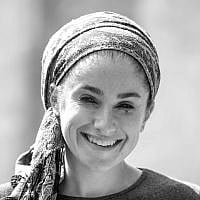
Rambles of a reservist’s wife
I made aliyah at the age of 18, driven by deep Zionist values and a profound sense of commitment to the Jewish people. My college years were a blur of tears and laughter, filled with exciting adventures as I navigated adulthood in a country where everything initially felt backwards — yet deeply meaningful and worthwhile. I was blessed to meet my husband at a young age, and together we began building our life in Israel — a dream I had davened for over many years.
We live what many would consider a classic Israeli life. We are blessed with four beautiful children, we both work, and we are involved in our community. We spend our free time going on tiyulim, walking the land promised to us thousands of years ago, and spending time with family and friends. We built our home in a new suburb in southern Israel with the idealism and optimism of pioneers. There is nothing particularly extraordinary about us.
My husband, Sruli, was called up on October 7th, just hours after we heard our first siren and huddled together in the bomb shelter. As fragments of information slowly began coming in, I packed him a small bag with a few pitas, some chips, apples, and water before sending him to the northern border. We had already lived through Tzuk Eitan together nearly ten years earlier, and I assumed — naively — that at most he would be gone for a week or two.
I could never have imagined that this would become the moment that fundamentally changed our lives.
Since October 7th, Sruli has completed four rounds of reserve duty and is currently in the middle of his fifth. Our baby, born in September 2024, is approaching his second birthday. Out of the first 22 months of his life, Sruli will have spent six months away in miluim.
Our almost six-year-old daughter does not remember life without “Abba b’miluim.” For her, it is simply part of normal life.
But this is about far more than counting days apart. It is about missing milestones and bedtime routines. It is Shabbatot where Ima makes Kiddush and Havdalah alone. It means watching my husband study for our seventh grader’s Chumash test over FaceTime and help review fourth-grade homework in between guard duties. This is the reality we — and so many others — are living.
At the same time, we are incredibly blessed with an extraordinary community, family, and friends who continue to carry us through. There have been countless meal deliveries, Shabbat invitations, and constant check-ins to make sure we are okay. My children have become accustomed to unexpected knocks on the door erev Shabbat — neighbors and friends arriving with cakes, cookies, and quiet acts of kindness.
I am not sharing this because I believe our story is unique. In fact, there are families whose husbands and fathers have served far more days than ours. But I think it is important for the Jewish people — including Jews in the Diaspora — to understand that here in Israel, reserve families are still actively living this war every single day.
Spend one Shabbat in my shul and simply look around. Notice how many fathers are home on leave, carrying rifles while pushing strollers.
It is easy, especially from afar, to forget how many families are still deeply “in” this war. So I am writing this to remind you what YOU can do for reserve families.
Reach out. If you live nearby, invite them for Shabbat. And please — do not say, “Let me know when you want to come for a meal.” It comes from a kind place, but most of us will never ask. Instead, offer something concrete. Ask whether they need groceries, challah for Shabbat, or help with errands.
Drop off a meal. Bring dinner in the middle of the week and simply leave it at the door.
Don’t live nearby? Send a Wolt gift card.
Reach out directly to soldiers. Ask what their unit needs. What equipment are they missing? Fundraise for them. Many units are still lacking essential supplies. Even something as simple as sponsoring a BBQ or a warm dinner can make an enormous difference.
Planning a trip to Israel? Look into volunteer opportunities on army bases or along the northern and southern borders. Support businesses owned by reservist.
And most importantly — daven. Daven for our husbands, sons, brothers, and partners serving on the front lines. Tefillah goes a long way. It does not matter which border they are protecting — ultimately, we have only Hashem to rely on.
And if you have made it this far, I want to leave you with one final request:
Do not pity reserve families. Do not give us sad eyes when we tell you our husbands or fathers are in miluim. Instead, let us change the language.
Say: “Thank you for your family’s service. I am grateful for the sacrifices you are making so that my family, my friends, and the Jewish people can continue to live in — and visit — our homeland.”
Because despite the hardships, I am proud. I am grateful to live during this chapter of Jewish history — a time when I know that my family and I are contributing, in our own way, to the future of our people and our land.
I know what I am doing for the Jewish people today.
What will you do?