
Reality Over Illusion What Peace Really Looks Like
Was what you did on October 7 meant to lead the Palestinians to liberation or to destruction?
During an interview on October 11, 2025 Hamas’s co-founder Mousa Abu Marzouk refused to show the slightest hint of remorse. He would not bend, would not reconsider, and would not even pretend to seek peace. His words were defiant, filled with pride about the massacres and kidnappings. He simply states that the movement “fulfilled its national duty” and acted as “resistance to occupation.” To me, it is the language of fanaticism and death. It is the truest mirror of what Hamas represents today, an ideology that does not want peace, does not accept defeat, and still dreams of liberating imaginary Palestine from the river to the sea.
That slogan, repeated endlessly at rallies from Gaza City to London to New York, is not a call for independence but rather it is a call for elimination. “From the river to the sea” means a world without Israel, without Jews, without coexistence. Yet the international community still treats Hamas as if it were a political faction with grievances that can be negotiated away, rather than a violent theocracy obsessed with annihilation.
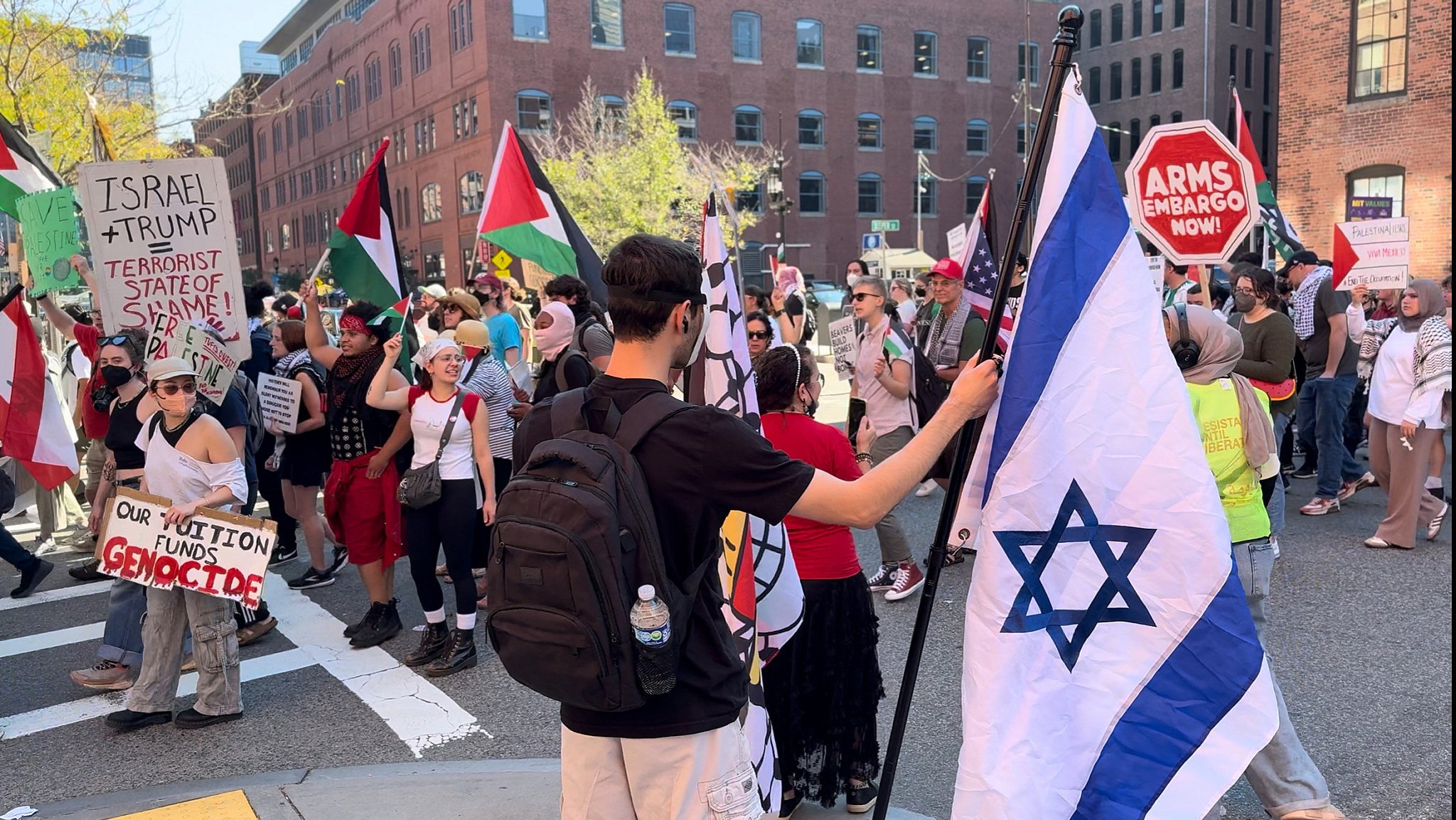
Just today, in the middle of Manhattan, another angry pro-Palestinian crowd filled the streets, waving green Hamas flags and screaming that “the job is not done” and that “many more October 7ths are coming, Inshallah.” These were not isolated extremists. They were students, activists, and influencers who are educated voices in the heart of the free world chanting for mass murder of Jews. Western journalists called it a “pro-Palestinian rally.” But to anyone who remembers the footage of October 7, the burned homes, the mutilated families, the kidnapped children, these rallies look less like political protests and more like celebrations of horror.
This is what the world refuses to face. Hamas is not an army fighting for territory; it is a movement fueled by hatred and apocalyptic zeal. Its charter does not call for borders, it calls for blood. It is a cult that glorifies death over life, and tragically, it has succeeded in infecting generations with that poison. Every child who grows up learning that Jews are descendants of pigs and monkeys, every schoolbook that praises “martyrs,” every sermon that preaches eternal war — these are not accidents. They are policy. They are the foundation of a culture built on vengeance.
And so when Western diplomats speak about “ceasefires” and “two-state solutions,” they speak in a vacuum of fantasy. You cannot build peace when one side educates its youth to kill. You cannot sign a treaty with an organization whose founding document rejects your existence. You cannot negotiate morality with those who deny the sanctity of human life.
The so-called “peace movement” in the West is perhaps even more troubling. It wears the mask of human rights but operates on the fuel of selective outrage. These are the same activists who march by the thousands for Gaza but stay silent when Hamas executes its own civilians, when women are beaten for refusing to wear a veil, or when gay men are thrown from rooftops. Their silence is not compassion, it is complicity. They claim to stand for justice, yet they chant for the destruction of the only democracy in the Middle East.
The real peace will only come when antisemitism and anti-Zionism cease to exist. It will come when the hatred that drives both is finally named and rejected. It will only come when the global community stops indulging the myth that Israel is the problem and accepts the reality that the problem is those who cannot accept a Jewish state in any borders, in any form, under any condition.
Inside Israel, this realization has created its own kind of reckoning. The nation remains united in grief and determination but divided in vision. Some, like National Security Minister Itamar Ben-Gvir, call for “complete victory” — an end to Hamas, total control of Gaza, and a permanent assertion of Israeli sovereignty. His words spark outrage abroad but reflect a very real sentiment within the Israeli public: after two years of funerals, massacres, and international hypocrisy, many Israelis no longer believe that coexistence is possible.
During a recent meeting with Witkoff and Kushner a tense exchange that many will remember Ben-Gvir delivered sharp criticism of the deal being discussed. He said:
“I’m sitting here looking at the list of terrorists being released, murderers of babies, rapists of women. With all due respect, the United States would never release people like this. I appreciate your efforts and your support for Israel, but let’s be honest, you would not back a deal of this nature. You speak of economic agreements and peace, but you cannot make peace with Hamas. They want to kill us.”
Witkoff responded with a personal anecdote: “I understand your perspective, but let me share a story. My son died of an overdose. I wanted to kill the person responsible, but when I got to court, I saw his parents — ashamed and pleading for forgiveness. And I forgave them.” Ben-Gvir replied, “Mr. Witkoff, that’s precisely the difference: the people who murdered us on October 7 are not asking for forgiveness. Their families are proud. They glorify murder. They want to kill Jews.”
Kushner added, “But Hamas is globally isolated and deterred.”
Ben-Gvir countered bluntly: “Would you make peace with Hitler? Hamas is Hitler. They want to kill us.”
No matter how far right he is or how many people dislike him, he is 100% correct on this: the moral and existential calculus is different when the other side celebrates murder and refuses repentance.
Others, weary of endless war, hope for some form of pragmatic peace not because they trust their enemies, but because they long for normalcy. While working in Israel this summer on my new documentary Ashes of Identity, we interviewed a man who lived along the Gaza envelope, someone who helped Gazans with whatever they needed, drove their children to hospitals in Tel Aviv for treatment, and as he called himself, a complete “leftie” who truly believed in coexistence and peace with Palestinians. After October 7, his life was turned upside down. With tears in his eyes, he told us: “I feel the knife in my back and I don’t believe that peace is possible with them in the next 50 years.”
That sentence captured the collective heartbreak of a nation even among those who had once believed the loudest in peace. After October 7, who can honestly imagine a handshake across that divide? What parent could trust that tomorrow’s “peace partner” will not raise another generation to kill their children?
The fact that hostages are finally coming home is indeed a great accomplishment, a moment of relief for families who have lived through the unthinkable. But it cannot and must not be treated as the job completed. The return of hostages is not peace; it is a humanitarian necessity and a moral obligation. To achieve true peace, and when I say peace, I mean people-to-people peace it will take generations of reeducation, a complete restructuring of the Palestinian Authority from the ground up, and, most importantly, the rise of a real leader who is genuinely committed to coexistence and who recognizes Israel as the Jewish state not as a bargaining chip, not with conditions, but simply as a right.
Hope is a beautiful word, but it cannot survive without truth. And the truth is harsh: peace will not come from another UN resolution, not from a conference in Doha, and not from politicians who equate terrorists with victims. Real peace will take generations, a complete re-education of the Palestinian Authority’s schools, a dismantling of the propaganda that glorifies death, and a moral revolution within Palestinian society itself. Only then, maybe, can peace even begin.
Until that day, Israel will continue to defend itself because it has no other choice. The same world that lectures Israel about restraint would never tolerate what Israelis live through daily. The same universities that justify “resistance” would call it terrorism if it happened in London, Paris, or Boston. Israel’s survival is not a negotiation; it is a necessity.
I hope I am wrong. I hope one day there will be peace, not the kind written on diplomatic paper, but the kind that lives in the heart of every child who learns respect instead of hate. But that day will not come soon. It will take a generation reborn, a region cleansed of lies, and a world brave enough to tell the truth.
Until then, peace will remain a dream and Israel, as always, will be forced to live in reality.