
Red Carpets in the Gulf: Trump’s Map of Influence
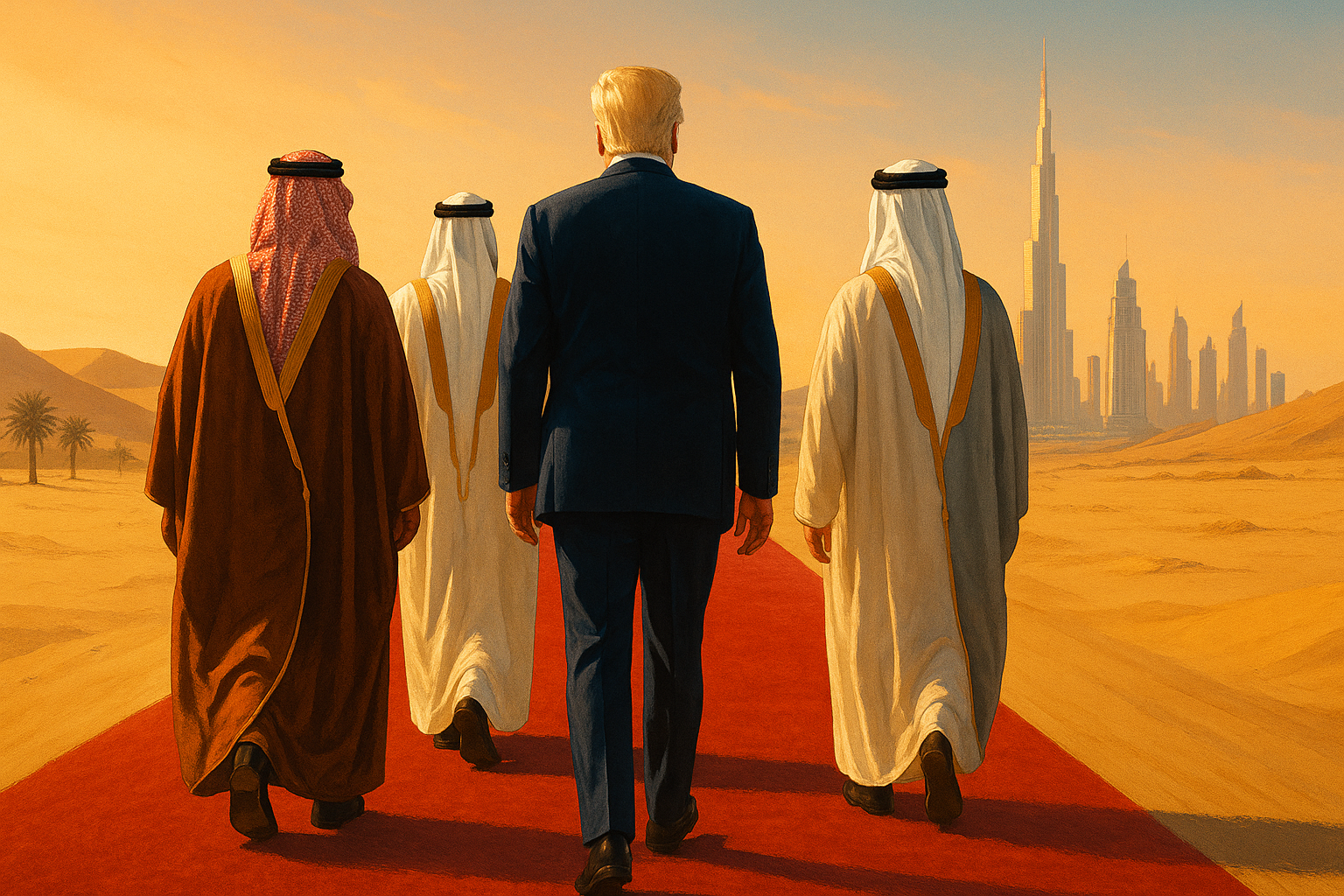
Donald Trump’s decision to visit Gulf capitals while skipping Jerusalem was not a demotion of Israel but a recalibration of priorities. He remains committed to the Abraham Accords and supportive of Israel. However, his second-term strategy recognizes that regional influence in today’s Middle East begins with economic gravity. Trump is pursuing a different sequence. He is strengthening Gulf partnerships first through investment, infrastructure, and energy, and using that leverage to shape future diplomatic outcomes. This is not a detour from normalization with Israel. It reflects a belief that shared economic stakes create more durable conditions for political realignment.
The red carpets, military parades, and ceremonial grandeur during Trump’s stops in Riyadh, Doha, and Abu Dhabi were not just symbolic; they were strategic. Trump was welcomed with traditional displays of Arabian hospitality: camel processions, sword-bearing guards in national dress, and formal receptions in gilded halls. These gestures conveyed more than respect. They signaled that Gulf leaders see the United States, under Trump, as a priority partner. The presence of major American tech executives reinforced that this tour extended beyond oil and arms, even as those sectors remain strategically significant. It focused on anchoring U.S. leadership across critical sectors including artificial intelligence, energy, defense, technology, infrastructure, and major arms deals. These agreements, reportedly worth over two trillion dollars, are not separate from diplomacy. They represent diplomacy by other means. They offer the United States a way to counter China’s growing influence while embedding Gulf states in a U.S. anchored economic order.
For Israel, this approach may feel like a shift but not a slight. Trump is not replacing Israel with the Gulf. He is building a wider platform in which Israel remains a central, though no longer exclusive, pillar. His message to Jerusalem is subtle but firm. Long-term stability and regional integration depend on broader economic coalitions, not just traditional security alliances. Trump’s emphasis on calming the region reflects a consistent view he has expressed elsewhere, including on the war in Ukraine: prolonged conflicts stall economic progress and limit diplomatic leverage. The implication is clear. Israel’s strategic goals are best advanced not only through military strength, but also by aligning with the economic and diplomatic order now taking shape around it—one that prizes stability as a precondition for influence.
The emerging regional blueprint offers Israel both a challenge and an opportunity. The challenge is to adapt to a Middle East where American diplomatic energy is focused on multilateral economic coalitions. The opportunity is to engage that framework directly. Israel can take part in Gulf-led investment initiatives, bring its technological strengths to the table, and adjust its diplomacy to reflect the new terms of engagement. Trump’s strategy in the region is not driven by nostalgia. It is transactional, layered, and pragmatic. Israel would benefit from approaching it with the same strategic clarity.