Remembering Enid — One of a kind
At Enid’s funeral last week on Tuesday, as the Chevra Kaddisha came forward to take her to burial, an older man with a long grey beard stepped up to the microphone. I had taken him for one of them. Then, in Hebrew with a marked Russian accent, he said: My name is Yosef Mendelevich.
That name triggered a flood of memories from placards and petitions decades ago: a Prisoner of Zion. Here he was, free, in Jerusalem, telling us simply how our unassuming Enid had built a movement from the ground up. When I first met her in 1983, Enid had been to the Soviet Union ten years earlier. And what she saw there never left her. Together with her husband Stuart, she threw herself into the struggle for Soviet Jewry: demonstrations, endless phone calls and letters, meetings in Congress. For a time, letters from Natan Sharansky, then imprisoned in the Soviet Union, were relayed through Enid in America, to his wife Avital. It is hard to imagine a greater trust.
Years later I read Malcolm Gladwell’s book The Tipping Point. In it, he argues that great social changes don’t spread evenly. They depend on a handful of exceptional people. For the rarest of these he coins the term ‘connectors’: people who seem to know everyone, move easily between different worlds, and can always put you in touch with just the right person. Reading his description of one such ‘connector’, a woman called Lois in Chicago, it suddenly hit me: This is Enid!
Connectors matter because they bridge circles that would never otherwise meet. Enid linked refuseniks in the former Soviet Union with activists in America, housewives with congressmen, Prisoners of Zion with the people who would not let the world forget them. Perhaps this is the true story of the Soviet Jewry movement. As Yosef Mendelevich reminded us at the funeral, the Jewish establishment of the 1970s and 80s was often reluctant to make waves. It was housewives and students who demonstrated, lobbied, wrote and phoned until a cause of a few became the cause of many. By late 1987, a quarter of a million people filled Washington for Soviet Jewry. Movements tip because of people like Enid.
After Enid and Stuart moved to Israel, in 1977, she didn’t stop. As refuseniks finally arrived here in Israel, in the late 1980s she was still connecting: linking new immigrants with those who could help them; making sure people who had given so much were not forgotten; campaigning to secure their pensions. She kept going after losing Stuart z’l and through years of ill health, including a kidney transplant.
Enid left this world on our holiest day, Yom Kippur, which, according to tradition is considered a sign of a righteous person. So, this feels fitting for someone whose life was devoted others. Her Hebrew name was Esther Liba. She was named after Queen Esther, who was also known as Hadassah (Myrtle). In Yiddish, Liba means beloved. In Hebrew, libah means “her heart.” Both fit. She had an enormous heart, and she was greatly loved.
This week we sat in the Sukkah, a flimsy shelter open to the sky, reminding us of how fragile our homes can be. For refuseniks, life was exactly that: years in limbo, never knowing if and when the door might open. Enid spent her life helping people move from uncertain surroundings to a permanent home. And like the Sukkah, which welcomes guests, her door and her address book were always open.
According to the Talmud, the righteous are called hadassim: myrtles, the fragrance of the myrtle reflecting good deeds. On Sukkot, we take up the Arba Minim— the four species — each one distinctly different, the myrtle among them.
But here’s the thing; the Mitzvah is only fulfilled when they are brought together as one. Our sages saw in them every kind of Jewish person held in one bundle. Bringing people together — this was Enid’s gift.
May her memory be blessed. יהי זכרה ברוך.
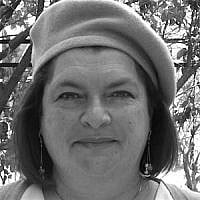
Enid Lynne Wurtman (1942 -2026)